Tile & Flooring
How to Choose Grout Color for Bathroom Tile
Choosing the right bathroom grout color means balancing contrast, maintenance, and tile scale. Here's how to pick a shade that looks good and holds up.
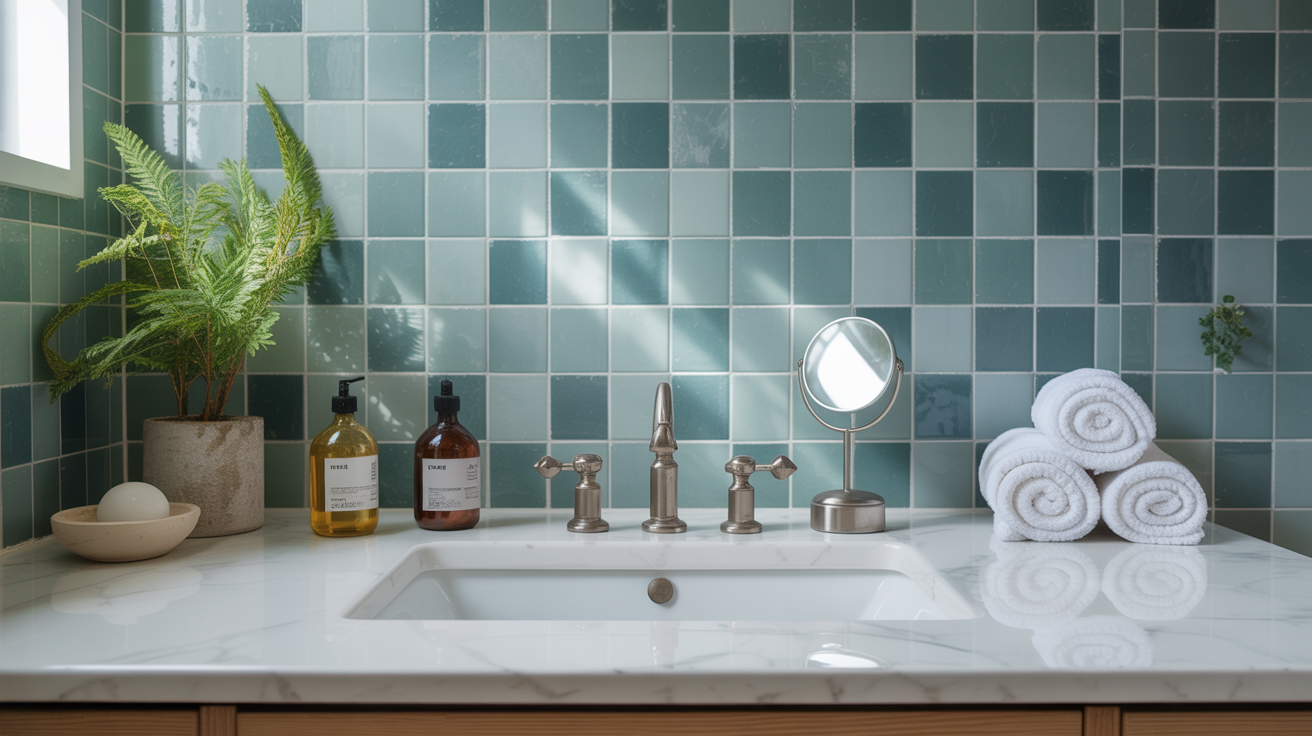
The grout color you pick has more visual impact than most people expect. The same white subway tile can read as calm and seamless with a white grout or as graphic and grid-like with charcoal. But the look is only half the question. A grout shade that photographs beautifully in a showroom can reveal every hard-water drip and soap smear if you haven't thought through how it behaves in a wet room. This guide walks through the matching-versus-contrasting decision, the real maintenance tradeoffs between light and dark grout, and how to test your options before you buy a single bag.
At a Glance
- Matching grout makes tile read as one continuous surface; contrasting grout turns the joint pattern into a visible design element.
- Light grout shows soap scum, hard water spots, and iron staining faster, especially within 18 inches of a showerhead.
- Dark grout hides everyday grime well but is unforgiving about haze if it isn't cleaned off within the product's curing window.
- Mid-tone gray, greige, or taupe is the lowest-maintenance middle ground for most bathrooms.
- Epoxy grout costs 2 to 3 times more than cement-based grout but never needs sealing and resists staining in high-splash zones.
- Always judge color from a cured, sealed 72-hour test patch, not a dry showroom chip.
Matching vs. Contrasting Grout: What Each Choice Does to the Eye
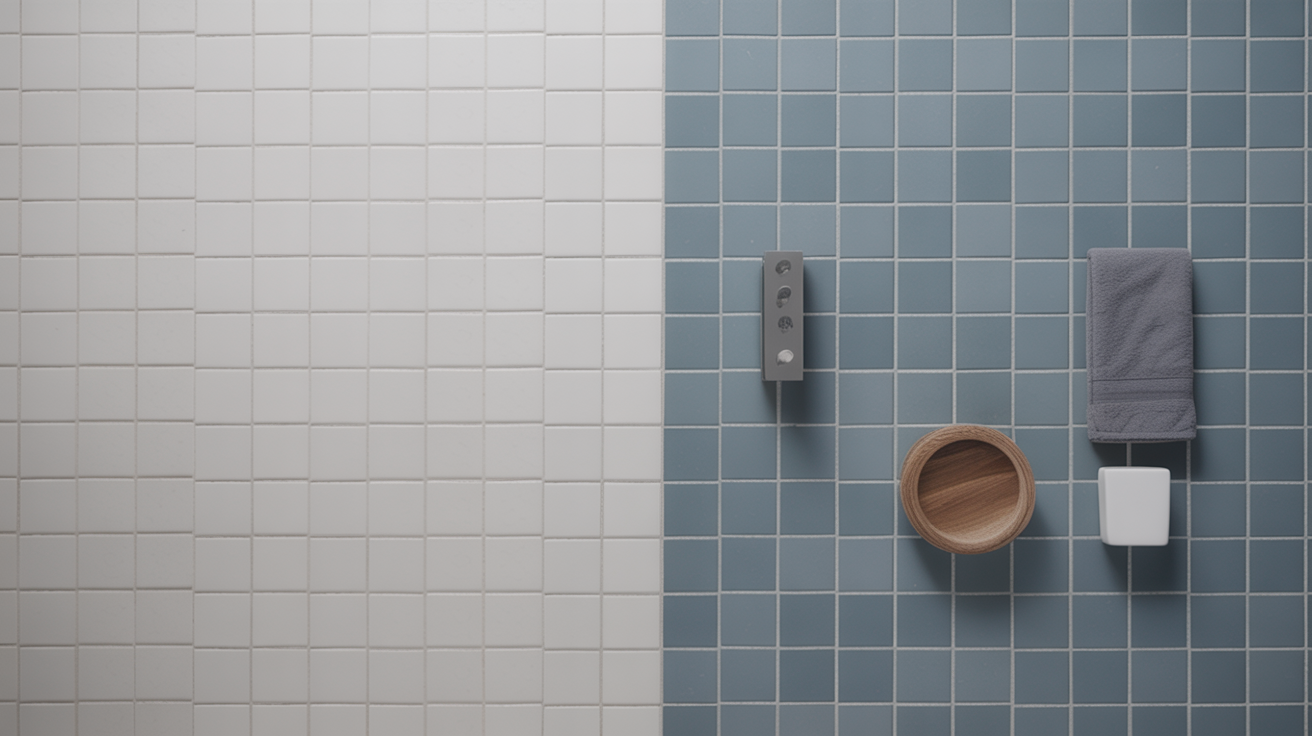
Every bathroom grout color decision starts here. The two approaches produce genuinely different results, and neither is universally better.
Matching Grout
When your grout closely matches the tile in both tone and value, the lines recede and the tile reads as a continuous surface. This works well if you're using a large-format tile (12 x 24 inches or bigger) where wide grout lines would create a grid that competes with the tile's texture or pattern. It also helps in small bathrooms, because the eye doesn't get interrupted by dozens of contrasting lines. If you're using a stone tile with natural veining, matching grout keeps the focus on the material itself rather than the grid imposed on top of it.
The limitation is that matching grout forgives nothing in terms of lippage (tile edges that sit slightly higher than their neighbors) or uneven joints. When lines disappear visually, any installation irregularity becomes the main thing you notice.
Contrasting Grout
Contrasting grout draws the joints into the design. Classic examples: white hex tile with black grout, terracotta Saltillo with a pale buff grout, or a blue-gray field tile with a warm cream joint. The geometry becomes part of the aesthetic, which can work very well in a small tile pattern (mosaic sheets, penny rounds, 2 x 2 squares) where the grout lines are numerous and tight.
The tradeoff is that contrasting joints show variation over time. Dark grout between pale tile will show any grout haze left behind during installation. Light grout between dark tile picks up discoloration faster in splash zones. You're committing to a high-visibility element, so consider how much ongoing attention you're willing to give it.
Grout Color Decision Table
| Grout Tone | Visual Effect | Day-to-Day Maintenance | Best Suited To |
|---|---|---|---|
| White / light | Clean, expansive, spa-like | High: shows soap scum, hard water spots, iron staining fastest | Low-splash walls; floors only with epoxy or well-sealed cement grout |
| Mid-tone (gray, greige, taupe) | Balanced, blends with most tile colors | Moderate: hides some soil, doesn't demand precise cleanup | Most floors and walls, the default safe choice |
| Dark (charcoal, espresso, black) | Bold contrast or near-seamless with dark tile | Low day-to-day, but high install-cleanup risk (haze) | Shower floors, high-splash zones, busy households |
| Matching tone-on-tone | Tile reads as one continuous surface | Depends on the base tone chosen | Large-format tile, small rooms, natural stone with veining |
| Contrasting | Grid becomes a visible design feature | Depends on the base tone chosen | Small-format mosaics, hex tile, graphic patterns |
Light vs. Dark Grout in the Bathroom: The Maintenance Reality
This is where many people make the choice based on a showroom sample and regret it within a year. The bathroom is a uniquely punishing environment for grout: daily moisture, soap residue, hard water minerals, and (in floor joints) foot traffic and cleaning product runoff.
Light Grout
Pale gray, off-white, and bright white grout all show soap scum and hard water deposits relatively quickly, especially within 18 inches of the showerhead or along the floor directly below the drain. On the other hand, light grout doesn't show mold or mildew as dramatically at first glance because the discoloration blends into the pale surface, though the underlying problem is the same. Light grout also tends to highlight any staining from iron-heavy well water, which can turn a white joint orange over several months.
If you want light grout in a wet zone, the best defense is an epoxy grout or a densely pigmented cement grout sealed within 72 hours of installation and resealed every 12 to 18 months. See how to clean grout and keep it white for a maintenance schedule that actually works.
Dark Grout
Charcoal, slate gray, espresso brown, and true black grout hide most everyday soil remarkably well. In a shower floor, where soap and skin oils collect in joints, a dark grout can look clean long after a light grout would need scrubbing. Dark grout also conceals the minor efflorescence (the white salt deposits that migrate to the surface as water evaporates from a porous, cement-based material) that affects cement-based grout in high-moisture areas. Efflorescence is cosmetic in most bathroom joints, but it's the same underlying process that shows up as a chalky bloom on basement concrete, so it's worth recognizing rather than mistaking for a cleaning failure.
The real downside is grout haze. Dark pigment is harder to remove from tile surfaces if haze isn't cleaned off within the curing window (typically 24 to 72 hours, depending on the product). Dark grout on textured or matte tile is particularly unforgiving during that cleanup phase.
Mid-Tone Grout
Gray tones in the middle range (think warm greige, soft taupe, or medium ash) sit in a genuinely useful middle ground. They don't show soap scum as aggressively as white and don't demand the cleanup precision of deep charcoal. For many bathrooms, a medium-gray grout works across both floor and walls with minimal visual conflict, and it pairs with almost any tile color without fighting for attention.
How to Test Grout Colors Before You Commit
Never choose a grout color from a small cardboard chip under fluorescent store lighting. The same grout will look different in the tile manufacturer's sample, on a cured mockup board, in your actual bathroom under your actual lighting, and after the grout sealer is applied (sealer can slightly deepen or flatten the tone).
Here's a reliable process:
- Request or buy the tile manufacturer's grout sample kit. Most major grout brands sell sets of 2 x 2 inch cured squares in their full color range for around $10 to $20. These give you a better sense of the final tone than chips.
- Hold the sample against your actual tile in your bathroom, not in the store. Take photos in both natural morning light and with your vanity lights on.
- If possible, ask your tile supplier for a small quantity of two or three candidate grouts to do a 12-inch test patch on a piece of cement board. Mix and trowel a small section, let it cure fully (72 hours minimum), and seal it. That cured, sealed color is what you're actually choosing.
- Factor in tile scale. A 1/16-inch joint and a 3/8-inch joint in the same grout color will read differently because the proportion of colored line to tile surface changes.
The color chart numbers between brands don't translate. A "pewter" from one manufacturer can look completely different from a "pewter" in another line, even if they're both roughly gray. Always confirm with a physical sample of the exact product. If you haven't settled on joint width yet, our grout calculator estimates how many bags you'll need once you know the joint size and tile dimensions, which is worth knowing before you order sample kits in bulk.
Which Grout Colors Hold Up Best in High-Splash Zones
Certain zones in a bathroom are harder on grout than others: the floor of the shower enclosure, the 24 inches of wall directly above the tub surround, the backsplash strip behind the sink, and any floor grout within 12 inches of the toilet base.
For these areas, color selection is a secondary concern after product selection. Grout comes in two broad families: cement-based, which is porous and needs periodic sealing, and epoxy, a thermoset polymer that cures into a non-porous joint. Epoxy grouts don't require sealing, making them the most resistant option in terms of staining and moisture penetration. They're also more demanding to mix and apply (shorter working time, requires more precise surface prep) and cost roughly 2 to 3 times more per pound than cement-based grout. For a small shower floor or a tight backsplash, the extra cost is often worthwhile.
If you prefer cement-based grout for its workability and wider color range, prioritize medium to dark mid-tones in the highest-splash zones even if you use a lighter shade elsewhere. You can match grout on the walls and shift one or two shades darker on the floor without it looking mismatched, because the two planes don't compete directly in the visual field.
For tile selection context, it helps to understand the underlying material. Porcelain vs ceramic tile behave differently during grout installation, particularly in terms of how much grout haze they hold on the surface and how easy that haze is to remove.
Frequently Asked Questions
Does grout color change after it cures?
Yes, moderately. Cement-based grouts typically dry 15 to 25 percent lighter than they appear when first mixed and applied. Most manufacturers account for this in their sample chips (which show cured tone), but if you're mixing up a small test batch yourself, let it cure fully and dry at room temperature for at least 72 hours before judging the color. Applying a sealer afterward can shift the tone slightly darker.
Can I change my grout color without re-grouting?
For a significant color shift, no. Grout colorants and dyes exist, but they work best for renewing existing grout that has faded or stained rather than changing from, say, white to charcoal. For a moderate refresh within the same color family, a high-quality grout colorant applied with a small brush can work well. Fully replacing the color requires mechanical removal of the existing grout and fresh installation.
What grout color works best with white subway tile?
It depends on the look you want. White or light gray grout makes the wall feel continuous and clean, which suits a spa-style or minimalist bathroom. A medium gray shows the tile grid more clearly without high contrast. True charcoal or black creates a strong graphic effect. The most common mistake is choosing bright white grout in a high-use shower, where the maintenance burden is real. A soft gray grout in the 30 to 50 percent range typically photographs like white but forgives daily use far better.
Does grout color affect how large or small the bathroom feels?
Slightly. High contrast between tile and grout (white tile, dark grout) emphasizes the grid and can make a small space feel more segmented. Matching or low-contrast combinations help a small room read as less divided. However, the effect of grout color on perceived room size is much smaller than tile size, tile color, or the amount of natural light. Don't let the room-size argument override a grout choice you'll regret for maintenance reasons.
Should floor grout and wall grout match exactly?
Not necessarily. Many bathrooms use a slightly different grout shade on the floor than on the walls, either because of different tile colors or to address the higher traffic on the floor. As long as the tones are harmonious rather than jarring, a near-match reads as intentional. Where it looks awkward is when the floor and wall grout are visibly different shades of the same neutral (two different grays that clash rather than coordinate). If you're using different products for the two planes, get physical samples of both and compare them in the installed context before committing.
How much grout color difference is too subtle to matter?
If two candidate colors look identical under store lighting but have different names, they're usually different enough to matter once installed. A shift as small as one shade on a manufacturer's chart can read clearly across an entire shower wall, because the eye compares the joint color across dozens of repeats rather than judging a single 2-inch chip in isolation. When two samples seem genuinely close, the cured test patch from step three above is the only reliable way to tell them apart.