Cleaning & Care
How to Clean Glass Shower Doors and Keep Them Spotless
Step-by-step methods to remove soap scum and hard water buildup from glass shower doors, plus a simple daily routine to keep them clear.
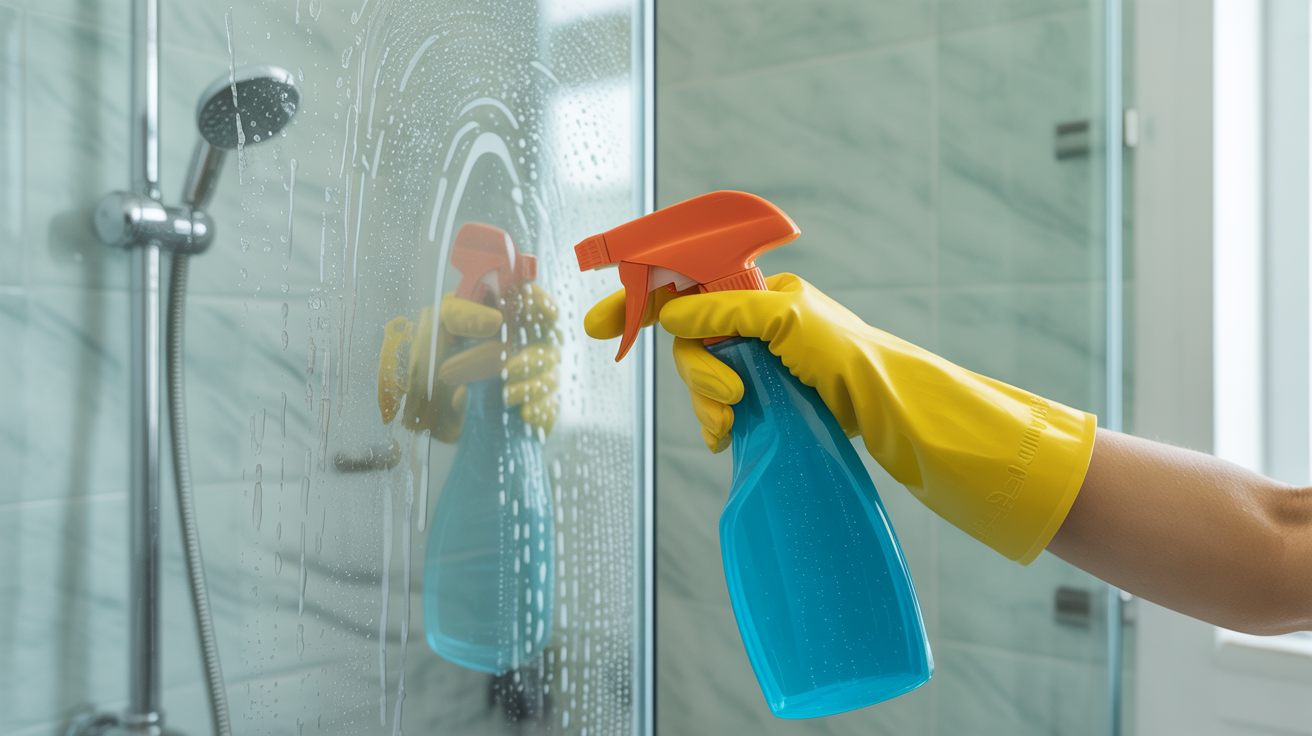
Soap scum and hard water deposits are the two main reasons glass shower doors go from clear to cloudy, and both come off with the right approach. The methods below work whether you're dealing with light weekly buildup or months of neglected scale.
At a Glance
- Soap scum (fatty, waxy) and hard water scale (mineral, chalky) are different problems that often layer on top of each other, most doors need both an acid step and a scrub step.
- White vinegar dissolves limescale; dish soap barely touches it. Match the cleaner to the buildup, not the other way around.
- Never mix bleach with vinegar or any acid-based cleaner, the reaction releases chlorine gas.
- A daily 20-second squeegee pass prevents more buildup than any weekly deep clean removes.
- Hard water is a regional reality, not a cleaning failure; homes on mineral-rich groundwater need a faster maintenance cycle regardless of technique.
- Aftermarket glass sealants reduce how hard mineral deposits bond, but they don't eliminate the need to clean.
What You're Actually Dealing With
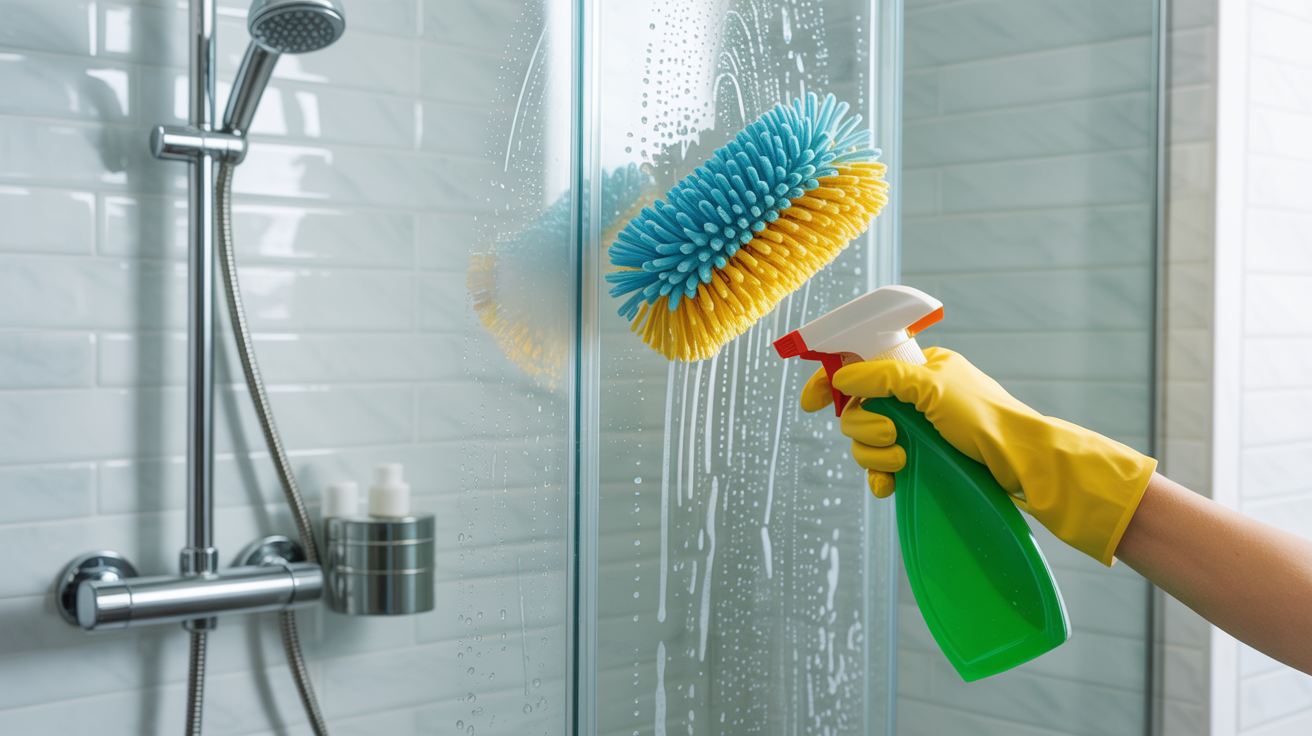
Soap scum is a white or gray film left behind when fatty acids in bar soap bond with calcium and magnesium ions in your water. It feels waxy and often has a slight sheen. Hard water deposits (sometimes called limescale or mineral buildup) look chalky or faintly orange-tinged, especially near the bottom track and around hardware. They're purely mineral, not fatty, so the cleaners that cut soap scum don't always dissolve limescale well, and vice versa.
Most shower glass has both types of buildup layered on top of each other. That's why a single product often underperforms: you may need two separate steps.
The mineral load in your water isn't something a cleaner changes, it's a property of your local supply. The EPA's secondary drinking water standards note that scale is a mineral deposit that builds up wherever hard water sits or flows repeatedly, on pipes, fixtures, and, in a shower, glass. If your area has notably hard water, expect to clean more often than the general schedules below suggest, no product fully offsets a high mineral load.
How to Remove Soap Scum from Shower Glass
Work in a well-ventilated bathroom. Open a window or run the fan before you start.
- Wet the glass. Run the shower for 30 seconds or spray the doors thoroughly with warm water. Heat softens soap scum slightly.
- Apply your cleaner. Spread a thin coat over the entire glass surface and let it sit for 3 to 5 minutes. Don't let it dry on the glass.
- Scrub with a non-scratch pad. Use a white or blue nylon scrubbing pad (not green, which can scratch). Work in small circular sections from top to bottom.
- Tackle the bottom track. Use an old toothbrush or a narrow grout brush to scrub the channel where water and debris collect.
- Rinse completely. Use the showerhead or a bucket of warm water. Any cleaner residue left behind just attracts more scum.
- Dry with a microfiber cloth. Wipe from top to bottom in vertical strokes. A chamois or squeegee blade also works well here.
For heavy buildup, you may need two applications. Let the cleaner sit longer on the second pass, up to 10 minutes, before scrubbing.
Getting into the Frame and Hardware
Door frames (if yours has them) trap soap residue in the corners where the glass meets the metal. A cotton swab works for tight spots. Rinse the hinges and pulls separately, as cleaner pooling in threaded hardware can corrode chrome finishes over time if not removed.
Removing Hard Water Deposits from Glass Shower Doors
Limescale needs an acid to dissolve it. Mild acids break the calcium carbonate bond and let the mineral lift off with light scrubbing.
- Mix a diluted white vinegar solution. Combine equal parts white vinegar and warm water in a spray bottle. For heavier scale, use straight vinegar.
- Spray generously and wait. Let it sit for 10 to 15 minutes. For thick deposits, soak a few sheets of paper towel in vinegar, press them against the glass, and let it dwell for 20 to 30 minutes.
- Scrub and rinse. Use the same nylon pad as above, then rinse fully with warm water.
- For stubborn spots, make a paste from baking soda and a small amount of dish soap. Apply it to the remaining spots, let it sit for 5 minutes, and scrub gently. The mild abrasive action helps lift scale without scratching.
If you have heavy orange or brown staining near the drain channel, that's usually iron in your water. A product specifically labeled for rust or iron removal (containing oxalic acid or a similar compound) is more effective than vinegar for those spots. Follow the product's instructions exactly.
If you want more context on hard water deposits throughout the bathroom, the guide on how to get rid of hard water stains in the bathroom covers sinks and fixtures with the same approach.
Comparing Shower Door Cleaners
Not every cleaner is the right tool for every job. Here's a practical breakdown.
| Cleaner | Best against | Speed | Cost | Cautions |
|---|---|---|---|---|
| White vinegar solution (DIY) | Limescale, light soap scum | Slow (10–20 min dwell) | Very low | Etches natural stone thresholds and unsealed grout |
| Dish soap and warm water | Fresh, light soap scum | Fast for what it treats | Very low | Won't touch established hard water scale |
| Commercial bathroom spray (surfactant-based) | Routine soap scum | Fast | Moderate | Check label before using on stone or specialty coatings |
| Commercial lime and scale remover (acid-based) | Heavy mineral deposits | Fast | Moderate | Needs gloves, ventilation; avoid on plated finishes unless labeled safe |
| Baking soda paste | Spot-treating loosened deposits | Slow, mildly abrasive | Very low | Not a standalone treatment for heavy buildup |
What to avoid: Never mix bleach with any acid-based cleaner, including vinegar. According to Washington State's Department of Health, combining chlorine bleach with an acid releases chlorine gas outright, and the same source notes bleach mixed with ammonia (found in some glass cleaners) produces toxic chloramine gas instead. Both reactions happen immediately, not after a delay, so there's no safe window for layering products. Don't mix commercial products unless the labels specifically say they're compatible. If your shower has a stone curb or threshold, keep acidic cleaners well clear of it or neutralize any splashes immediately with clean water.
For mold or mildew you're also seeing on the grout lines, the guide on how to remove bathroom mold and mildew safely covers those without putting the surrounding tile at risk.
Sealing Glass: Does It Help?
Frameless glass shower doors often come with a factory-applied hydrophobic coating. Over time that coating wears off, and water starts sheeting unevenly instead of running straight down, which accelerates mineral spotting.
Aftermarket glass sealants (sold as water repellents or hydrophobic coatings for shower glass) can restore some of that behavior. You apply them to clean, dry glass, let them cure, and then water beads up and rolls off instead of spreading and drying in place.
A sealed surface doesn't mean you skip cleaning. It means mineral deposits have less opportunity to bond deeply to the glass, so when you do clean, there's less scrubbing involved. Reapply sealants per the product's schedule, typically every 6 to 12 months, or when you notice water no longer beads.
Common Mistakes That Make Buildup Worse
A few habits show up again and again in shower glass that never seems to stay clean, regardless of which cleaner gets used.
- Using an all-purpose cleaner as the only tool. General bathroom sprays are formulated as a middle ground; they're fine for light weekly upkeep but underpowered against either heavy soap scum or established limescale. If you're reaching for the same all-purpose bottle every time and the glass still looks dull, the product isn't matched to the buildup.
- Skipping the rinse step. Cleaner left on the glass to air-dry doesn't disappear, it dries into a film that's often harder to see than the original grime but attracts new soap scum faster. A full rinse with clean water is not optional, even for "no-rinse" labeled sprays used occasionally alongside a deeper clean.
- Scrubbing dry glass. Any abrasive pad, even a soft nylon one, is more likely to leave fine scratches on glass that hasn't been wetted first. Always wet or apply cleaner before the first scrub pass.
- Letting bar soap sit on a shower shelf. A bar of soap dissolving slowly on an open shelf sheds fatty residue into the air and onto nearby glass every time it's used. A soap dish that drains, or switching to a liquid wash, cuts down on ambient scum buildup even between cleanings.
- Ignoring the door sweep or bottom seal. Water pooling against a worn door sweep re-wets the same strip of glass and track for hours after a shower ends, which is exactly the standing-water condition that speeds up both mineral deposits and mold. A cracked or flattened sweep is a cheap, five-minute swap that reduces cleaning frequency more than any product change.
A Daily Routine That Actually Works
The most effective way to keep glass shower doors spotless is to not let buildup accumulate in the first place. The routine takes under two minutes.
After every shower:
- Run a squeegee down the glass from top to bottom. Overlap each stroke slightly. This removes the majority of water before minerals can deposit.
- If you don't want to squeegee every day, a quick spray of a daily shower spray (rinse-free formulas are available) helps prevent soap film from hardening between cleanings.
Weekly:
- Spray the glass with your preferred cleaner and wipe down with a microfiber cloth. At this frequency, you shouldn't need to scrub, just wipe and rinse.
Monthly:
- Do a full cleaning including the track, hinges, and any grout lines around the door frame. This is a good time to check grout lines for early discoloration. The guide on how to clean grout and keep it white is useful here if you're noticing any yellowing.
Switching to a liquid body wash instead of bar soap also makes a noticeable difference in how fast scum accumulates, since liquid formulas don't contain the fatty acids that create that waxy film.
Frequently Asked Questions
Why does my shower glass look foggy even right after I clean it?
If the glass looks hazy when dry but clearer when wet, the issue is usually etching from long-term mineral exposure rather than surface buildup. Etching happens when hard water deposits have sat on the glass long enough to slightly pit the surface. Light etching can sometimes be improved with a glass polishing compound, but deep etching is permanent. This is why consistent maintenance matters more than occasional deep cleaning.
Can I use a razor blade to remove soap scum from shower glass?
A single-edge razor held at a shallow angle (about 30 degrees) can remove stubborn deposits without scratching tempered shower glass, but it's a last resort. Use it wet, with the glass well lubricated with cleaner or soapy water, and never drag it dry. Don't use razor blades on coated glass or glass with any decorative treatment.
How do I clean the bottom track without flooding the bathroom?
Spray the track with cleaner and let it sit for a few minutes. Use a toothbrush or small grout brush to scrub, then use a damp cloth or paper towel to absorb the liquid rather than rinsing with water. A turkey baster works surprisingly well for flushing the track with a small, targeted stream of water that you can immediately blot up.
Is it safe to use a steam cleaner on glass shower doors?
Yes, in most cases. Steam is effective at loosening soap scum and doesn't require any chemicals. Keep the nozzle moving rather than holding it in one spot, especially around silicone seals, which can degrade with prolonged direct heat. Let the glass cool before wiping dry.
My water is very hard. How often should I be cleaning the shower doors?
In a high-mineral-content area, squeegeeing after every shower is non-negotiable if you want to avoid weekly deep cleaning. Even then, a dedicated limescale treatment every two weeks is realistic. A whole-house water softener or a showerhead filter reduces mineral load significantly if frequent cleaning is unsustainable.
Can I test how hard my water actually is before deciding on a maintenance schedule?
Yes, and it's worth doing before you assume your cleaning routine is the problem. Most hardware stores sell inexpensive test strips that give a rough parts-per-million reading in under a minute, and many water utilities publish an annual water quality report with hardness figures for your specific supply area. Anything above roughly 180 mg/L is generally considered hard water, and at that level, no cleaning schedule fully outpaces mineral deposit formation without also addressing the water itself.