Fixtures & Vanities
Showerhead Types and How to Choose the Right One
A practical guide to showerhead types (rain, handheld, wall-mount, and more) with tips on flow rate, pressure, and choosing what fits your bathroom.
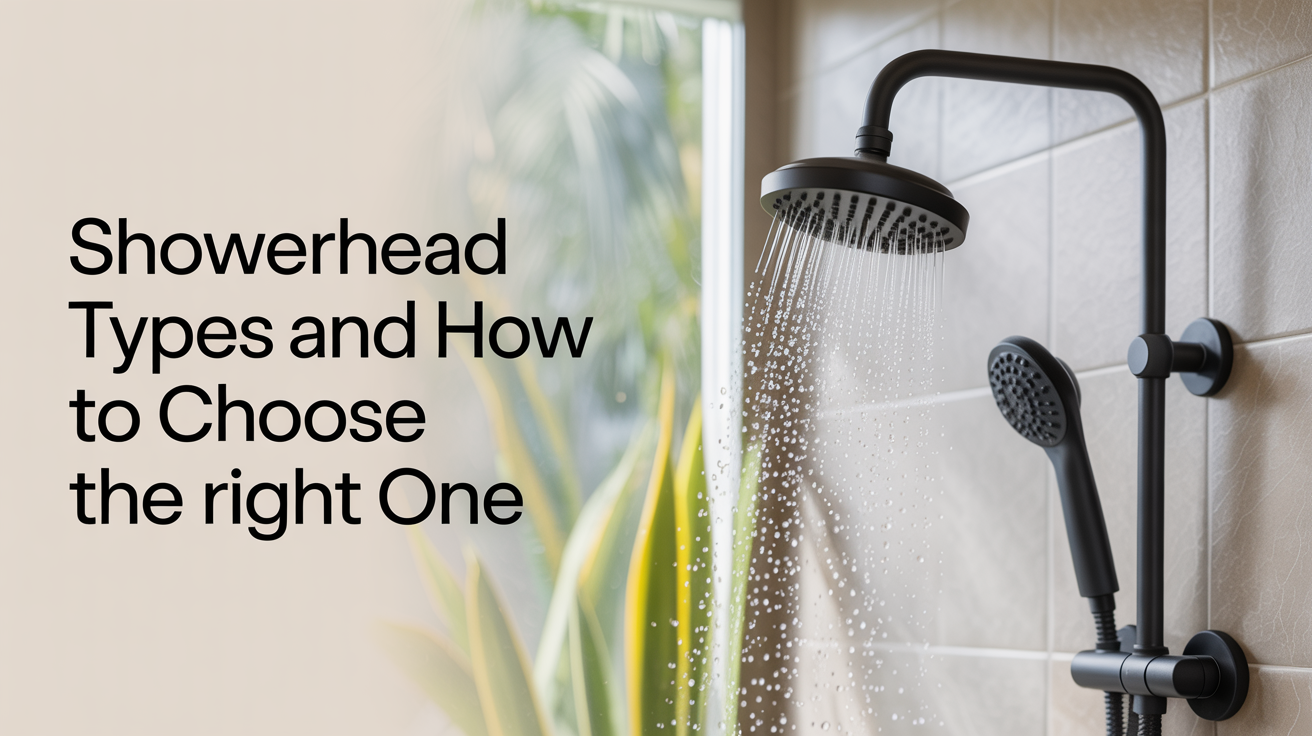
The showerhead shapes how you start every morning, yet most people swap it out without much thought. Pick the wrong one and you're stuck with a trickle when you wanted a downpour, or a wall-mount head that's too low for anyone over 5'8". This guide covers the main showerhead types, the specs worth reading before you buy, and a framework for matching a fixture to your actual plumbing and your household's habits.
At a Glance
- A standard wall-mount head ($15-$200+, 15-minute install) is the right default unless a specific limitation (height, mobility, low pressure) pushes you toward another type.
- Rain heads look and feel best at 2.0+ GPM; a shower stall under 36 inches wide doesn't give you room to stand under a ceiling-mount head comfortably.
- The federal flow-rate cap is 2.5 GPM; showerheads carrying the EPA WaterSense label are tested to use no more than 2.0 GPM without sacrificing spray force.
- Handheld showerheads on a slide bar are the most practical choice for households with mixed heights, kids, pets, or anyone who showers seated.
- Check your water pressure with a $10 gauge at a hose bib before buying a dual-head or body-spray system; below 45 PSI, both heads will underperform.
- Almost every US residential showerhead uses a half-inch NPT threaded connection; anything labeled "European" or "thermostatic" may need an adapter.
The Main Showerhead Types
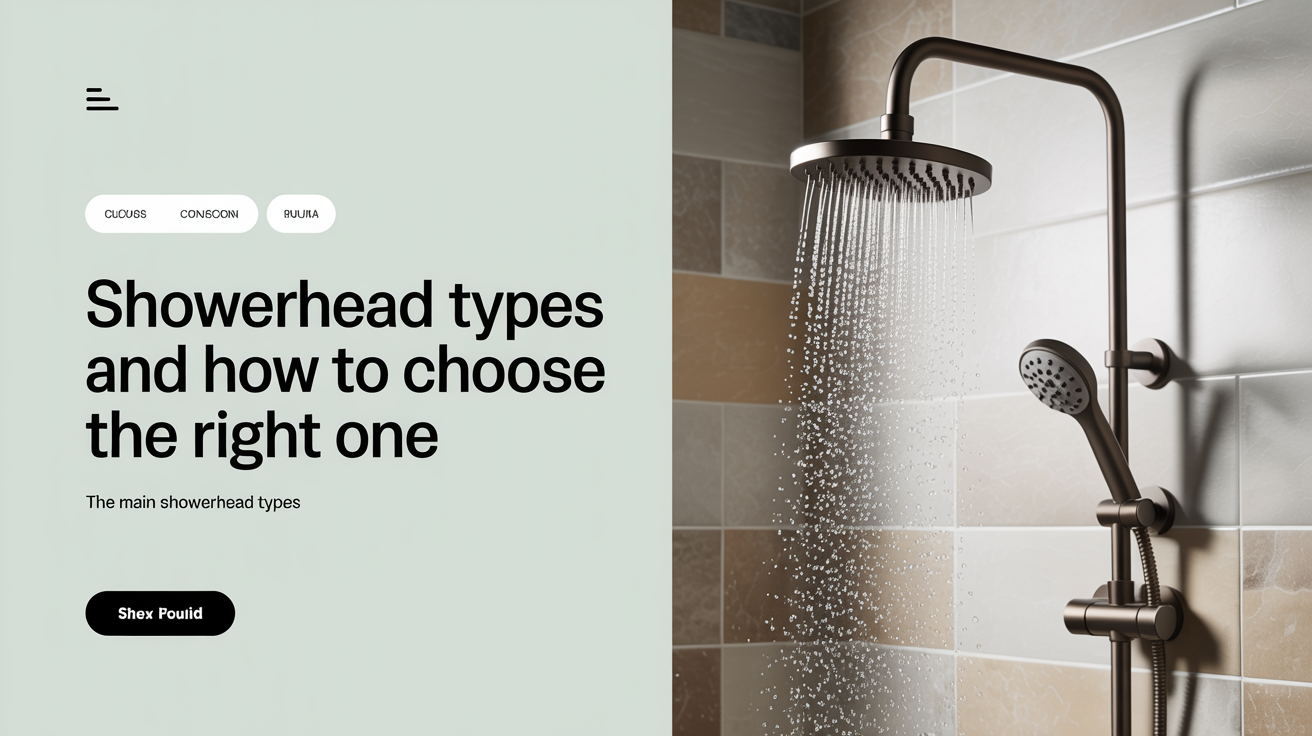
Understanding the categories first makes the spec sheet easier to read. Each type solves a different problem.
Standard Wall-Mount Showerheads
This is the most common type: a single head on a fixed arm that threads into a half-inch IPS fitting on the wall. They come in almost every price range ($15 to $200+), take less than 15 minutes to install, and work with any standard shower arm.
Most have a ball joint for modest angle adjustment, usually 15 to 25 degrees. A taller S-arm extension (available in 6-, 8-, and 11-inch lengths) can bridge the height gap between a 5'4" and a 6'1" person. The main limitation: they spray from a fixed position, so rinsing a cast or keeping your hair dry is awkward.
Rain Showerheads
Rain heads (sometimes called rainfall or ceiling mount showerheads) have a large face, typically 8 to 14 inches in diameter, designed to let water fall nearly straight down. The effect mimics standing in light rain rather than getting hit by a directed stream.
They mount either to the ceiling with a dedicated rough-in fitting or to the wall via an extended S-arm or offset arm. Ceiling mounting delivers the most realistic rainfall feel because the angle is truly vertical, but it requires rough-in plumbing inside the ceiling and a larger shower footprint. A shower stall under 36 inches wide won't give you room to stand under the head comfortably.
Wall-arm rain heads are a compromise: you get the wide coverage without cutting into the ceiling, but the angle is 30 to 45 degrees from vertical, which feels slightly less immersive.
Flow rate matters more here than with standard heads. A 14-inch rain face at 1.5 GPM (gallons per minute) produces a noticeably light spray. Most people prefer at least 2.0 GPM for a satisfying rain effect, though local water codes may cap residential fixtures at 1.8 GPM or lower. The EPA's WaterSense program specifically revised its testing protocol to account for this, referencing the ASME A112.18.1/CSA B125.1 spray-force standard so that water-efficient rain heads can still earn the label without feeling weak.
Handheld Showerheads
A handheld connects to a flexible hose (typically 60 to 72 inches long) attached to the wall via a slide bar or a fixed bracket. You can use it docked like a standard head or detach it to direct the spray exactly where you need it.
They're practical for bathing young children, rinsing pets, cleaning the shower itself, and for people with limited mobility who shower seated. A slide bar version lets you position the docked head anywhere from about 30 inches to 70 inches off the floor, which makes a single bathroom usable for people of very different heights. For reference, accessible-design guidelines from the U.S. Access Board call for a hand-held hose at least 59 inches long and controls placed no higher than 48 inches above the shower floor, reachable within 27 inches of a fold-down seat. Those aren't residential code requirements, but they're a solid baseline if anyone in the household showers seated now or might need to later.
Hose quality varies a lot. A lightweight plastic-coated hose kinks easily and doesn't last. Stainless steel braided hoses (look for 304-grade) hold up considerably longer and resist the constant bending that daily use puts them through.
Dual and Combo Systems
A dual showerhead setup pairs a fixed wall-mount (or rain head) with a handheld on the same arm using a diverter valve. You can run one at a time or both together, depending on the diverter design.
The catch: running both simultaneously cuts flow to each. If your home's water pressure is already marginal (below 45 PSI at the shower valve), a dual setup can leave both heads performing poorly. Check your household pressure with an inexpensive gauge at a hose bib before committing to a combo system.
Body Spray Panels and Shower Columns
These panels add multiple spray jets at different heights, sometimes combined with a rain head at the top and a handheld at the side. The multiple jets demand high flow volume, often requiring a dedicated valve or pressure-balancing manifold. They're not a DIY retrofit; plan them into a full remodel where the supply lines can be roughed in properly.
Key Specs to Read Before You Buy
GPM (Flow Rate)
The federal maximum for showerheads is 2.5 GPM at 80 PSI. Many states have stricter limits: California, Colorado, and New York cap residential showerheads at 1.8 GPM, with some localities setting 1.5 GPM or lower. Check what your municipality requires.
Lower GPM doesn't automatically mean a worse shower. A well-designed 1.8 GPM head can feel stronger than a poorly designed 2.5 GPM head. Pressure-compensating models maintain consistent flow across a range of inlet pressures, which helps when your water pressure fluctuates. Pressure compensation is one of the specific criteria WaterSense tests for, alongside spray force and coverage, so a WaterSense-labeled head is a reasonably reliable shortcut if you don't want to compare lab data yourself.
Spray Settings and Patterns
Most mid-range wall-mount heads offer two to five spray modes: full coverage, massage/pulse, mist, and combinations. Mist settings use very little water but feel cool and aren't well-suited to rinsing shampoo.
If you primarily want one strong steady stream, a single-mode head is often better engineered for that than a multi-mode head at the same price.
Connection Type
The vast majority of residential showerheads use a half-inch NPT (National Pipe Taper) threaded connection, which is a universal standard in the US and Canada. Check before buying anything labeled "European" or "thermostatic combo" since those sometimes use different thread standards or require an adapter.
Comparing Showerhead Types by the Numbers
| Type | Typical price range | GPM range | Install time | Best for |
|---|---|---|---|---|
| Standard wall-mount | $15-$200+ | 1.5-2.5 | Under 15 min | Most households, renters, simple swaps |
| Rain (ceiling-mount) | $60-$400+ | 1.8-2.5 | 1-3 hrs (needs rough-in) | Larger showers (36 in.+ wide), full remodels |
| Rain (wall-arm) | $40-$250 | 1.8-2.5 | Under 20 min | Rain-style spray without ceiling work |
| Handheld on slide bar | $30-$300 | 1.5-2.5 | 20-40 min | Mixed heights, kids, pets, seated bathers |
| Dual/combo | $80-$400 | Split across heads | 30-60 min | 60 in.+ stalls, two people, strong pressure |
| Body spray panel | $500-$2,500+ | 4+ combined | Remodel-only | Full renovations with upgraded supply lines |
How to Choose the Right Showerhead for Your Situation
Match It to Your Water Pressure
Low pressure (under 40 PSI): Look for a showerhead rated for low-pressure use. Avoid rain heads and skip dual-head setups entirely. A single-mode wall-mount head with a narrow spray pattern will concentrate what pressure you have.
Normal pressure (45 to 80 PSI): Most heads perform well without modifications.
High pressure (above 80 PSI): A pressure-reducing head helps protect the valve over time. Most newer showerheads include a flow restrictor, and removing it is not recommended even when online guides suggest otherwise, since it can push flow past what your local code allows and stress fittings that weren't sized for it.
Think About Who Uses the Shower
A household of adults with similar heights can usually get by with a standard fixed head. Add a child, an elderly parent, or someone who showers seated, and a handheld on a slide bar becomes the more practical choice. The slide bar keeps the fixture looking clean while serving a wide range of users.
Two people sharing a 60-inch or wider stall at the same time? A dual-head system on opposite walls makes sense. Anything narrower and two people are largely sharing one stream anyway.
Consider Your Bathroom's Plumbing Setup
Most single-head fixtures work with a standard half-inch supply connection. Body spray systems and some larger rain heads expect three-quarter-inch or larger supply lines at the valve, so retrofitting them without opening walls usually isn't practical.
Ceiling-mount rain heads require a rough-in fitting inside the ceiling that many showers don't have. A wall-arm rain head delivers a similar look without the rough-in requirement.
Replacing a faucet and showerhead at the same time? The types of bathroom faucet connections follow similar logic and are worth reviewing together so the valve and head match.
Installation Notes
Standard wall-mount and handheld showerheads require adjustable pliers, plumber's tape (PTFE tape), and about 10 minutes. Wrap two to three layers of tape clockwise around the arm's threads, hand-thread the head, and snug it with pliers. Avoid over-tightening porcelain or plastic fittings, since a hairline crack in the fitting often doesn't show up until months later as a slow leak inside the wall.
Rain heads on extended arms have more torque at the connection point because of the added weight. Use a second wrench to hold the arm steady while tightening the head; otherwise the arm can rotate and stress the pipe inside the wall.
If your existing shower arm is corroded or the threads are damaged, replacing just the arm ($10 to $25) before installing a new head prevents leaks. Shut off the shower valve, unscrew the old arm, wrap new tape, and thread in the replacement.
Frequently Asked Questions
How much water pressure do I need for a rain showerhead?
Rain heads work best with at least 45 PSI at the valve. Below that, the wide face spreads the water so thin that the spray feels weak. If your home's pressure is under 40 PSI at the showerhead, a standard wall-mount head with concentrated nozzles will perform better.
Can I install a rain showerhead without replumbing my ceiling?
Yes, using a wall-arm rain head. An extended curved arm (sometimes called a goose-neck arm) mounts into the existing wall fitting and positions a large rain head over the center of the shower floor. The spray angle isn't perfectly vertical, but the experience is close, and installation is the same as swapping any standard head.
Are low-flow showerheads noticeably worse?
Not always. Modern 1.8 GPM and even 1.5 GPM heads can feel powerful if the nozzle geometry concentrates the spray efficiently. The difference is most noticeable with rain heads, where a larger face spreads limited flow into a lighter spray. For standard wall-mount heads, the difference between 1.8 and 2.5 GPM is often imperceptible in everyday use, and WaterSense-labeled models at 2.0 GPM are independently tested for spray force so they don't just feel like a slower version of a standard head.
How do I remove a flow restrictor, and should I?
The flow restrictor is usually a small plastic disc or rubber washer inside the inlet fitting. It can be removed with a flathead screwdriver. However, exceeding the maximum flow rate your local code allows is not legal, and it can void a warranty. If your shower feels weak, the more reliable fix is checking for a clogged aerator, low household pressure, or a partially closed valve upstream.
What's the easiest showerhead upgrade if I'm renting?
A handheld showerhead on a simple bracket is the most rental-friendly option. It installs using the existing wall fitting and comes off in minutes when you move. Keep the original head to reinstall before you go.
Do handheld showerheads work for someone who showers seated?
Yes, and they're generally the better choice. Mount the slide bar so the docked head sits within roughly 48 inches of the shower floor and close enough to a shower seat or bench to reach without stretching. A hose of at least 59 inches gives enough slack to bring the spray to a seated position comfortably rather than requiring someone to shift the seat to reach a fixed head.
Choosing a showerhead is less complicated than fixture marketing makes it seem. Know your water pressure, know who's using the shower, and pick the type that fits those two facts. The right head doesn't have to be expensive. It just has to match your actual setup.