Fixtures & Vanities
How to Choose a Bathroom Faucet (Types Explained)
Learn the five main bathroom faucet types, what hole configurations they need, which finishes hold up best, and how to match a faucet to your sink.
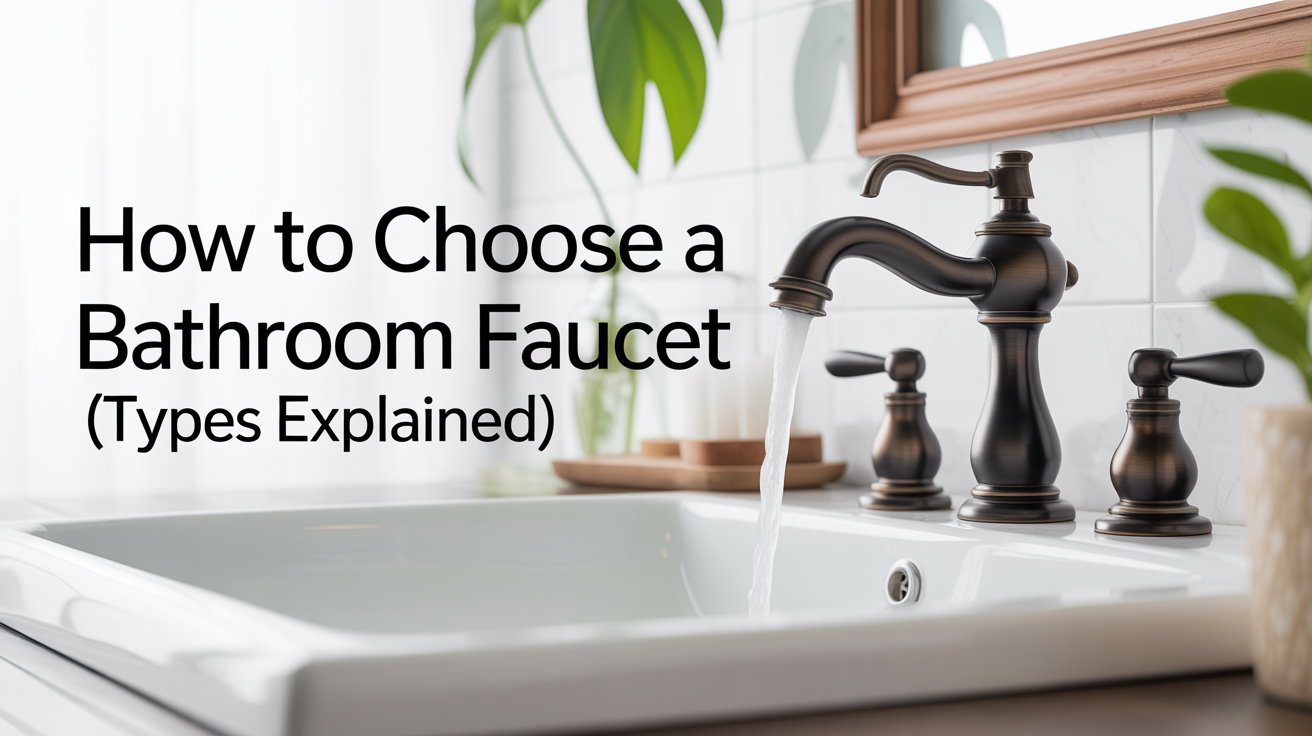
The most important thing to know before shopping for a bathroom faucet is how many holes your sink has, because that determines which faucet types will even fit. Once you've confirmed that, narrowing down by finish, valve quality, and style takes about ten minutes.
The Five Bathroom Faucet Types
Not all faucets work with all sinks. Each mounting style requires a specific number of holes drilled into the sink deck or countertop, and the spacing between those holes varies. Buying the wrong type means returning it or drilling new holes, neither is fun.
| Faucet Type | Holes Required | Typical Hole Spacing | Best For |
|---|---|---|---|
| Centerset | 1 or 3 | Centers cover 4" spread | Smaller vanities, compact sinks |
| Widespread | 3 | 6"–16" between outer holes | Large vanity decks, custom spacing |
| Single-hole | 1 | N/A (single hole) | Vessel sinks, minimalist styles |
| Wall-mount | 2 (in wall) | 4"–8" center-to-center | Vessel sinks, freestanding basins |
| Vessel filler | 1 (tall) | N/A (single hole) | Vessel sinks needing extra reach |
Centerset Faucets
Centerset faucets come as a single unit where the handles and spout are joined on a base plate. They cover a standard 4-inch spread and need either one hole (for the combined deck plate) or three holes drilled at 4-inch centers. These are the most common option for builder-grade sinks and work well for vanities under 36 inches wide. The deck plate hides all the hardware, which simplifies installation.
Widespread Faucets
Widespread faucets separate the spout and each handle into three independent pieces, each going into its own hole. The outer holes can be anywhere from 6 to 16 inches apart, giving you real flexibility on a large vanity deck. That range is why widespread faucets are often the right call when you're also choosing a new bathroom vanity that fits your space, you can match the faucet spread to the deck width rather than forcing a centerset onto a wide sink.
Installation is slightly more involved because you're running supply tubes to three separate points, but the look is cleaner and more custom.
Single-Hole Faucets
A single-hole faucet handles both hot and cold through one body. Most use a joystick or lever that tilts and rotates to mix temperature, or a separate button on the spout base. They pair naturally with vessel sinks and sinks pre-drilled with one hole.
If your sink has three holes and you want a single-hole faucet, most manufacturers sell a cover plate (also called an escutcheon) that sits over the unused holes. It works, but check that the plate fits your sink's actual hole spacing before ordering.
Wall-Mount Faucets
Wall-mount faucets thread through the wall above the sink rather than through the sink deck. They look striking paired with a vessel basin or a freestanding console, and they make cleaning the vanity surface easier since there are no deck penetrations to work around.
The tradeoff is installation complexity. You need to rough-in the supply lines in the wall at the right height before tiling or closing up drywall. Getting that height wrong, too low and the spout hits the basin, too high and the stream splashes, is a costly mistake. For wall-mount installs, consult a licensed plumber during the rough-in phase; it's not a job to eyeball. If you're planning a full wet-area renovation, the walk-in shower ideas and features guide covers how to coordinate plumbing rough-ins across a bathroom remodel.
Widespread vs. Centerset: Which Should You Choose?
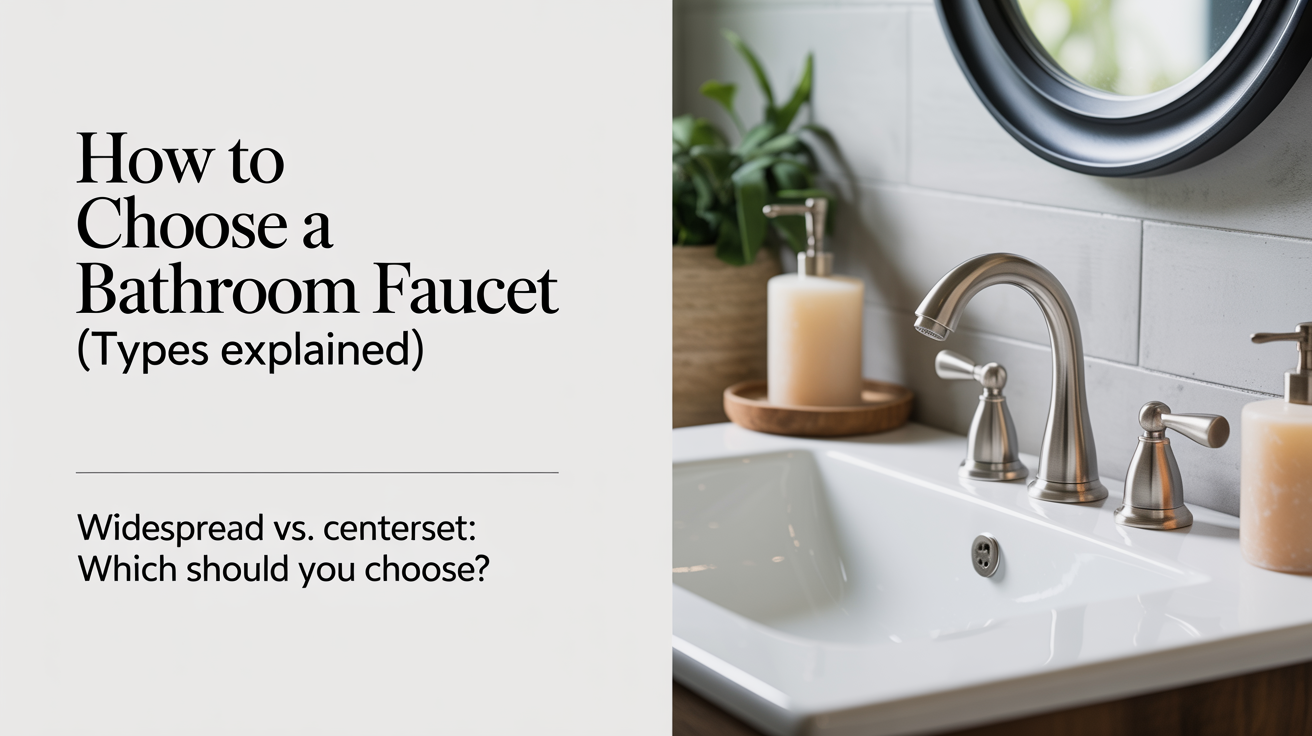
This is the most common question because the two types look similar in product photos but behave very differently in practice.
Choose centerset if:
- Your existing sink has three holes at 4-inch centers (or one centered hole)
- The vanity is 24–36 inches wide
- You want a straightforward installation with fewer connections
- Budget is a priority, centersets are generally less expensive
Choose widespread if:
- Your sink deck has three holes spaced 6 inches or more apart
- You're buying a new sink and want more design flexibility
- You're pairing it with a double vanity where each basin gets its own faucet
- You want handles that look more architectural or custom
If you're replacing an existing faucet and keeping the sink, measure your current hole spacing first. Sink manufacturers stamp the drilling pattern on the underside of most porcelain sinks, or you can measure from center to center of the outer holes while the old faucet is still in place.
Valve and Cartridge Quality
The valve is the mechanical heart of the faucet, and it's the part that determines whether you're replacing washers every couple of years or not thinking about the faucet for a decade.
Ceramic disc valves are the most durable option. A pair of ceramic discs control flow and temperature through precise rotation, there are no rubber seats to wear out. Quality ceramic disc cartridges routinely last 20+ years with minimal maintenance. Look for faucets that list ceramic disc valves in the spec sheet, not just brands that imply quality through price.
Ball valves use a rotating ball with ports that align to control flow. They were the standard for single-handle faucets for a long time and work fine, but the O-rings and springs that seat the ball do wear. Drips and leaks at the base are the typical failure mode.
Cartridge valves (usually polymer or ceramic-coated) sit between the two. Many mid-range faucets use proprietary cartridges that are easy to replace but specific to that brand. If you choose a brand with good parts availability, this is perfectly acceptable.
For a bathroom used daily by multiple people, a ceramic disc valve is worth paying for. The upfront cost difference rarely exceeds $50–$100 on a mid-range fixture, but the labor cost to replace a dripping faucet later dwarfs that gap.
Bathroom Faucet Finishes
Finish affects both how a faucet looks and how much maintenance it needs. Bathroom faucets take daily exposure to water, soap, and toothpaste. Some finishes handle that gracefully; others spot and tarnish quickly.
Brushed nickel is the most forgiving finish in daily use. The matte texture hides water spots and fingerprints, and most brushed nickel faucets use a PVD (physical vapor deposition) coating that resists corrosion better than electroplated finishes. It reads as neutral and pairs with most tile and vanity colors.
Matte black has become a dominant choice for contemporary bathrooms. It holds up well in low-humidity bathrooms, but in a steamy space with soft water, mineral deposits can show as white spots. Wipe dry regularly if this is a concern.
Polished chrome is durable and the easiest to clean, but it shows water spots immediately. It suits traditional or transitional bathrooms and is usually the least expensive finish option for a given faucet line.
Brushed gold / champagne bronze adds warmth and works well in earthy, organic interiors. Quality matters here, thin electroplated gold finishes wear through in a few years. Look for PVD-coated options, which are more durable.
Oil-rubbed bronze develops a living finish that changes slightly over time. Casual, slightly rustic look. Not ideal for households that want consistent appearance.
When coordinating finishes, consider every piece of metal in the room: towel bars, toilet paper holder, mirror frame, and light fixture. You don't need to match everything exactly, but keeping to the same undertone (warm vs. cool) ties a bathroom together. If your vanity hardware is already set, check the undertone before finalizing a faucet finish.
Matching the Faucet to Your Sink's Hole Count
Before you buy anything, confirm three things under the sink:
- How many holes are drilled. Count them. Some sinks come pre-drilled for one, three, or all configurations. Some have knockout plugs you can remove.
- The spread between holes. Measure from the center of the left hole to the center of the right hole in inches.
- The deck thickness. Most faucet shanks accommodate up to 1.5 inches, but some thick stone vanity tops need extended shanks or mounting kits.
If your sink has extra holes you won't use, you have two options: a deck plate from the faucet manufacturer (works if the holes align) or a separate sink hole cover. These are inexpensive and come in every common finish.
Frequently Asked Questions
What's the difference between a centerset and a mini-widespread faucet?
They look almost identical and both fit a 4-inch hole spread, but a mini-widespread has three separate pieces (two handles, one spout) rather than a single deck-plate unit. Mini-widespread handles have a slightly more open, distinct look on the vanity deck. Installation is similar to a centerset in terms of hole requirements.
Can I install a widespread faucet on a sink drilled for centerset?
Not without modification. A widespread faucet's outer holes need to be at least 6 inches apart, while centerset holes sit at 4 inches. You'd need to drill two new holes in the sink deck, doable on a stone or solid-surface countertop by a stone fabricator, but not practical on a ceramic or vitreous china sink.
Do I need a plumber to install a bathroom faucet?
For a like-for-like swap on a deck-mount faucet with accessible supply shutoffs, most handy homeowners can handle it in an hour or two with basic tools. Wall-mount faucets are the exception, the in-wall rough-in requires opening up the wall and is best left to a licensed plumber, especially if you're tiling over it.
How do I know if a faucet finish will hold up in a steamy bathroom?
Look for PVD (physical vapor deposition) coating rather than standard electroplating. PVD finishes bond at a molecular level and resist humidity, cleaning products, and UV far better than conventional plating. Many manufacturer spec sheets list the coating type; if it isn't specified, it's probably standard electroplate.
What flow rate should I look for in a bathroom faucet?
Federal law caps bathroom faucets at 2.2 GPM, but WaterSense-certified faucets use a maximum of 1.5 GPM with no noticeable performance difference for handwashing or tooth-brushing. WaterSense certification is worth looking for, it cuts water use by roughly 30% without sacrificing usability, and some municipalities offer rebates for certified fixtures.