Fixtures & Vanities
How to Pick the Right Toilet for Your Bathroom
Learn how to choose a toilet that fits your rough-in, budget, and style. Covers one-piece vs. two-piece, seat height, flush performance, and more.
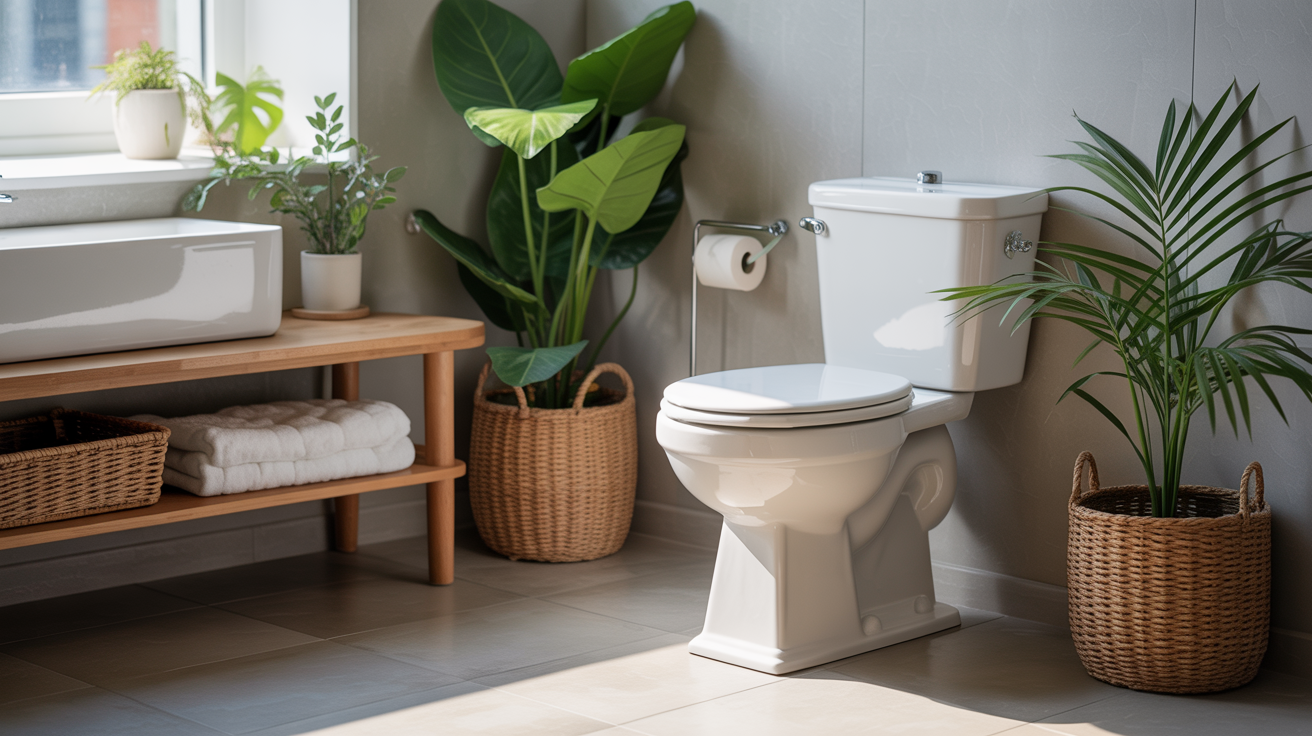
Buying a toilet sounds straightforward until you're standing in a showroom staring at 40 models in three price tiers with no clear sense of how they differ. Most of the variation comes down to four measurable factors. Get those right and the rest is personal preference.
At a Glance
- Measure your rough-in first. Most homes are 12 inches; some older homes are 10 or 14 inches, and toilets aren't interchangeable across sizes without replumbing.
- One-piece toilets clean up faster and look sleeker; two-piece toilets cost less, weigh less, and let you swap a cracked tank without replacing the bowl.
- Comfort height (16 to 18 inches to the seat rim) suits taller adults and anyone with knee or hip stiffness; standard height (14 to 15 inches) suits kids and shorter adults.
- WaterSense-certified toilets use 1.28 gallons per flush or less and still have to clear the bowl reliably, so efficient no longer means weak.
- Check the MaP score before you buy. Aim for 800 or higher; that single number predicts real-world flush performance better than price does.
- Budget $150 to $300 for a solid two-piece toilet, $200 to $400 for one-piece, and $800 to $1,200 installed for a wall-hung system.
Measure Your Rough-In Before You Shop
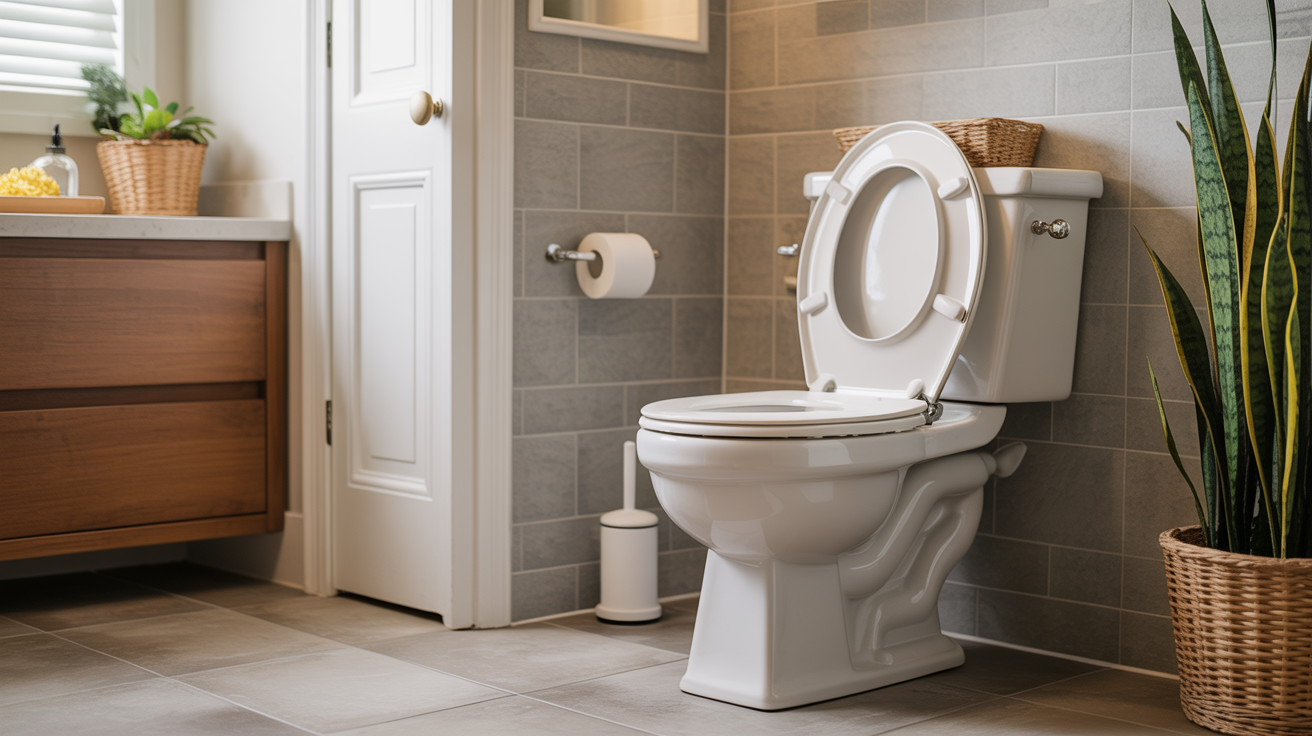
The rough-in is the distance from the finished wall behind the toilet (not the baseboard) to the center of the floor drain. It determines which toilets will physically fit your space. No amount of style or price will compensate for buying the wrong size.
How to Measure
Hold a tape measure flat on the floor. Start from the wall directly behind where the tank will sit and measure to the center of the drain hole. If you're replacing an existing toilet, measure from that back wall to the center of the mounting bolt caps on either side of the toilet base. That gives you the same number without moving the old unit.
The Three Standard Sizes
Most homes have a 12-inch rough-in. A smaller number of older homes use 10 inches, and some have 14 inches, usually due to older plumbing or added wall thickness from a previous renovation. Toilets are made to match these dimensions. They are not interchangeable without replumbing, so confirm your measurement before you shop.
A 12-inch toilet in a 10-inch rough-in will sit 2 inches too far from the wall. A 10-inch model in a 12-inch rough-in leaves a visible gap behind the tank. Neither is acceptable, and neither is obvious until the old toilet is already out.
If your measurement lands between two standard sizes, for example 11.5 inches, re-measure. That gap almost always means the tape wasn't flush against the baseboard or the drain center was misjudged. True odd rough-ins exist but are rare enough that a bad measurement is the more likely explanation. When a genuine oddball rough-in shows up, a few manufacturers make 10-inch and universal-offset models built specifically for tight retrofits, though the selection is narrower and the price runs higher than a standard 12-inch toilet.
One-Piece vs. Two-Piece Toilets
Two-piece toilets (a separate tank bolted to a bowl) have been the standard for decades. One-piece models fuse tank and bowl into a single unit at the factory. Both flush equally well at the same price point. The differences are practical.
Cleaning
Two-piece toilets have a seam between tank and bowl where grime and mildew collect. That junction is awkward to wipe down, and the rubber gasket there can eventually fail, causing a slow drip at the base of the tank. One-piece toilets have no seam. The exterior wipes down quickly, which matters more in a heavily used family bathroom than in a guest powder room.
Installation and Weight
One-piece toilets are heavier, sometimes over 100 lbs, which makes solo installation awkward. Two-piece models are carried in two lighter pieces and bolted together on-site. If you're hiring a plumber, the weight difference is irrelevant. For a DIY install, it's worth factoring in.
Price
Two-piece toilets start around $150 for basic models. One-piece models tend to run $50 to $150 more for comparable flush performance. The premium pays for aesthetics and easier cleaning, not better function.
Wall-hung toilets (tank hidden inside the wall, bowl mounted to a bracket) exist as a third option. They look sharp and make floor cleaning simple, but installation means opening the wall, setting a concrete-in-place carrier frame, and buying a compatible tank unit. Budget at least $800 to $1,200 for parts plus installation in most markets.
Toilet Types Compared
| Type | Typical Price | Weight | Cleaning | Best For |
|---|---|---|---|---|
| Two-piece | $150-$300 | 70-100 lbs, ships in two pieces | Seam between tank and bowl needs regular attention | Budget remodels, DIY installs, easy tank replacement |
| One-piece | $200-$400 | 90-120+ lbs, single unit | No seam, wipes down fast | Family bathrooms, resale-focused updates |
| Wall-hung | $800-$1,200 installed | Carrier frame plus lightweight bowl | Easiest floor cleaning, no base to scrub around | Small bathrooms, modern design, renovations already opening the wall |
Seat Height: Standard vs. Comfort Height
Standard toilet seats sit 14 to 15 inches from the floor to the top of the seat rim. Comfort height (also called ADA height or chair height) measures 16 to 18 inches, roughly the height of a dining chair. The U.S. Access Board's guide to accessible toilet room clearances specifies a seat height of 17 to 19 inches for ADA-compliant fixtures, along with a centerline of 16 to 18 inches from the side wall, the same measurement contractors use when they lay out clearance around any toilet, accessible or not.
Who Benefits
Taller adults and anyone with knee or hip stiffness generally find comfort height easier to use. It reduces the depth of the knee bend on the way down and makes standing back up less of an effort.
Children and shorter adults sometimes find comfort height less comfortable because their feet hang rather than resting on the floor. For a bathroom used by people with very different needs, this is worth a conversation before you buy. If you can visit a showroom and sit on both heights, do it. The difference is more noticeable in practice than it sounds on paper.
Clearance Around the Toilet
Seat height is only half the fit question. The centerline of the toilet needs 15 to 18 inches of clearance to the nearest side wall, vanity, or obstruction, and at least 21 inches of clear space in front of the bowl for the door to swing and for someone to stand comfortably. Cramming a comfort-height toilet into a powder room with 13 inches of side clearance will pass a tape measure in the showroom and fail the moment it's installed next to a pedestal sink.
Flush Performance and Water Use
The flush is where budget toilets lose. A toilet that needs two flushes to clear the bowl is not saving water or money. It's using more of both.
Gallons Per Flush
Federal law caps standard toilets at 1.6 gallons per flush (gpf). WaterSense-certified models use 1.28 gpf or less and must meet EPA performance benchmarks, independently verified by third-party certification, to carry that label. Many 1.28 gpf toilets actually outperform older 3.5-gpf models because the engineering has improved substantially over the past two decades.
Dual-flush toilets offer a partial flush (roughly 0.8 to 1.0 gpf) for liquid waste and a full flush for solid waste. They work well in practice, though the buttons or handles on some models are less intuitive than a standard lever.
Worked example: a household of four using a 3.5 gpf toilet at roughly five flushes per person per day uses about 70 gallons a day on toilet flushing alone. Switching to a 1.28 gpf WaterSense model drops that to about 26 gallons a day, a savings of roughly 16,000 gallons a year, without changing anyone's habits.
MaP Score
The Maximum Performance (MaP) testing program rates toilets by how many grams of solid waste they clear in a single flush. A score of 500 is the minimum for reliable day-to-day use. Most quality toilets score 800 to 1,000. This data is published publicly and gives you an objective comparison across brands without relying on marketing copy.
Look up any toilet you're seriously considering. A $200 toilet with a MaP score of 1,000 will outperform a $400 toilet scored at 600 every single day.
Bowl Shape and Bathroom Clearance
Round bowls measure about 16.5 inches from the front of the bowl to the seat hinge bolts. Elongated bowls extend roughly 2 inches further, to about 18.5 inches. That gap matters in tight rooms.
If the toilet sits close to a wall, a swinging door, or a vanity, a round bowl can recover 2 inches of clearance that would otherwise feel cramped. In a larger bathroom, most adults find elongated bowls more comfortable for everyday use.
The rough-in size tells you whether a toilet fits the plumbing. The bowl shape tells you how it fits the room around it. Both dimensions matter.
If you're updating other fixtures at the same time, the guide to choosing a bathroom vanity covers clearance planning in the same detail, and the numbers often interact. The required 15 to 18 inches from toilet centerline to the nearest side obstruction is the same calculation whether you're placing a vanity, a wall, or a door swing.
Features Worth Paying For (and Some That Aren't)
Worth Considering
A fully glazed trapway is a smooth interior finish on the channel waste travels through after the flush. Un-glazed trapways accumulate buildup over time. Most mid-range and higher toilets include a fully glazed trapway; budget models sometimes don't. Check the spec sheet before buying.
Slow-close seats are included on many toilets now. If the model you're buying doesn't come with one, an aftermarket slow-close seat for a round or elongated bowl costs $20 to $40 and swaps in about 10 minutes.
Probably Not Worth the Upgrade
Heated seats, built-in bidet seats, and auto-open lids are available on high-end units. They're reliable when included, but a standalone bidet seat installed on a standard toilet typically costs less than upgrading to an integrated unit and is easier to replace if a component fails. The same principle applies to many bathroom fixtures. The overview of bathroom faucet types covers a similar trade-off between integrated features and modular options.
Touchless flush sensors add complexity. Batteries need replacing, the sensor can trigger unintentionally, and repair is more involved than swapping a standard trip lever. For most households, a lever or push-button flush is more reliable over the long run.
Common Buying Mistakes
Skipping the rough-in measurement is the single most frequent mistake, and it's the one that forces a return trip to the store with the old toilet already disconnected. A close second is buying on bowl shape alone without checking seat height, which leaves a household split between "too low" and "too tall" complaints for years. Third is assuming a higher price guarantees a stronger flush. Price correlates loosely with materials and finish, not with MaP score, so check the number rather than the tag.
Frequently Asked Questions
What rough-in size do most homes have?
The 12-inch rough-in covers the majority of American homes built after the mid-20th century. If you're buying a replacement toilet without measuring, 12 inches is the most common answer, but measure anyway. Homes with thicker walls from tile-over-tile renovations can shift the effective dimension to 10 or 14 inches without warning.
How do I tell if a toilet is comfort height?
The spec sheet or product box will say "comfort height," "ADA height," or "chair height." The seat rim should measure 16 to 18 inches from the floor. If you're measuring an existing toilet, anything below 16 inches is standard height.
Is a one-piece toilet actually better than two-piece?
Better depends on the context. One-piece toilets are easier to clean and look sleeker in a finished bathroom. Two-piece toilets cost less, are lighter to carry and install, and the tank can be replaced on its own if it cracks (rare but possible). For most people in most bathrooms, the cleaning advantage of a one-piece is the deciding factor if the budget allows.
What MaP score should I look for?
Aim for 800 or higher. Toilets scoring 1,000 (the maximum in the test protocol) are widely available at mid-range prices. Anything below 500 is a risk in a high-traffic bathroom, regardless of brand name or price.
Does a WaterSense label mean weaker flushing?
No. WaterSense certification tests both water use and flush performance together; a toilet that clogs or needs a second flush doesn't qualify for the label regardless of how little water it uses per cycle. Treat the label as a shortcut past the marketing claims, not a trade-off you have to accept.
Can I replace a toilet myself?
Yes, for a standard floor-mounted swap. Turn off the water supply, flush to empty the tank, disconnect the supply line, unscrew the nuts at the base, and lift out the old unit. Clean the floor flange, set a new wax ring, lower the new toilet onto the bolts, and reconnect the supply. Most replacements take one to two hours with basic tools. If the floor flange is cracked, corroded, or sitting below the finished floor level, that's work for a licensed plumber.