Bathroom Design
Powder Room Ideas for a Stylish Half Bath
Fresh powder room ideas for your half bath: fixtures, wall treatments, lighting, color, and storage tips to create a guest bathroom guests actually notice.
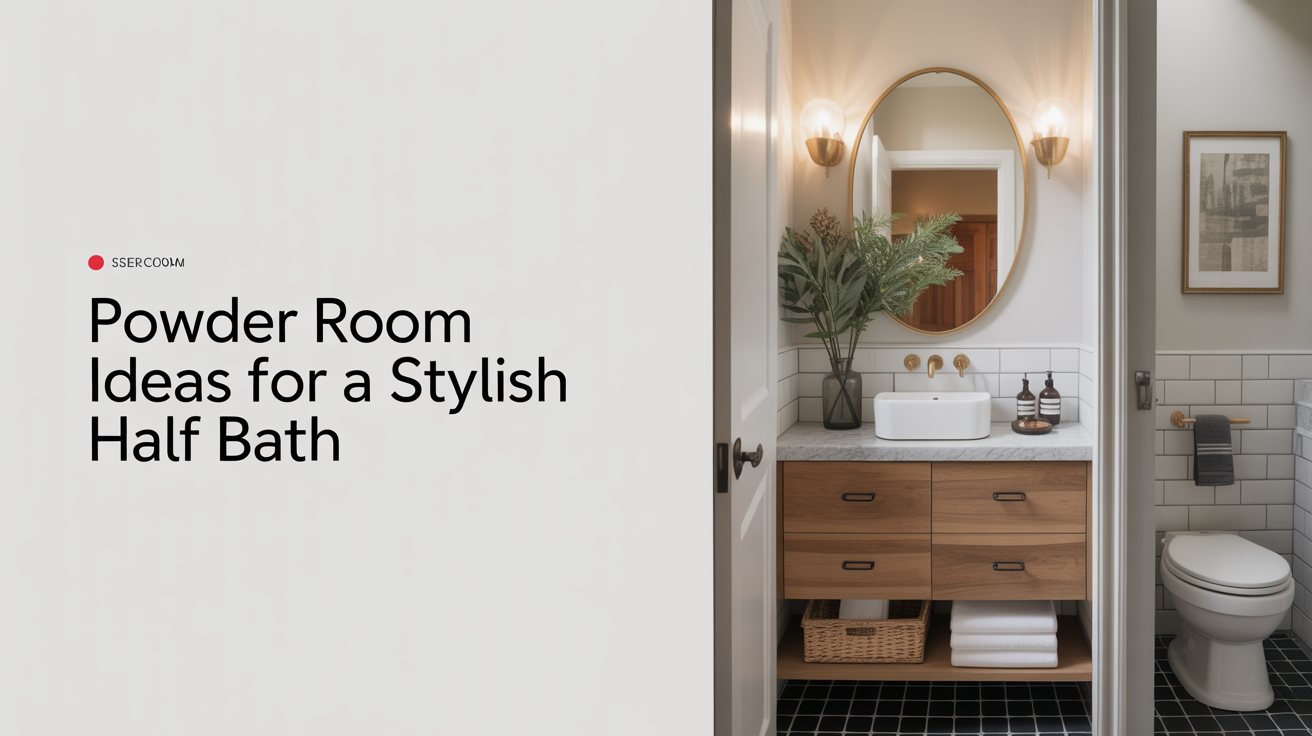
A powder room is the one room in your house where you can take real design risks. It has no shower to waterproof, no tub to center the layout around, and guests spend only a few minutes inside. That limited footprint, typically 20 to 30 square feet, is exactly what makes half bath decor so interesting. The constraints force you to make every surface count.
Whether you want a moody, wallpapered room with a vessel sink or something bright and clean for a busy family hallway, these powder room design ideas will help you figure out what actually works in the space you have.
At a Glance
- Most codes require a minimum of 11 sq ft for a half bath, but 20 to 30 sq ft is where the room starts to feel comfortable rather than tight.
- Toilet clearance rules everything else: 21 inches minimum in front of the bowl, 15 inches from centerline to any side wall.
- A pedestal or wall-mount sink almost always beats a full vanity in a tight footprint, both for clearance and for visually opening the floor.
- A single accent wall, whether wallpaper, tile, or a bold paint color, does more for a powder room than any other single design move.
- Side-mounted sconces at 60 to 65 inches from the floor flatter faces far better than a single overhead can light.
- Mechanical ventilation (50 CFM minimum, 80 to 110 CFM with a humidity sensor is better) matters even with a window, since a closed window in winter does nothing for moisture.
Getting the Fixtures Right First
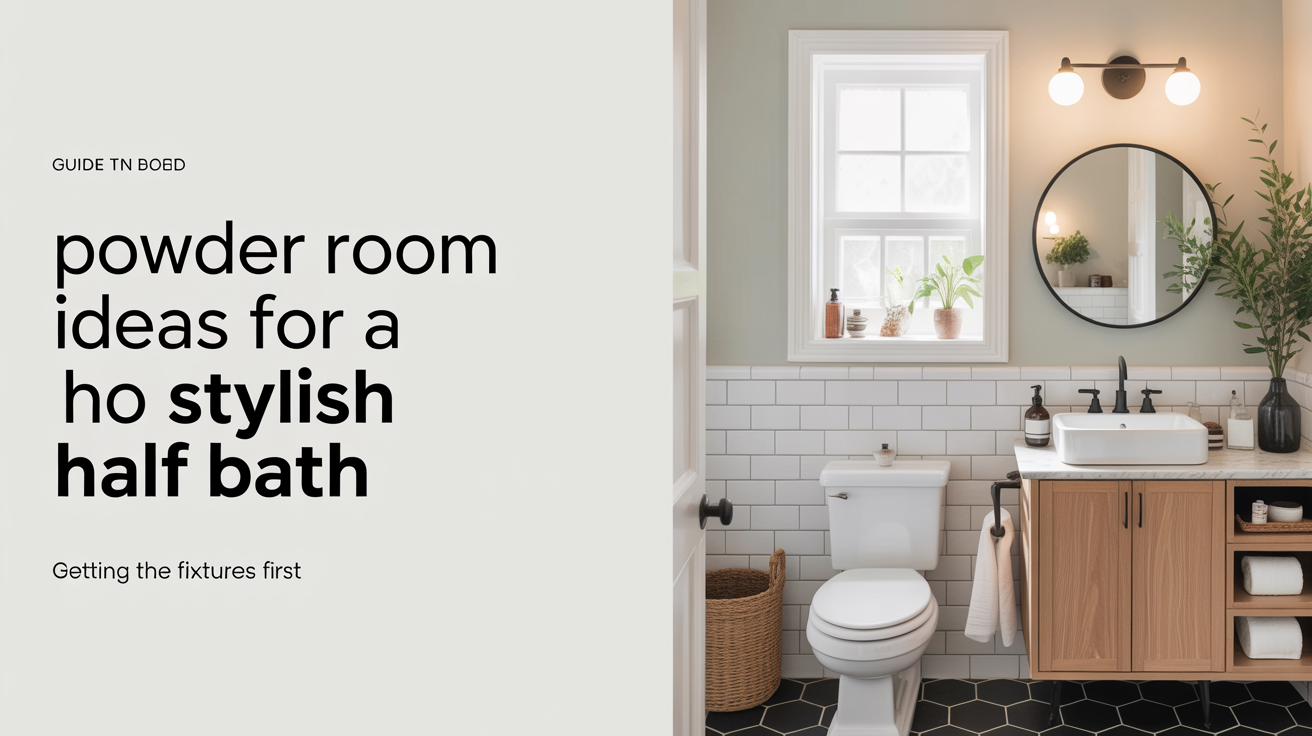
Before any decorating decision, the fixtures need to fit. A toilet in a half bath requires a minimum of 21 inches of clearance in front of the bowl (though 30 inches feels comfortable), and at least 15 inches from the centerline to any side wall or obstacle. Most powder rooms are narrow, so measure that clearance before picking your toilet profile.
If you want the room to work as an accessible or universal-design half bath, the bar is higher. The U.S. Access Board's ADA guidance for toilet rooms calls for a 16- to 18-inch centerline clearance and a 60-by-56-inch minimum clear floor space in front of the toilet, well beyond typical residential code minimums. Most powder rooms can't hit that clear-floor number without a wall-mount sink and a swing-out or pocket door, but it's worth knowing the target if accessibility is a priority for your household.
Choosing a Sink for a Tight Layout
A pedestal sink or wall-mount sink suits most powder rooms far better than a full vanity cabinet. They visually open the floor, which reads as more space. A pedestal sink typically projects 18 to 24 inches from the wall; a wall-mount can be as shallow as 14 inches if you need the extra room to move.
If you do want storage under the sink, a small floating vanity in the 18- to 24-inch width range works in many half baths without crowding the toilet. Just confirm the rough-in plumbing lines up with your planned cabinet placement before ordering.
Vessel Sinks and Statement Basins
A concrete, stone, or hammered-brass vessel sink adds visual weight and character that a standard under-mount cannot. Keep the faucet spout at least 2 inches taller than the rim of the vessel, and confirm the drain height works with your countertop thickness before purchasing. Vessel sinks can make a powder room feel curated rather than merely functional.
Wall Treatments That Set the Tone
The walls in a half bath are your biggest canvas, and you do not have to live with them for twenty years the way you would in a bedroom. A bold or labor-intensive treatment that feels too committed elsewhere is a reasonable bet in a 25-square-foot room.
Wallpaper
Wallpaper has made a full return in powder room design. A single room requires only one to two rolls for most standard ceiling heights (typically 8 to 10 feet), so even higher-priced papers stay affordable. Large-scale botanical prints, geometric patterns, and tiled motifs all work. Peel-and-stick options can work on smooth walls, but traditional paste wallpaper adheres better and tends to look more finished at the seams.
If you go with a busy pattern, keep fixtures and accessories simple. A plain white pedestal sink and brushed-nickel hardware let the wall carry the room.
A note on ventilation while the adhesive cures: standard wallpaper paste and many finish paints release volatile organic compounds that affect indoor air quality as they dry. A powder room's small, often window-free volume concentrates that off-gassing more than a larger room would, so run the exhaust fan during installation and for a day or two after, even if the room feels dry to the touch sooner than that.
Tile as an Accent Wall
Tiling a single wall, usually the one behind the toilet or sink, can transform a half bath without the cost of tiling every surface. Zellige tiles, handmade ceramic subway tiles in an unexpected color, or large-format stone-look porcelain slabs all work well. A 4-by-8-foot accent wall uses roughly 32 square feet of tile, which keeps material costs manageable.
Grout color matters here more than in a shower. A contrasting grout line makes the tile pattern pop; a matched grout creates a quieter, more unified look.
Painted Finishes
A single deep paint color applied ceiling to floor (walls, trim, and even ceiling in the same shade) makes a small powder room feel intentional rather than cramped. Colors like deep navy, forest green, charcoal, or burgundy work well at this scale. Flat or matte finishes absorb light in a way that feels luxurious, though a satin finish is easier to wipe clean on the walls nearest the sink.
For choosing a palette that holds up over time, lean toward colors that work in both natural and artificial light, since most powder rooms have limited windows.
Lighting and Mirrors
Bad lighting is the fastest way to ruin an otherwise thoughtful powder room. Overhead can lighting alone produces unflattering shadows on the face and makes the room feel like a utility space. Side-mounted sconces flanking the mirror, positioned at roughly 60 to 65 inches from the floor to their center, are far more flattering and functional.
Mirror Size and Placement
A mirror scaled to your sink makes the room feel proportional. For a 24-inch-wide vanity, a 22- to 26-inch-wide mirror fits without dominating; for a pedestal sink, a round or oval mirror 20 to 30 inches in diameter gives you enough reflection without eating the wall. Leave at least 6 inches between the top of the faucet and the bottom of the mirror.
An oversized mirror, spanning nearly the full width of a wall, can make a narrow powder room feel noticeably wider. This works especially well in hallway-style half baths where the toilet and sink are on the same wall.
Decorative Fixtures
A single pendant light centered over the sink, a small chandelier, or a dramatic flush-mount fixture turns the ceiling into part of the design. In a room this small, one good light fixture does more for the atmosphere than a dozen accessories.
Color, Pattern, and Guest Bathroom Ideas
The powder room gets heavy use from guests who have never seen it before. That fresh-eyes experience means you have more latitude than in a personal bathroom. A design choice that might fatigue you over years in your primary bath can be a genuine delight in a guest bathroom visited occasionally.
Dark and Moody Rooms
Deep, saturated colors recede visually and create a sense of intimacy. A powder room painted in near-black or rich emerald, with warm brass hardware and a lit mirror, can feel more like a bar lounge than a bathroom. This works best when there is at least one deliberate light source (a sconce or pendant) rather than relying only on overhead ceiling light.
Light and Airy Rooms
For a powder room off a busy kitchen or family hallway, a lighter approach, soft white, warm cream, or pale sage, reads as clean and welcoming. Add texture through a woven basket for extra paper towels, a small framed print, or a linen hand towel rather than relying on color contrast.
Powder Room Fixture and Clearance Cheat Sheet
| Element | Minimum | Comfortable | Notes |
|---|---|---|---|
| Room size | 11 sq ft (typical code) | 20-30 sq ft | Confirm your local minimum |
| Toilet clearance, front of bowl | 21 in | 30 in | |
| Toilet clearance, centerline to wall | 15 in | 18 in | Accessible/ADA target: 16-18 in |
| Pedestal sink projection | 18-24 in | — | Wall-mount as shallow as 14 in |
| Mirror width, 24-in vanity | 22-26 in | — | Leave 6 in above faucet |
| Exhaust fan | 50 CFM | 80-110 CFM, humidity sensor | Required if no operable window |
Finishing Touches: Storage and Accessories
A powder room has no storage demands beyond a few necessities. That simplicity is an asset. A small floating shelf above the toilet can hold extra hand soap, a candle, and a small plant without cluttering the space. Recessed medicine cabinets are rare in half baths but can work in homes with the right wall depth (at least 3.5 inches between studs).
Hand towels, soap dispensers, and wastebaskets do more visual work than people expect. Matching finish metals across faucet, towel ring, and toilet paper holder is the easiest way to make a powder room look pulled together without a renovation.
For a broader look at how fixture placement affects the room, see bathroom layout ideas that make the most of your space.
Frequently Asked Questions
What is the minimum size for a powder room?
Most building codes require a minimum of 11 square feet for a half bath with a toilet and sink, though 20 to 28 square feet is more functional and comfortable. The toilet needs at least 21 inches of clearance in front of the bowl and 15 inches of clearance from its centerline to any side wall.
Can I use wallpaper in a powder room with no window?
Yes. Powder rooms without windows are actually easier to wallpaper because there is no direct sunlight to fade the pattern. Use a bathroom-rated or moisture-resistant wallpaper and run a ventilation fan during and after any moisture-producing activity. Paste-the-wall installation is generally more moisture-resistant than paste-the-paper methods.
How much does it cost to update a powder room?
A cosmetic refresh, new paint, mirror, light fixture, and hardware, typically runs $300 to $1,000 depending on material choices. Adding new wallpaper and a replacement faucet brings most projects to $500 to $2,000. A full gut renovation including new tile, vanity, toilet, and plumbing work ranges widely by region but commonly falls between $5,000 and $12,000.
What style works best for a half bath?
There is no single best style. A traditional home might suit a classic pedestal sink with subway tile; a modern home might call for a floating vanity and large-format porcelain. The more useful question is whether the powder room's style connects to the rooms adjacent to it. A jarring style break between the hallway and the powder room tends to feel like an afterthought.
Do I need a window or exhaust fan in a powder room?
Most codes require mechanical ventilation (an exhaust fan rated at least 50 CFM) if there is no operable window. Even with a window, an exhaust fan is worth installing. It removes moisture and odors more reliably than relying on a window that is likely to stay closed in winter. A fan rated 80 to 110 CFM with a humidity sensor is a reasonable choice for most powder rooms.
Can a powder room double as an accessible half bath?
It can, but the fixtures and door need to be chosen with that goal from the start. A wall-mount sink instead of a pedestal frees up the clear floor space accessible design calls for, and a pocket door or outward-swinging door avoids eating into the maneuvering area a standard inward-swinging door requires. Hitting the full ADA clear-floor target in a typical 20 to 30 sq ft powder room footprint is tight, so if this matters for your household, work the layout backward from the toilet clearance numbers before committing to a sink style.