Bathroom Design
How to Choose a Bathroom Color Scheme You Won't Tire Of
Pick bathroom color schemes that age well — covering undertones, lighting, finishes, and how to test before you commit to a full repaint.
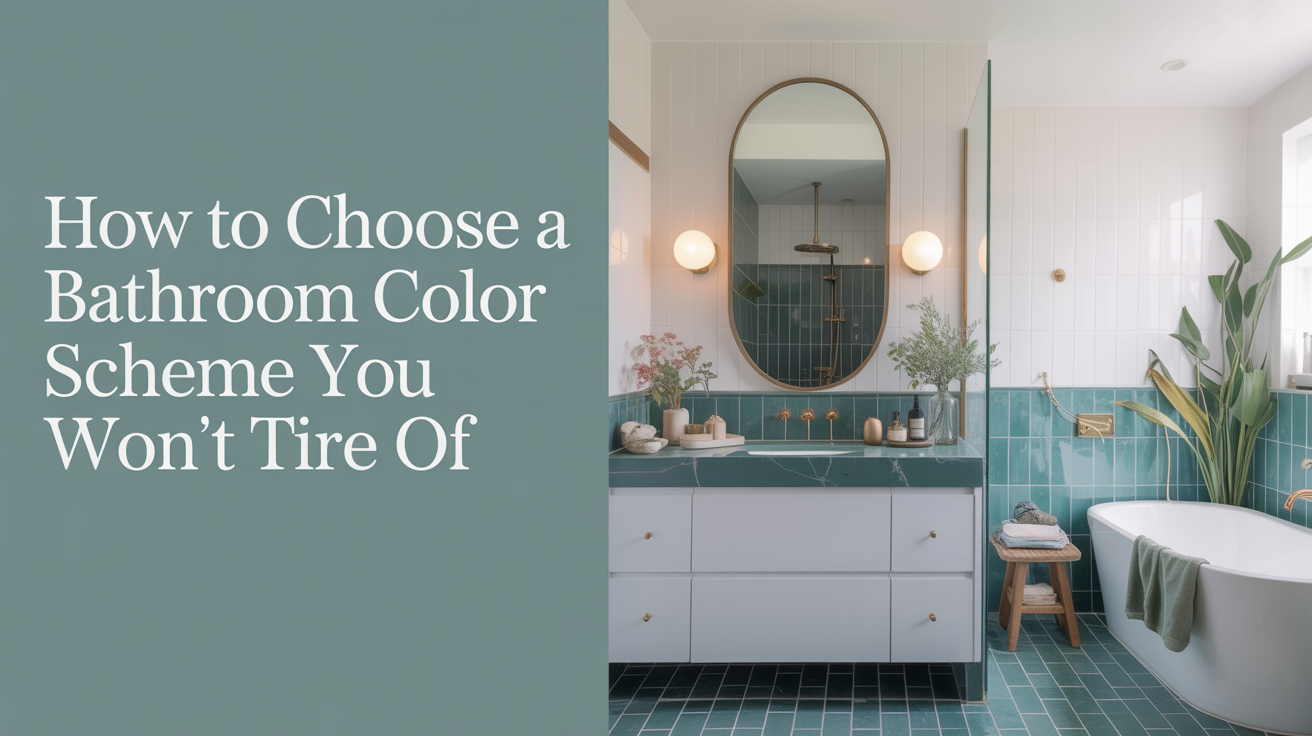
The bathroom is repainted less often than any other room in the house, which makes a bad color choice especially punishing. Getting it right comes down to three things: understanding how small rooms behave with color, knowing which finishes hold up, and testing before you commit.
At a Glance
- Bulb color temperature changes how paint reads more than almost any other variable; a 4000K bulb pulls blue out of everything, a 2700K bulb pulls it back toward warm.
- Every paint color has an undertone that amplifies in a small room; test with a white sheet of paper next to the dried chip to see it clearly.
- Neutral doesn't mean beige: warm whites, soft greens, and blue-greens all hold up better over time than stark, cool-toned whites.
- Satin sheen is the practical default for bathroom walls; semi-gloss for trim; flat, mold-inhibiting paint for ceilings.
- Pull your starting color from the grout, not the field tile, grout is the dominant visual texture in most tile installations.
- Test with a large painted board moved around the room in both morning and evening light before committing to a gallon.
Why bathrooms read differently than the rest of your home
A color swatch that looked warm and creamy in the paint store can go cold and clinical on a bathroom wall. The reason is usually light. Most bathrooms have a single overhead fixture, often with a color temperature around 4000K (cool white), which pulls blue out of every color in the room. If your tile is even slightly gray-veined, that blue doubles.
Natural light changes things further. A north-facing bathroom that gets indirect light all day will make the same greige look distinctly purple by afternoon. A south-facing bathroom with direct afternoon sun can make a soft sage feel almost yellow-green by 3 p.m.
Before choosing bathroom paint colors, check which direction your bathroom faces and what fixtures you're working with. A bulb swap from 4000K to 2700K (warm white) costs almost nothing and can make a cool color feel 20 degrees warmer. For reference, the Department of Energy's guidance on LED color temperature puts warm white in the 2700-3000K range (the incandescent-like glow most people associate with a cozy room), neutral around 4000K (closer to typical office light), and cool white at 5000-6500K (a crisp, blue-tinted daylight look). Most stock bathroom fixtures ship in that 4000K neutral zone by default, which is exactly the range most likely to flatten a warm paint color.
How undertones actually work in a small space
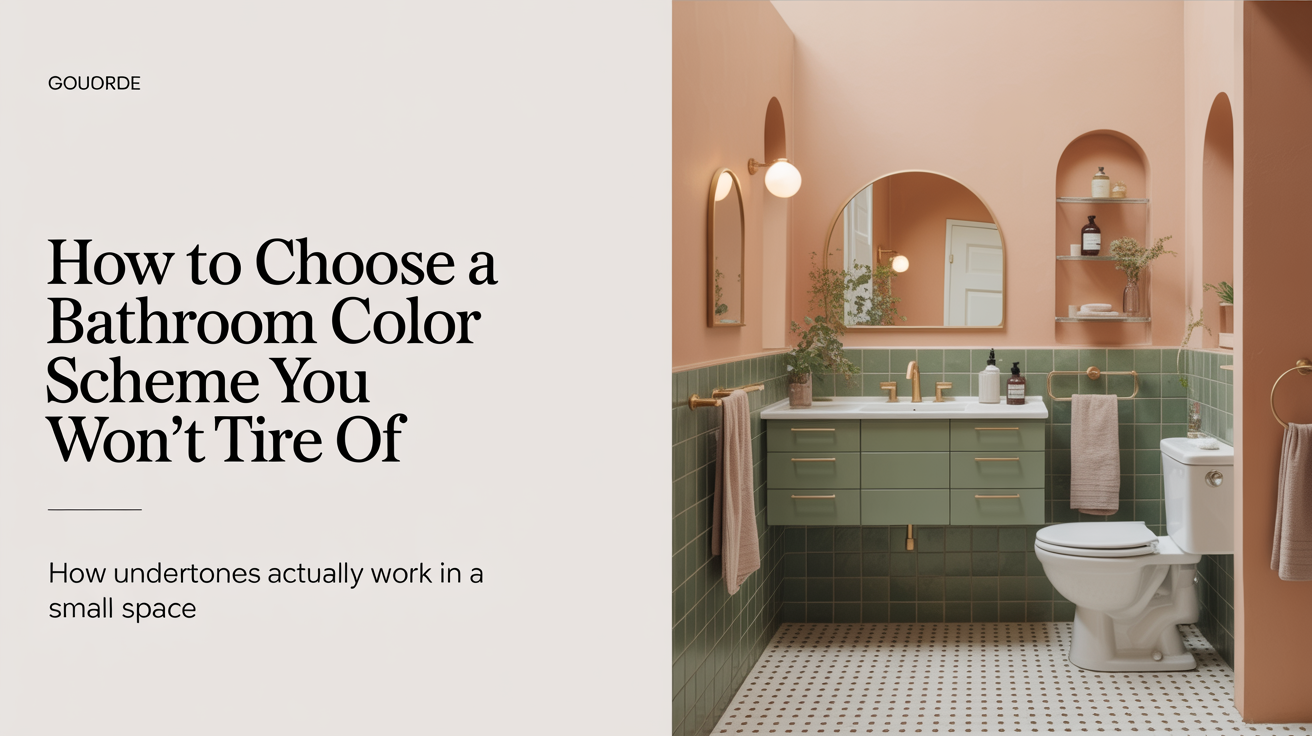
Every paint color has an undertone, and bathrooms amplify them because you're standing close to every surface at once. Here's how the common ones behave:
| Color family | Typical undertone | What triggers it | Safe pairing |
|---|---|---|---|
| White | Blue, pink, or yellow | Cool lighting, gray tile | Warm wood vanity or brass fixtures |
| Greige | Purple or green | North light, chrome fixtures | Warm-white bulbs (2700-3000K) |
| Sage/green | Yellow or gray | Direct sunlight, white tile | Matte black or aged bronze hardware |
| Navy/deep blue | Green or violet | Artificial light only | Warm wood, brass, white grout |
| Terracotta | Pink or orange | High-gloss tile reflection | Linen whites, matte finishes |
| Soft gray | Blue or lavender | Fluorescent or LED cool light | Nickel or chrome fixtures, white trim |
The easiest way to test undertones: put a white sheet of paper next to the dried paint chip on your wall. Whatever color the paint appears to be beside pure white is its undertone.
Neutral bathroom colors that actually hold up over years
Neutral doesn't mean beige. The colors people rarely regret in bathrooms tend to share a few qualities: a mid-value tone (not too light, not too dark), a muted rather than saturated chroma, and an undertone that matches the metal finishes already in the room.
Some specific options that have performed well over time:
Warm whites. Benjamin Moore White Dove (OC-17) and Sherwin-Williams Alabaster (SW 7008) both carry a slight yellow undertone that reads warm rather than stark. They work in bathrooms because they don't fight tile and they age gracefully as styles shift. Expect to pay $60-$80 per gallon for a quality paint in these tones.
Soft greens. Colors like Sherwin-Williams Oyster Bay (SW 6461) or Benjamin Moore Healing Aloe (2046-40) sit in the sage family without pulling too yellow or too gray. They photograph well, which matters if resale is a consideration.
Blue-greens. Colors around Farrow & Ball's Mizzle (No. 266) or Behr's Atmospheric (S470-2) read quiet in artificial light and pick up subtle depth in daylight. These pair particularly well with white subway tile because the slight warmth in traditional subway glaze keeps the combination from feeling cold.
Charcoal and deep navy. Used on a single wall or a vanity rather than all four walls, dark colors in a bathroom rarely feel oppressive. The trick is keeping ceilings white and using mirrors generously. A dark wall behind a vanity mirror can actually make the room feel larger by receding visually.
For a layout that makes the most of whatever square footage you have, see our guide to bathroom layout ideas that make the most of your space.
Finish matters more in bathrooms than anywhere else
Paint sheen is a practical decision before it's an aesthetic one. Bathrooms deal with steam, water, soap splatter, and cleaning products. A flat or matte paint will absorb moisture and scrub badly.
- Eggshell (10-25% sheen): Works on walls if your bathroom has good ventilation. Scrubbable enough for light use, easy to touch up.
- Satin (25-35% sheen): The default for bathroom walls. Handles humidity well, wipes clean, doesn't show every imperfection.
- Semi-gloss (45-70% sheen): Standard for trim, door frames, and window casings. Some people use it on all surfaces in a small powder room for a lacquered look.
- High-gloss: Reserved for cabinetry and trim where you want maximum durability and don't mind that every brush stroke shows. Prep work is everything with gloss.
Ceiling paint is a separate category. Most bathroom ceilings should be flat white with mold-inhibiting additives, regardless of what color you put on the walls. Ceilings don't get touched, so scrub resistance isn't the issue; running the fan and cutting moisture is what keeps them clean. The EPA's guidance on mold and moisture control is blunt about this: controlling moisture, not the paint additive, is what actually prevents mildew from taking hold on a ceiling.
There's a second, less obvious reason to plan the paint job itself carefully: fresh paint is a real air-quality event in a small, poorly ventilated room. The EPA notes that indoor VOC levels from products like paint can run as much as 1,000 times higher than outdoor background levels while the job is underway, and recommends maximum ventilation, an open window plus the exhaust fan running, during and for a day or two after painting. Low-VOC and zero-VOC formulations are now widely available at the same price tier as standard paint and cut this problem substantially; it's worth asking for one by name at the counter rather than assuming the standard product is low-VOC by default.
Color schemes that connect the bathroom to the rest of the house
One thing that makes a bathroom color scheme feel off is treating the room like it exists in isolation. If your hallway is a warm off-white and the bathroom is a cool gray, the transition feels jarring, especially in a master suite where the rooms are visible at the same time.
The simplest approach is to pull from the same undertone family throughout. If your bedroom walls have yellow-warm undertones, a soft sage or warm white in the attached bathroom will read as intentional. If you want contrast, go darker in the same tone family rather than shifting the undertone entirely.
For inspiration on how bathrooms connect to a broader design direction, the modern farmhouse bathroom ideas that still feel fresh and spa bathroom ideas for an at-home retreat guides show how specific palettes play out across full rooms.
How to test before you paint the whole room
The worst way to choose a bathroom color is to decide from a chip under a paint store's fluorescent lights. The second-worst way is to paint a small swatch directly onto a wall and judge it there.
A better method: paint a large section of foam core board (at least 12x18 inches) with two coats. Let it dry 24 hours. Then move it around the room, prop it against the wall behind the toilet, hold it near the window, lean it next to your existing tile. Look at it in the morning and again in the evening.
Most paint brands sell sample pots for $4-$8. For a bathroom with significant tile investment or high-end fixtures, buying three or four samples before committing to a gallon is cheap insurance.
One thing to pay attention to: how the paint reads when the shower has been running for ten minutes and there's steam in the room. Colors shift slightly when surfaces absorb humidity, especially porous materials like unsealed plaster or older wallboard.
A worked example of why this matters: a soft greige that reads warm and neutral on a north-facing bedroom wall under 2700K lamplight can shift visibly purple on a north-facing bathroom wall lit by a single 4000K vanity fixture, the color itself hasn't changed, but the light hitting it has lost most of its red-yellow component. Swapping that one bulb to 2700K before you repaint, rather than after, can save you from repainting a room that was never actually the wrong color to begin with.
Frequently Asked Questions
What is the most timeless bathroom color?
White and off-white have the longest staying power, but the specific white matters. Stark bright whites (those with a blue undertone) tend to feel dated faster than warm creamy whites. White Dove by Benjamin Moore and Alabaster by Sherwin-Williams appear on lists of popular bathroom colors year after year, which is some evidence they're not trend-driven.
Can I use dark colors in a small bathroom?
Yes, with a few adjustments. Keep the ceiling white to maintain perceived height. Use large mirrors to bounce light. Dark colors on all four walls of a very small bathroom (under 35 sq ft) can feel cave-like, but a single accent wall or a dark vanity against lighter walls usually works well regardless of room size.
How do bathroom paint colors interact with tile?
The tile's undertone dominates, not the paint. If your existing tile is cool-gray veined marble, a warm paint color will fight it rather than unify the room. Pull a paint chip from the grout color as a starting point rather than from the field tile itself, grout is the dominant visual texture in most tile installations.
Should bathroom trim be white or match the walls?
White trim is the safer default because it defines the room's architecture and reads clean against any wall color. Matching trim to walls (a "tonal" look) works in bathrooms that have minimal architectural detail; it can feel flat in rooms with elaborate crown molding or paneled wainscoting where you want the trim to register.
How often should you repaint a bathroom?
A bathroom with good ventilation and a quality satin or semi-gloss paint typically looks fresh for 5-7 years before scuffs, yellowing, or finish wear become obvious. Bathrooms without exhaust fans or with steam from long showers may show mildew staining and paint peel in 2-3 years regardless of paint quality. Fix the ventilation first.
Does changing my light bulbs really matter as much as changing the paint color?
For undertone problems, often yes, and it's dramatically cheaper to try first. A cool 4000-5000K bulb pulls blue out of nearly every paint color, while a warm 2700-3000K bulb pulls the same color back toward its intended tone. If a recently painted bathroom looks off in a way you can't quite name, swap the bulb before you blame the paint. It won't fix a genuinely wrong color choice, but it resolves a surprising number of "this isn't what I picked at the store" complaints.
Is it worth paying more for a low-VOC or zero-VOC paint in a bathroom?
Generally yes, and it costs little to nothing extra at most price points now. Bathrooms are small, often poorly ventilated rooms where you're standing close to freshly painted surfaces, exactly the conditions where off-gassing is most noticeable. Low-VOC formulations cut down on both the odor during the job and the lingering smell afterward, and performance (coverage, durability, scrubbability) is now on par with standard paint from most major brands.