Bathroom Design
Bathroom Layout Ideas That Make the Most of Your Space
Practical bathroom layout ideas with real dimensions, clearances, and tradeoffs so you can plan a floor plan that actually works.
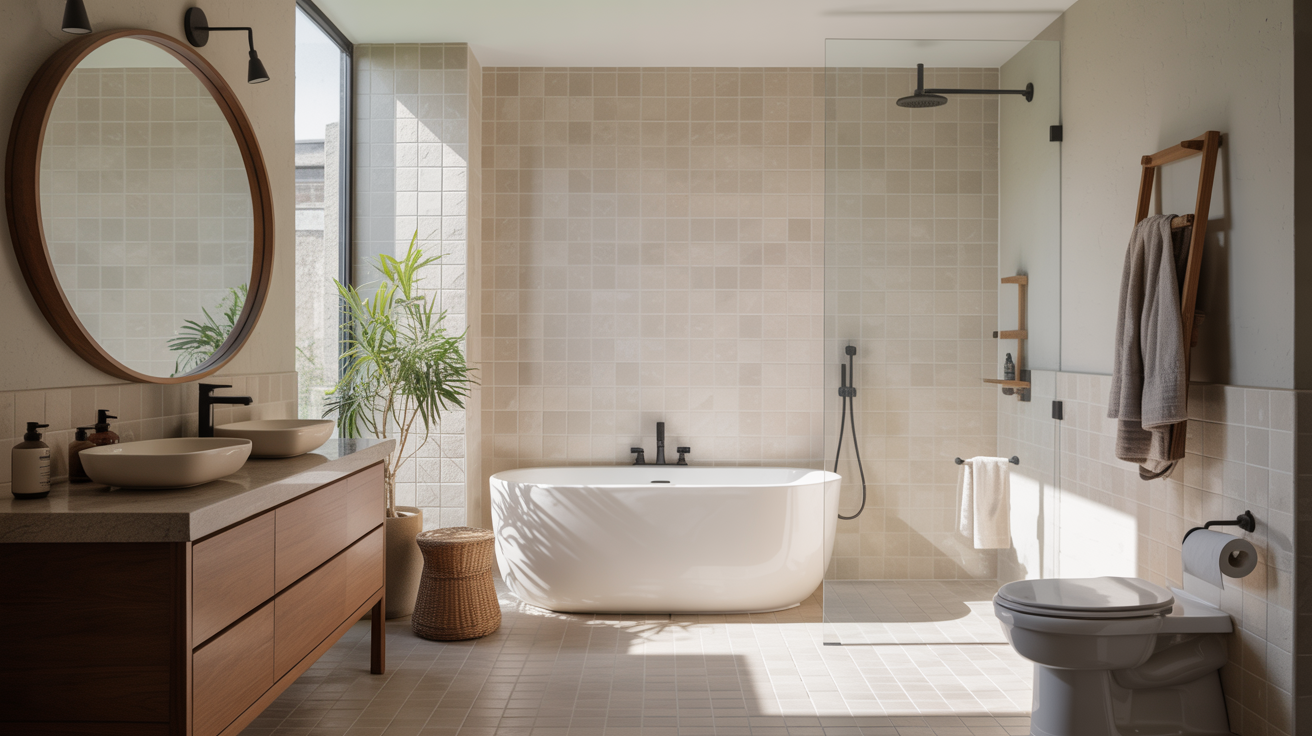
The bathroom is usually the smallest room in the house, yet it has the most plumbing, the most code requirements, and the highest cost-per-square-foot to renovate. Getting the layout right before you pull a permit saves money and headaches. Here's how to think through it.
At a Glance
- Learn clearances before floor plans: 15 in. to the toilet centerline, 21 in. in front of it, 36 x 36 in. minimum shower, all before you sketch a single wall.
- The 5 x 8 ft. bathroom is the classic American minimum; it fits a toilet, 30-in. vanity, and 5 ft. tub-shower with almost no slack.
- L-shape is the most common full-bath layout because it separates the wet zone from the grooming zone.
- Place the toilet first, not last, it's the most constrained fixture and the hardest to move later (vent stack rules add real cost).
- A cosmetic remodel that keeps fixtures in place typically runs 30-50% less than a full reconfiguration that moves drain lines.
- Prioritize the shower over the tub in larger primary baths; a tub that gets used twice a year is a poor use of 15 square feet.
Start With Clearances, Not Aesthetics
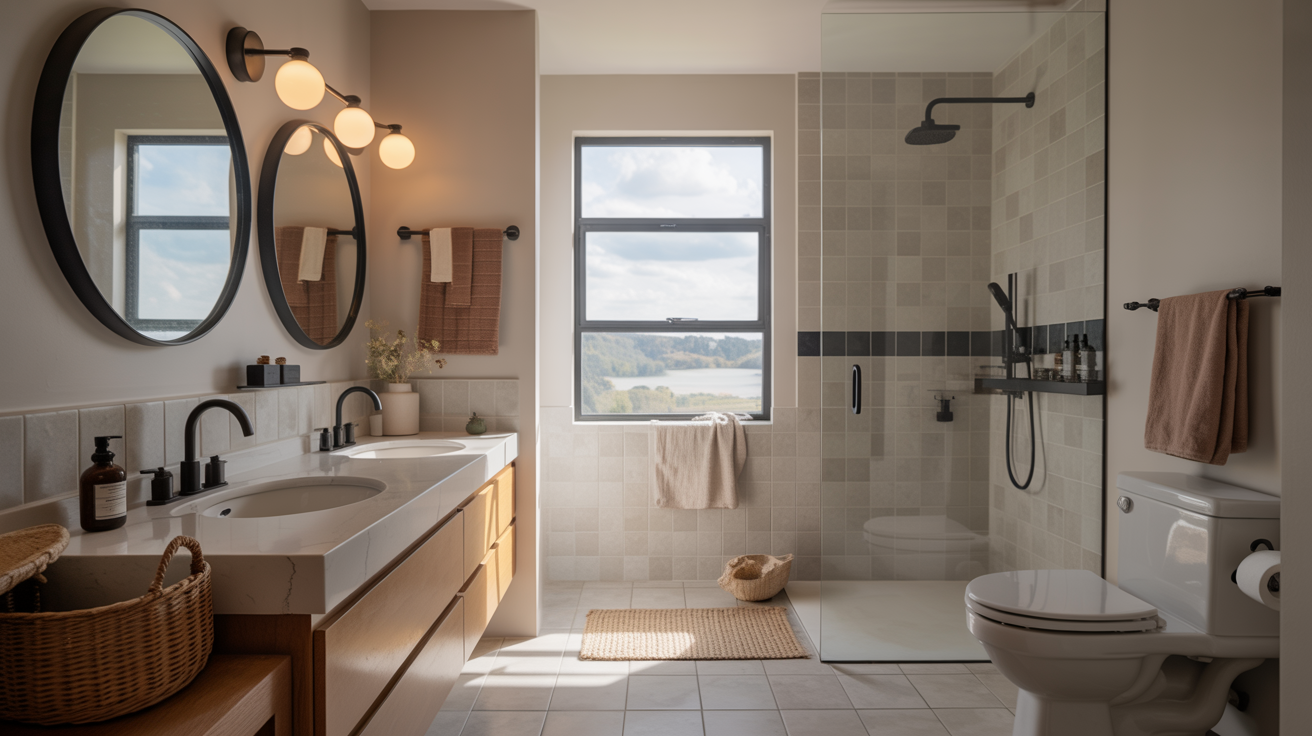
Before you fall in love with a floor plan you found on Pinterest, learn the minimum clearances that govern every bathroom layout decision. These are code minimums; most designers recommend going bigger where you have room.
Toilet clearances:
- 15 in. from centerline to any side wall or obstruction (18 in. preferred)
- 21 in. clear in front of the toilet (30 in. preferred for comfort; required in some jurisdictions)
Sink clearances:
- 15 in. from centerline to any wall or obstruction
- 21 in. in front of the vanity
Shower/tub clearances:
- Minimum shower interior: 36 x 36 in. (36 x 48 in. is far more comfortable)
- 24 in. clear in front of a shower entry
These numbers come from the International Residential Code (IRC), but your local authority having jurisdiction (AHJ) may require more. Check before you draw anything. A licensed contractor or permit office can tell you what applies to your project.
It helps to know there's a second, stricter set of numbers in circulation for accessible design. The U.S. Access Board's guidelines for bathing rooms call for a 36-by-48-inch clear approach to a transfer shower and a full 30-by-60-inch compartment for a roll-in shower, both well beyond the 36 x 36 in. residential code floor. Likewise, its toilet room guidance asks for a 60-by-56-inch clear floor space around the toilet, versus the 21 in. front clearance most residential codes require. You don't need to hit those numbers in a standard remodel, but if aging in place or resale to a broader range of buyers is on your mind, they're a useful upper bound to design toward where the room allows it.
The 5 x 8 Rule
A 5 x 8 ft. bathroom (40 sq. ft.) is the classic full-bath minimum in American tract housing. It fits a toilet, a 30-in. vanity, and a 5 ft. tub-shower combo with code-legal clearances. Barely. If your existing bathroom is this size, you're not going to move anything without hitting a wall (literally). Your options are reconfiguring fixtures in the same footprint, or bumping out into a closet or hallway.
The Most Common Bathroom Floor Plan Configurations
There are really only a handful of layouts that show up over and over. Each has tradeoffs.
Single-Wall Layout
Everything lines up on one wall: toilet, vanity, tub/shower in a row. Simple plumbing stack, low cost, easy for a contractor. Works well in a long narrow room, roughly 5 x 10 ft. or larger. The downside: you're always reaching past something to get to something else. Fine for a guest bath, less great as a primary.
L-Shape Layout
The toilet and tub sit on one wall, the vanity on the perpendicular wall. This is the most common layout in full baths because it separates the wet zone (tub/shower) from the grooming zone (vanity), which makes the room feel more organized. Standard footprint: 5 x 8 or 6 x 9 ft.
Split Vanity / Compartmentalized Layout
For a primary bath with two users, separating the toilet into its own compartment (a water closet) and doubling the vanity changes how the space functions. A true compartmentalized layout needs roughly 8 x 10 ft. minimum to do it well. The toilet compartment should be at least 36 x 66 in. with a door that swings out.
Open Wet Room
No shower pan, no tub. The entire shower zone is a sloped, waterproofed floor. Popular in modern and spa-style bathrooms. Requires a competent tile setter (linear drains especially), a solid waterproofing membrane, and often an engineer sign-off if you're changing the floor structure. Don't skip any of those steps. See our guide on creating a spa bathroom at home for more on the wet room approach.
Where to Put the Toilet (and Why It Matters More Than You Think)
The toilet is the most constrained fixture in any bathroom, so it should be placed first, not last. Common mistakes:
- Putting the toilet directly across from the door, which creates an unflattering sightline from the hallway.
- Placing it where the lid hits a wall or cabinet when opened.
- Ignoring the vent stack location. Moving a toilet more than 6 ft. from a vent stack usually requires re-venting, which adds cost.
The best position is tucked into a corner or behind the door swing, where it's out of the primary sightline. A pocket door into the toilet compartment solves the swing-clearance problem in tight spaces.
Rough-In Dimensions
The toilet rough-in is the distance from the finished wall to the centerline of the drain. Standard is 12 in. Most toilets are made for a 12-in. rough-in, but 10-in. and 14-in. models exist. If you're replacing a toilet, measure the existing rough-in before buying a replacement. A mismatch means the tank won't sit flush to the wall.
Bathroom Layout Dimensions at a Glance
| Room Size | Typical Configuration | What Fits | Realistic Remodel Budget |
|---|---|---|---|
| 5 x 8 ft. (40 sq. ft.) | Single-wall or L-shape | Toilet, 30-in. vanity, 5 ft. tub-shower | $10,000-$18,000 |
| 6 x 9 ft. (54 sq. ft.) | L-shape | Toilet, 36-in. vanity, separate tub or walk-in shower | $15,000-$28,000 |
| 8 x 10 ft. (80 sq. ft.) | Split/compartmentalized | Double vanity, separate tub + shower, water closet | $25,000-$45,000 |
| 10 x 12 ft. (120 sq. ft.) | Master suite bath | Walk-in shower (4 x 5 ft.+), soaking tub, double vanity | $35,000-$70,000+ |
Cost ranges vary wildly by region and finish level. A mid-range full bath remodel runs $10,000-$25,000 in most U.S. markets. A primary bath with a custom tile shower and double vanity can easily hit $40,000-$70,000 in high-cost areas. These are ballpark figures; get at least three contractor bids for your specific project.
Practical Layout Ideas by Room Size
Small Bathrooms (Under 50 sq. ft.)
The single biggest gain when thinking through a small bathroom layout usually comes from replacing a swing door with a pocket door or barn door. That reclaims 6-8 sq. ft. of usable floor space. Other moves:
- Corner toilets aren't common, but a round-front toilet (about 2 in. shorter than elongated) can help in a pinch.
- A wall-hung vanity with no base cabinet makes the floor appear larger and lets you clean underneath.
- A 32 x 32 in. corner shower stall fits where nothing else will, though 36 x 36 in. is much more comfortable.
- Skip the tub entirely if this isn't the only full bath in the house. You'll get more shower space and the room will breathe.
Medium Bathrooms (50-80 sq. ft.)
This is where most layout decisions open up. You can separate the tub and shower, add a double vanity at 60-72 in., and still meet clearances. The main question becomes traffic flow: can two people use the room at the same time without getting in each other's way? If the door opens into the vanity zone, consider a layout shift so it opens into neutral floor space.
Storage matters more at this size than people expect. A 6 x 9 ft. bathroom with nowhere to put towels, toilet paper, or a hair dryer feels small despite the square footage. A built-in niche in the shower, a recessed medicine cabinet over the vanity (which adds zero floor footprint), and a linen cabinet tucked beside the toilet can solve all of that without changing the footprint plan.
For color and design direction once you've settled the layout, our article on choosing a bathroom color scheme covers what holds up over time versus what dates quickly.
Larger Primary Baths (80+ sq. ft.)
The temptation is to fill the space. Resist it. A 10 x 12 ft. room with a giant tub nobody uses, two sinks crammed together, and a shower barely big enough to turn around in is a poorly planned large bathroom. Prioritize the shower. A 4 x 5 or 4 x 6 ft. walk-in with a bench and multiple showerheads gets used every day. The soaking tub is beautiful, but be honest about your habits. If you're set on a tub, consider a freestanding model positioned where it can be seen from the doorway; it reads as intentional rather than an afterthought.
Modern farmhouse primary baths often use a long floating vanity with open shelving to keep the room from feeling heavy. For more on that direction, see our modern farmhouse bathroom ideas guide.
A Worked Reconfiguration Example
Take a common problem: a 5 x 8 ft. bathroom where the tub sits on the short wall and the door swings directly into the vanity, cutting the usable floor by nearly a third every time someone opens a drawer. Swapping the door to swing the other direction (into the room's open corner instead of the vanity zone) costs little more than reframing the jamb and rehanging the door, often under $500 in labor, yet it can restore 8-10 sq. ft. of functional space in a room where every square foot matters. Before spending on a full reconfiguration, walk through whether a door swap, a pocket door retrofit, or a fixture swap (compact toilet, shallower vanity) solves 80% of the problem for a fraction of the cost of moving plumbing.
Frequently Asked Questions
What is the minimum size for a full bathroom with tub, toilet, and sink?
The code minimum is typically around 35-40 sq. ft. for a full bath, with a 5 x 8 ft. footprint being the standard example. In practice, going slightly larger (to 5 x 10 or 6 x 8 ft.) makes clearances more comfortable and gives you flexibility with fixture sizes.
Can I move the toilet to a completely different wall?
Yes, but it costs more than most people expect. Moving a toilet requires extending (or sometimes re-routing) the drain line and adding or extending a vent stack. Depending on your floor construction and how far the toilet moves, labor alone can run $500-$2,500. Always have a licensed plumber assess this before it goes into your budget, and pull a permit.
Is it cheaper to keep the existing bathroom floor plan?
Usually, yes. Keeping fixtures in the same location eliminates the cost of moving drain lines and supply pipes. A cosmetic remodel that replaces tile, fixtures, and vanity without moving anything can cost 30-50% less than a full gut-and-reconfigure. If the layout mostly works, renovating in place is often the smarter call.
How much space do I need for a walk-in shower?
A 36 x 36 in. shower is the minimum most contractors will build; it's usable but cramped. A 36 x 48 in. shower is a reasonable baseline for daily use. A 48 x 48 in. or larger shower with a bench starts to feel genuinely comfortable. If you're installing a steam shower, the enclosure needs to be fully sealed and the ceiling sloped to prevent condensation drips; consult a licensed contractor for that one.
Do I need a permit for a bathroom remodel?
In most U.S. jurisdictions, yes: if you're moving or adding plumbing, doing electrical work, or making structural changes, a permit is required. Replacing fixtures in the same location (a like-for-like toilet swap, for example) sometimes doesn't require a permit, but check with your local building department first. Unpermitted work can cause problems when you sell the house.
What's the difference between designing for accessibility and just following residential code?
Residential building codes set the legal floor for a typical bathroom, they get you a room that's safe and usable for most people. Accessibility guidelines like the ones from the U.S. Access Board go well beyond that floor, specifying much larger clear floor spaces around fixtures (roughly 60 x 56 in. around a toilet, for example, versus a 21 in. front clearance in a standard code) so the room works for wheelchair users and people with mobility aids. You don't have to design to those numbers unless you're building a commercial or publicly accessible space, but pulling a few extra inches toward them, wider doorways, a bit more clearance beside the toilet, costs little during a full remodel and pays off if the household's needs change.
Should the layout change if I'm planning to age in place?
If aging in place is a real consideration, prioritize a step-free shower entry, a taller "comfort height" toilet, grab-bar blocking behind the toilet and inside the shower even if you don't install the bars yet, and a door wide enough for a walker or wheelchair (32 in. clear opening minimum, 36 in. is more comfortable). These changes are far cheaper to build in during a full gut renovation than to retrofit later, since most of them involve decisions made before drywall goes up.