Small Bathrooms
Small Bathroom Organization Tips That Stick
Practical small bathroom organization ideas that hold up over time, from decluttering under the sink to claiming vertical wall space you didn't know you had.
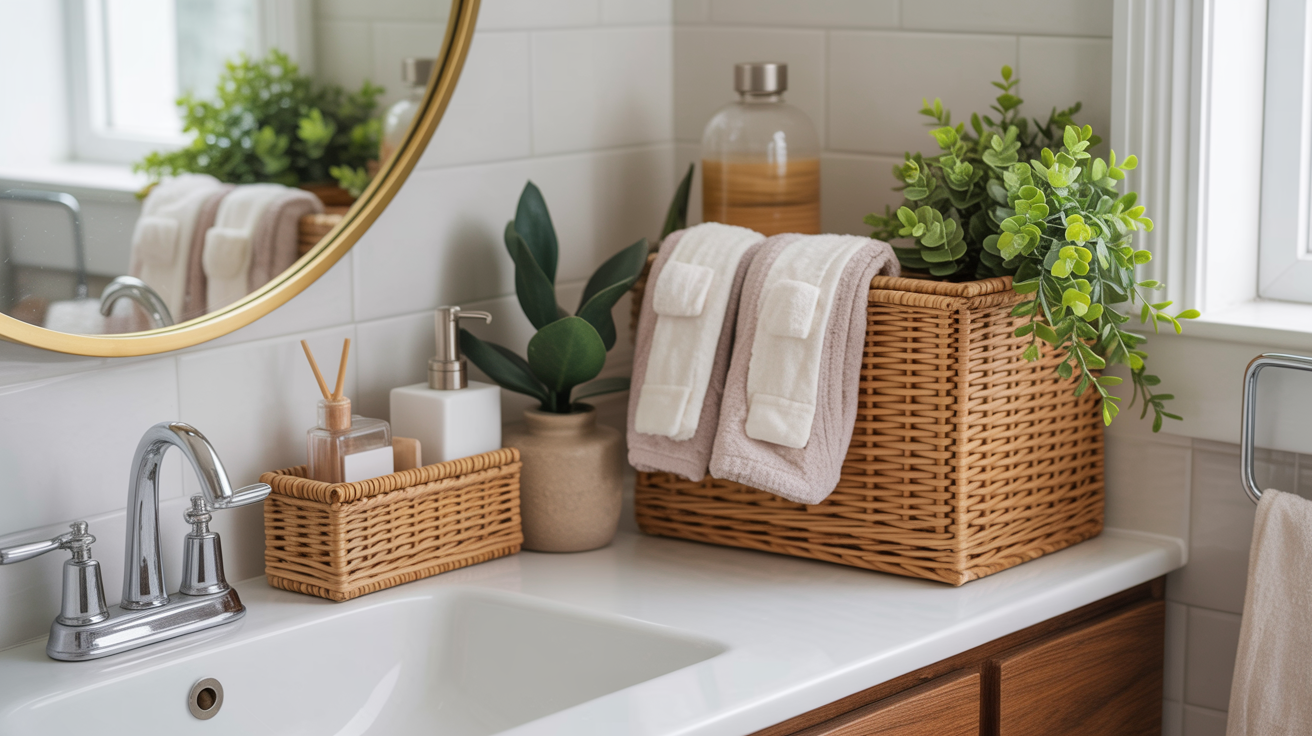
A small bathroom doesn't need more square footage. What it needs is a system you'll actually maintain. Most organization attempts fail within a few weeks because they rely on willpower instead of structure. This guide covers the strategies that hold up long term, from a proper bathroom declutter to vertical storage tricks that work in 30 square feet or less.
At a Glance
- Purge before you organize. Buying bins for clutter you haven't sorted just gives the clutter a nicer container.
- Daily-use items (four to six per person) get the easiest reach; anything used weekly or less belongs outside the bathroom entirely.
- Measure the space on each side of the under-sink pipes before buying organizers; generic ones rarely fit both sides evenly.
- Vertical space above the toilet and on the back of the door typically goes unused and can absorb a surprising amount of storage.
- Organize by task (morning, shower, cleaning, first aid) rather than by item type, so you open one zone instead of three each morning.
- A 90-second nightly reset does more for long-term tidiness than a deep declutter every few months.
Start with a Ruthless Declutter
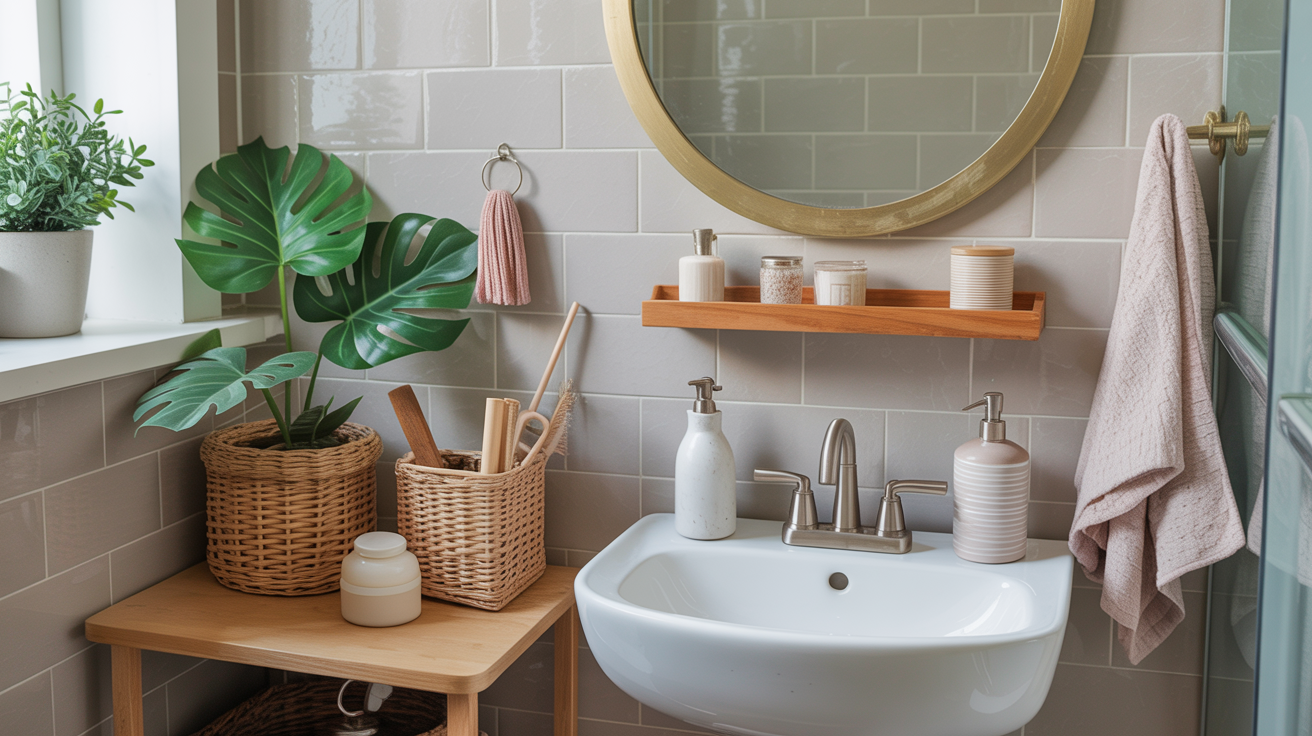
Organization that skips the purge just reshuffles clutter. Before you buy a single bin or shelf, pull everything out of the bathroom and sort it on the floor. This step is non-negotiable.
What Leaves Today
Expired medications and products. Check dates on everything. Most medications degrade past expiration, and many shouldn't go down the drain or into household trash loose. The FDA's guidance on medicine disposal recommends using a local drug take-back location or authorized collector when one is available, and reserves flushing for a specific list of medicines the FDA considers dangerous enough to risk accidental ingestion or misuse if left in the home. Absent a take-back option, most other medicines can go in household trash mixed with something undesirable like coffee grounds or kitty litter, in a sealed bag. Expired sunscreens, topical creams, and nail polishes go with them; the EPA's household hazardous waste guidance covers products like nail polish and aerosol cans that can ignite or leak if just tossed in the regular trash, and points to local collection programs for the ones that need it.
Products untouched for three months. If a shampoo has been sitting at the back of the cabinet since spring, it is not coming back into rotation. Out it goes.
Duplicates and near-empties. Three mostly empty conditioner bottles become one. Consolidate now rather than storing the empties.
Items that belong elsewhere. Leg razors used once a week don't need prime counter space. Cold medicine belongs in a hallway closet, not crowding your daily routine items.
What Earns a Spot
Daily-use items deserve the easiest access: toothbrush, face wash, moisturizer, deodorant. Roughly four to six items per person. Everything used less than daily goes into a drawer or cabinet. Anything used weekly or less can live outside the bathroom entirely. Linen closets and bedroom drawers handle backup supplies without stealing bathroom real estate.
A practical rule: no surface item should need to be moved to reach another surface item. If you're shuffling three things to get to your razor, the system is already failing.
Tackle Under-Sink Organization
The cabinet under the sink is usually a mess because pipes eat up the center, leaving awkward L-shaped space on either side. A few targeted approaches fix this without much expense.
Two-Tier Pull-Out Drawers
Stackable sliding drawers sized for under-sink cabinets (typically around 10 inches wide by 12 inches deep) make use of the vertical space beside the pipes. Pull-out versions mean you don't have to dig to the back. Measure the usable space on each side of your pipe cutout before buying anything; the two sides are rarely identical, since the trap and shutoff valves usually sit closer to one wall than the other. The pipe placement varies by vanity, and generic organizers don't fit every cabinet.
The Tension Rod for Spray Bottles
A spring-loaded tension rod installed horizontally inside the cabinet, about 10 to 12 inches from the top, gives you a rail for hanging spray bottles by their trigger handles. This frees the floor of the cabinet for larger items and keeps the sprays visible. Set it at a height where the bottles hang freely without touching the shelf below, usually two to three finger-widths of clearance.
Category Bins
Group items into clear, labeled bins: one for first aid supplies, one for backup hair products, one for cleaning supplies. When a bin fills up, that signals a declutter of that category, not a reason to buy a bigger bin.
Claim Vertical Wall Space
Most small bathrooms use only the floor footprint, ignoring 6 to 8 feet of vertical space that could hold towels, toiletries, and supplies without touching the floor.
Above the Toilet
The 24 to 36 inches above most toilets is dead space. A floating shelf unit or a freestanding over-toilet etagere (usually around 7 to 8 inches deep) adds real storage without expanding the floor plan. Use the lower shelves for everyday items and the upper shelves for backup supplies or folded towels.
Shallow wall shelves mounted at 60 to 65 inches from the floor clear enough headroom for most adults. If you're renting and can't drill, tension-pole shelving units apply pressure between floor and ceiling with no anchors required.
The Back of the Door
Over-the-door pocket organizers work for hair tools, cotton rounds, small product bottles, and medications. A basic six-pocket unit adds the equivalent of a small cabinet using only the back of an existing door. Measure your bottles before buying: oversized pockets leave things sliding around; too narrow and nothing fits.
Command hooks on the door interior handle lightweight towels, a hair dryer, or a robe. Three hooks can replace a full towel bar in function while taking up no wall space at all.
For a closer look at how layout choices affect what storage you actually have to work with, the best layouts for a small bathroom walks through the spatial trade-offs for different footprints.
Matching Storage to the Space You Actually Have
Different bathroom zones call for different solutions. This is a quick reference for which approach fits which spot, so you're not buying a product before confirming it solves the right problem.
| Zone | Best low-cost fix | Best permanent fix | Rental-friendly? |
|---|---|---|---|
| Under sink (beside pipes) | Category bins | Custom pull-out drawers | Yes, bins and rods both |
| Above toilet | Tension-pole shelf unit | Built-in recessed niche | Yes, tension pole only |
| Back of door | Over-the-door pocket organizer | N/A | Yes |
| Inside shower | Suction/adhesive caddy (short-term) | Tiled recessed niche | Adhesive caddy only |
| Counter | Labeled tray, one per person | Vanity with drawers | Yes, tray only |
Zone the Bathroom by Task
Organizing by item type (all hair products together, all medicines together) feels logical but often means you're opening multiple areas every morning. Organizing by task is more practical.
Create three or four zones based on your actual routine:
- Morning zone: Everything for your daily getting-ready, in one drawer or on one shelf. Face wash, moisturizer, toothbrush, deodorant.
- Shower zone: Products that live in or beside the shower. A caddy with drainage holes prevents the soap scum build-up that corner shelves accumulate.
- Cleaning zone: All bathroom cleaning supplies in one under-sink bin. When it's time to clean, you grab one bin and you're set.
- First aid and backup zone: Medications, bandages, and backup consumables in a labeled bin, out of daily reach.
The habit that makes this work is returning things to the correct zone rather than setting them on the nearest surface. That one behavior separates a lasting system from one that collapses in two weeks.
If you need more ideas specifically for squeezing in hardware storage, small bathroom storage ideas that save space covers options like recessed niches and cavity shelving.
Maintenance Habits That Hold the System Together
The biggest reason small bathrooms drift back into clutter isn't a shortage of storage. It's that items stop making it back to their homes.
One in, one out. Before a new product enters the bathroom, an old one leaves. This is the only sustainable way to prevent gradual accumulation.
A 90-second reset. Each evening, spend 90 seconds putting anything out of place back where it belongs. Much easier than a weekly rescue operation.
Cap the backstock. Store only one backup of each consumable. One spare toothpaste. One extra shampoo. When the backup comes into use, that's your signal to restock, not a reason to buy three more.
Wipe surfaces on the way out. Keeping a small microfiber cloth under the sink makes a quick counter wipe effortless. Surfaces that get wiped regularly don't build up the grime that makes deep cleaning feel so daunting.
Reassess quarterly, not just annually. Seasonal products (heavy moisturizers, sunscreen, cold-and-flu remedies) rotate in and out. A five-minute check every three months catches items before they expire unused, rather than finding a drawer full of dead stock at the next big purge.
Frequently Asked Questions
How do I organize a small bathroom with no storage at all?
Start with vertical space: over-the-door organizers, above-toilet shelving, and wall hooks. A tension rod under the sink for spray bottles and two-tier pull-out drawers for cabinet goods add storage without new furniture. If there's no cabinet at all, a slim rolling cart (about 12 by 16 inches footprint) fits beside most toilets and vanities and moves out of the way when needed.
How often should I declutter the bathroom?
A quick 10-minute sweep once a month handles most accumulation. Check for expired products, consolidate duplicates, and return anything that's drifted out of its zone. A deeper sort twice a year covers seasonal product swaps and catches what the monthly pass misses.
What is the most efficient way to use under-sink cabinet space?
Measure the usable width on each side of the pipes, then buy organizers built for those exact dimensions. Two-tier pull-out drawers and a tension rod for spray bottles use the space most efficiently. Group contents into labeled bins by category so you're not digging through mixed items every time.
Can I organize a small bathroom without drilling into the walls?
Yes. Over-the-door hooks, tension-pole shelf units, freestanding etageres, and adhesive command strips all add storage without wall anchors. Command strips rated for 7.5 pounds per set handle most hooks. Tension poles are ideal for renters because they apply no-damage upward pressure between floor and ceiling.
How do I keep a small bathroom from looking cluttered even after organizing?
Use matching containers rather than a mix of different bins and baskets. Limit surface items to three or four per person per counter area. A simple two-color palette for towels and containers creates visual calm. Close cabinet doors: even a well-organized interior adds visual noise if it's always visible. The fewer things competing for attention, the more spacious the room feels.
What's the safest way to get rid of old medications and half-used bottles of cleaner?
For medications, check first whether a local pharmacy, hospital, or police station runs a take-back program; that's the option public health guidance points to first. If nothing's nearby and the medicine isn't on the FDA's flush list, sealing it in a bag with something unappealing like used coffee grounds before trashing it keeps it out of curious hands and pets. For half-used cleaners, aerosols, and old nail polish, don't pour them down the drain or toss them loose in the trash; most municipalities run periodic household hazardous waste collection days for exactly these items, and your local solid waste or environmental agency can point you to the nearest one.