Small Bathrooms
Small Bathroom Storage Ideas That Save Space
Practical small bathroom storage ideas organized by zone — over-toilet, vanity, shower, wall, and door — with real dimensions and what goes where.
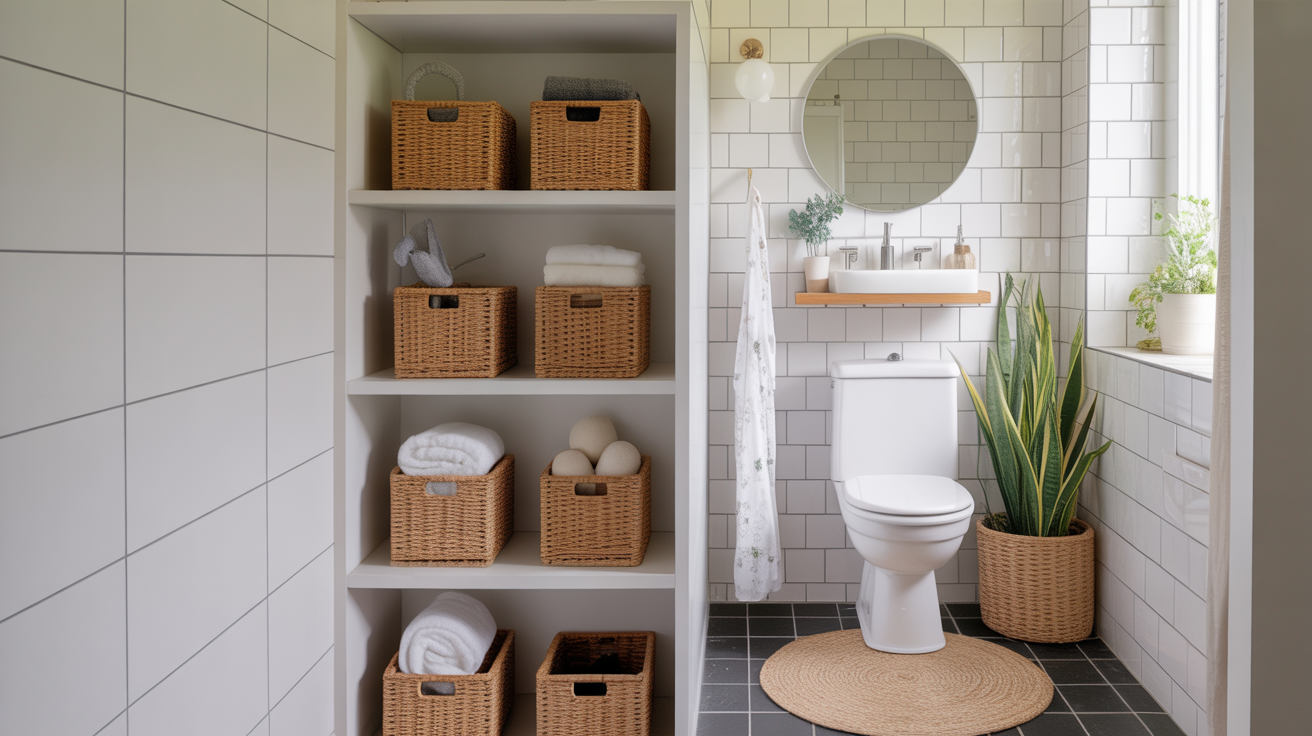
A small bathroom can hold more than you think, the problem is usually where things land, not how much there is to store. With a few targeted additions, even a 35-square-foot bathroom can handle daily essentials without the counter chaos.
At a Glance
- Think in five zones, over-toilet, vanity, shower, open wall, and door back, not one big storage problem.
- The 36–40 inches of clearance above a standard toilet tank is the single highest-yield spot in most small bathrooms.
- A recessed cabinet built into a 3.5-inch stud bay stores as much as a surface-mounted unit while projecting almost nothing into the room.
- Keep counter items to what you use daily; everything else belongs in a drawer or bin.
- Bathrooms are too warm and humid for medicine storage, keep medications in a bedroom drawer or hall closet instead.
- Audit and cut the pile by a third before you buy a single organizer, storage products contain clutter, they don't solve it.
Where Most Small Bathrooms Go Wrong
The typical culprit is a flat, horizontal mindset: everything lands on the counter or in the single cabinet under the sink. Vertical space above 48 inches goes untouched. Door backs are blank. The 8 inches above the toilet tank sits empty.
Once you shift to thinking about the room in zones, each with its own storage logic, the decisions get a lot easier. The five zones worth addressing are the wall above the toilet, the vanity area, the shower or tub niche, open wall space, and the back of the door.
If you're still sorting out your floor plan, these storage zones work best once the layout is locked in. See our guide to the best layouts for a small bathroom before committing to built-ins.
Small Bathroom Storage Ideas by Zone
Storage Zone Quick Reference
Use this as a starting checklist before you shop. Actual capacity depends on how deep you can build, but these are the working ranges installers and organizers land on repeatedly.
| Zone | Typical Depth | Typical Width/Height | Best For | Tools Needed |
|---|---|---|---|---|
| Over-toilet | 7–10 in. | 24–26 in. wide, 2–3 shelves | Paper goods, towels, first aid | None (freestanding) or stud finder (recessed) |
| Vanity/under-sink | 12–18 in. (cart) | 18 in. wide rolling cart | Cleaning supplies, styling tools | None |
| Shower niche (recessed) | 3.5–4 in. (built-in) | 12 x 24 in. | Daily shampoo, soap, razor | Tile tools, planned before tiling |
| Shower caddy (retrofit) | 6–8 in. | Tension-mounted, holds ~15 lbs | Same, no tile work | Tension pole only |
| Wall shelf | 8–10 in. | 24–36 in. wide | Towels, decor, medicine cabinet | Stud finder, drill |
| Door organizer | 2–4 in. | Up to 60 in. tall, 6–8 pockets | Toiletries, travel items | Over-door hooks only |
Over-Toilet Storage
The space above a toilet tank is one of the most reliable places to gain storage without touching plumbing or walls. The standard tank top sits at about 28–30 inches off the floor, which leaves 36–40 inches of clearance to the ceiling in most bathrooms, plenty for a two- or three-shelf unit.
What to store here:
- Spare toilet paper (a 4-roll stack fits a 10-inch-deep shelf)
- Hand towels and washcloths, folded flat
- First aid supplies in a small basket
- Cleaning supplies on the lowest shelf, where they're easy to grab
Freestanding over-toilet organizers typically span 24–26 inches wide and 7–9 inches deep. That depth keeps them above the tank without hanging over it. If the wall framing cooperates, a recessed cabinet between studs (standard 14.5-inch stud bay) gives you 3.5 inches of depth that projects almost nothing into the room.
Vanity and Under-Sink Storage
Under-sink cabinets lose half their usable space to the drain pipe and shutoff valves. Two fixes work reliably: pull-out drawers built around the plumbing, or shallow stackable bins positioned to clear the P-trap.
For a pedestal sink with no cabinet at all, a small rolling cart (18 inches wide, 12 inches deep) tucks beside or under the sink depending on clearance. This is removable storage, which matters for renters or anyone who might reconfigure later.
What to store under the vanity:
- Cleaning supplies and extra soap
- Hair dryers and styling tools (drawer dividers keep cords from tangling)
- Extra shampoo and body wash in flat bins
- Trash can (a 2.5-gallon size fits most under-sink cabinets)
The counter itself is worth treating carefully. One rule that holds in tight bathrooms: if something doesn't get used daily, it doesn't earn counter space. A single soap dispenser and a hand lotion are usually enough. Everything else can go into a drawer.
One thing that should never go in the vanity: medication. Bathrooms run warmer and more humid than almost any other room in the house because of shower steam, and that combination degrades pills faster than their labeled shelf life. MedlinePlus, the National Institutes of Health's consumer health library, recommends storing medicine in a cool, dry place such as a dresser drawer or a kitchen cabinet away from the stove and sink, not the bathroom cabinet where most people default to keeping it.
Shower Niche and Tub Surround Storage
A built-in shower niche is the cleanest option, typically 12 x 24 inches, set between studs at shoulder height, but it requires tile work and ideally gets planned before the tile goes in. Retrofitting one means opening the wall.
If the tile is already done, a corner caddy that tension-mounts between the ceiling and floor adds usable shelving without drilling. Tension poles hold up to about 15 lbs distributed across the shelves, which covers shampoo, conditioner, and a razor without issue.
What to store in the shower zone:
- Daily shampoo and conditioner
- Body wash or bar soap (on a small corner shelf)
- A razor and shave gel
- Loofah or shower puff
Keep the number of products honest. Three shelves of half-empty bottles is the enemy of a functional small shower. One product swap per shelf is a realistic ceiling for most people.
Wall-Mounted Storage
Open wall space between fixtures is where most of the creative bathroom storage ideas live. A few options with real numbers:
- Floating shelves: 8–10 inches deep, 24–36 inches wide. Good for towels rolled vertically, plants, or decorative jars holding cotton rounds. Install into studs when you can. If you're anchoring into open drywall instead, Family Handyman's load testing found that quality toggle-style anchors can carry well over 100 lbs in half-inch drywall, though the anchor packaging's rating (usually 20–50 lbs per anchor) is the number to plan around, not the lab maximum.
- Medicine cabinet: A recessed model (typically 14 x 24 inches or 16 x 26 inches) replaces a flat mirror and adds 3.5 inches of depth. Surface-mount versions project 4–5 inches but don't require wall surgery.
- Towel bars with hooks below: A 24-inch bar with three robe hooks underneath handles two bath towels and hand towels in under 10 inches of wall height.
For narrow bathrooms where space between fixtures is tight, staggering shelves vertically (one at 54 inches, one at 68 inches) lets you fit two shelves where a single wide shelf wouldn't clear the door swing or light fixture.
Door-Back Storage
The back of a bathroom door is often completely empty. An over-door organizer with clear pockets (typically 6–8 pockets per panel, hanging to about 60 inches tall) handles a surprising amount: toiletries, hair accessories, small first aid items, makeup.
For a heavier load, say, a full-width rack with wire baskets, check that the door hinges are heavy-duty enough. Standard interior door hinges handle about 5 lbs per hinge for something hung on the door surface. A three-hinge door can support a door rack holding 12–15 lbs without binding, as long as the weight is distributed low.
What works well on the door:
- Toiletries and travel-size items in clear pockets
- Cleaning cloths and a small spray bottle
- A full-length mirror combined with a storage organizer on the back face
- Kids' bath toys in mesh pockets that drain and dry
Practical Storage Tips for Small Bathroom Organization
Good small bathroom organization isn't just about adding more places to put things, it's about making sure the right things are accessible and the rest are out of the way.
- Audit first, buy second. Pull everything out of the bathroom and cut the pile by a third. Storage products can't solve a clutter problem; they only contain it.
- Use vertical stacking in drawers. Rolled towels and toiletries stored vertically (file-folder style) let you see everything at once and use the full drawer depth.
- Group by routine. Morning routine items go in one drawer or basket, nighttime items in another. This prevents counter spread during busy mornings.
- Label bins under the sink. It sounds small, but labeled bins (even with tape and a marker) mean the stock rotation actually happens and things don't disappear into the back.
- Dedicate one basket to overflow. Extra toilet paper, backup soap, extra razors, they all go in one spot. When the basket is full, that's the signal to stop buying more, not to add a second basket.
- Mount hooks at realistic heights. A hook at 65 inches suits an adult; add a lower hook at 40 inches if kids use the bathroom so they can hang towels themselves.
- Treat cords as storage. Hair dryer cords, electric shaver cords, a cord wrap or hook inside a drawer door keeps them from eating drawer space.
- Don't store closed containers of fabric in a damp zone. Rolled towels stored inside a closed bin on a shower-adjacent shelf can trap moisture. The EPA's guidance on mold and moisture notes that mold needs only water and a food source, like cotton fabric, to establish itself, and that materials dried within 24–48 hours of getting damp generally won't grow mold. Store spare towels loosely stacked or in a vented basket instead of a sealed bin.
For more layout strategies that support good storage placement, see our guides on small bathroom ideas to make it feel bigger and tiny half-bath ideas for awkward spaces.
Frequently Asked Questions
How much storage does a small bathroom actually need?
It depends on household size and how much is stored in the bathroom versus a linen closet elsewhere. For a single person in a bathroom under 40 square feet, one medicine cabinet, one under-sink cabinet, and two wall shelves typically handles everything. For two people sharing, add over-toilet storage and dedicated drawer space for each person. There's no one-size number, but if you find yourself stacking things on the back of the toilet tank daily, you're short on storage by at least one zone.
What's the best over-toilet storage for a small bathroom?
A freestanding over-toilet organizer (sometimes called an étagère) works in most spaces because it requires no drilling and can move with you. Look for units that are 7–8 inches deep rather than 10 inches, the shallower profile keeps the shelves above the tank without creeping into the space above the seat. If your walls are accessible and the framing aligns, a recessed wall cabinet centered above the tank stores more without projecting into the room at all.
Can you add storage to a bathroom without drilling into tile?
Yes, with some trade-offs. Tension-mount shower caddies, over-door organizers, freestanding shelving, and adhesive hooks on painted drywall walls all avoid tile penetration. Adhesive hooks rated for 7–10 lbs hold well on smooth surfaces if the wall is clean and dry when applied. They're not reliable on textured paint or porous grout. For heavier loads, a towel bar that will take daily pulls, a stud or toggle anchor into drywall is the only option that holds long-term.
How do you organize a small bathroom with no storage at all?
Start with three freestanding pieces: a rolling cart beside or under the sink, an over-toilet shelf unit, and an over-door organizer. Together, these add meaningful storage without any tools. A rolling cart at 18 inches wide and 30 inches tall holds cleaning supplies on the bottom shelf, daily toiletries at mid-height, and spare towels on top. That combination usually resolves the worst of the congestion while you figure out whether more permanent built-ins are worth the investment.
What should you not store in a small bathroom?
Medications, extra towels beyond one set per person, and anything that reacts badly to humidity (paper, certain medications, electronics) are better stored outside the bathroom if space allows. Heat and moisture from showers and baths can make medicine less potent or cause it to go bad before its printed expiration date, which is why MedlinePlus specifically flags bathroom cabinets as a poor storage spot. High-humidity storage also accelerates mold on fabric. A linen closet in the hallway is a better home for backup towels and sheet sets, keep only the current set in the bathroom itself.
Is it worth building a recessed niche instead of buying freestanding storage?
For a shower you're already retiling, yes. A built-in niche adds zero visible footprint and holds daily products at the exact height you use them. If the tile is staying put, the math flips, cutting into a finished wall to add one niche typically costs more than several years of a well-chosen tension caddy or shelf. Save the built-in for a remodel that's already opening the wall.