Small Bathrooms
Space-Saving Vanities for Small Bathrooms
Find the right small bathroom vanity for your space: narrow, corner, and floating styles explained with real dimensions and storage tips.
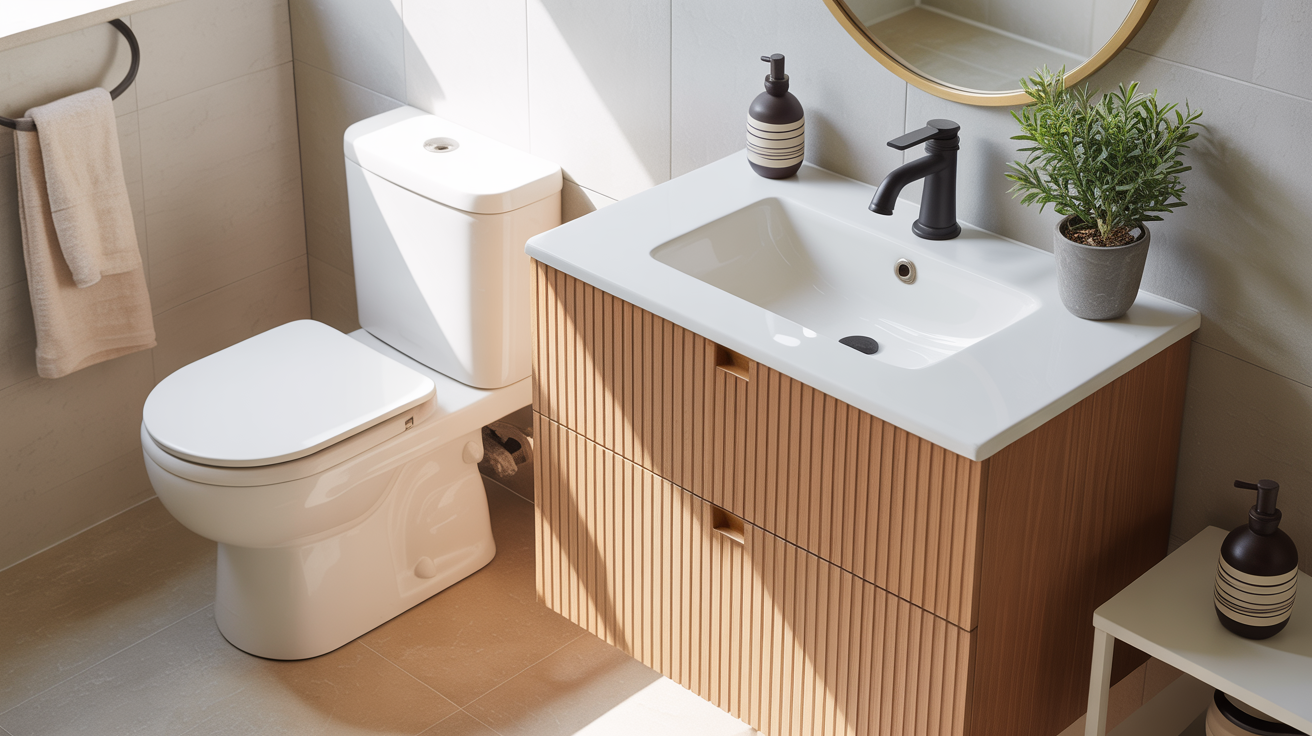
A small bathroom vanity does two things at once: it holds the sink and faucet your bathroom needs, and it has to do that without eating up floor space you can't afford to lose. The good news is that compact vanity options have improved considerably over the past decade. You can find well-built units as narrow as 18 inches wide that still include real storage. This guide walks through the formats that work, the dimensions to target, and the decisions that trip people up.
At a Glance
- A 24-inch vanity is the practical minimum for a bathroom used daily; 18-inch units exist but sacrifice basin size and storage.
- Shallow vanities (16 to 18 inches deep) can recover 4 to 5 inches of floor clearance versus a standard 21- to 22-inch depth.
- Floating vanities free up visual floor space and let you set mounting height to fit the household, but they must anchor into wall studs, not drywall alone.
- Corner vanities save adjacent wall space but shrink usable basin area compared to a straight vanity of similar overall width.
- Integrated or undermount sinks are easier to keep clean on a small counter than drop-in or vessel styles.
- Plan storage in layers (medicine cabinet, wall shelf, tower cabinet) since the vanity cabinet alone rarely covers daily needs.
How Small Is "Small"? Setting Your Vanity Size Baseline
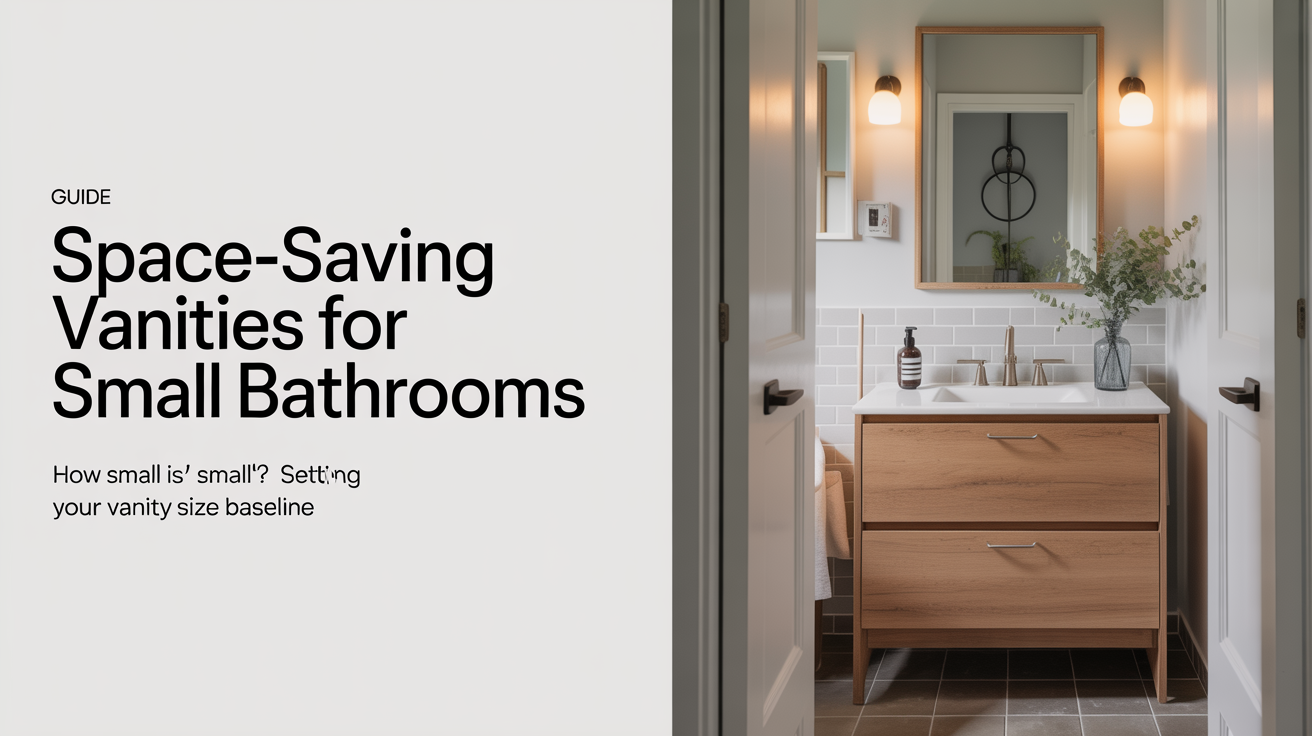
Before you start browsing, measure the space you actually have. Pull out a tape measure and record three numbers: the width of the wall where the vanity will sit, the depth available from that wall to the nearest obstacle (toilet, door swing, tub edge), and the height from floor to the bottom of any window or medicine cabinet above.
Those three numbers determine almost every other decision in this guide. Write them down before you look at a single product listing, since it's easy to fall for a vanity online and only discover afterward that the depth is wrong for your room.
| Vanity Width | Best-Fit Bathroom | Sink Type | Typical Storage |
|---|---|---|---|
| 18 in | Powder room, single-user secondary bath | Small integrated basin (14 to 15 in) | One shallow door or drawer |
| 24 in | Small full bathroom, one primary user | Undermount or integrated | One door plus one drawer |
| 30 in | Small-to-mid bathroom, light shared use | Undermount, drop-in | Two doors or a bank of drawers |
| 36 in | Shared bathroom with a compact footprint | Undermount, integrated | Full cabinet, often with a false drawer over plumbing |
Width: the Number That Matters Most
Standard vanities run 24 to 48 inches wide. For a genuinely cramped bathroom, look at the 18- to 24-inch range. An 18-inch vanity fits into spaces where a standard unit simply cannot go, though the basin will be shallow and storage is minimal. A 24-inch unit is the more practical sweet spot for most small bathrooms, wide enough for a proper undermount or drop-in sink and a small drawer on one side.
Anything under 30 inches is typically sold as a single-sink, single-door or single-drawer unit. That works fine for a powder room or a secondary bath used by one person. If two people share the bathroom, even an extra 6 inches of countertop makes the morning routine easier. If you're weighing whether to future-proof the room for accessibility (a wheelchair user, an aging household member, or simply a household that wants to age in place), the U.S. Access Board's guidance on accessible lavatories and sinks sets the reachable sink rim at 34 inches maximum above the floor, with at least 27 inches of clear knee space at that height. Even in a bathroom you're not building to that standard, it's a useful sanity check on counter height.
Depth: Often the Bigger Constraint
Standard vanity depth is 21 to 22 inches. That sounds shallow until you realize a door swinging open needs clearance, or that a toilet sits only 15 inches away from the wall your vanity is on. In those situations, look for "slim" or "shallow" vanities at 16 to 18 inches deep. They exist in multiple widths and can recover 4 to 5 inches of floor clearance, which is enough to change how navigable a small bathroom feels.
One tradeoff: a shallower vanity usually means a smaller basin. If the sink is less than 12 inches front to back, splashing becomes an issue. Test any unit you're considering by looking at the basin dimensions, not just the overall cabinet depth. A basin that's 12 by 9 inches will splash noticeably more than one that's 15 by 11, even though both fit on an 18-inch-deep top.
Floating Vanities and Why They Work in Tight Spaces
A floating vanity, also called a wall-mounted vanity, is fastened directly to the wall studs with no legs or floor cabinet touching the ground. The floor underneath is fully exposed. That visual break makes the room feel larger, and it also makes the floor easier to mop.
The functional benefit is just as real. Because you can set the mounting height anywhere from 30 to 36 inches off the floor, you can position it to suit your height, or to clear a floor-level heating vent. Standard countertop height runs around 32 to 34 inches, but taller households often prefer 36 inches.
How High to Mount a Floating Vanity
A good starting point is 32 inches from the finished floor to the top of the countertop for an average adult. Measure the height of the people who will use the bathroom regularly. If everyone is under 5'4", keep it at 30 to 32 inches. For households averaging 5'10" or taller, 34 to 36 inches feels more natural and puts less strain on the lower back during the morning routine.
The wall studs behind the vanity need to be located before you order anything. A floating vanity carries the full weight of the cabinet, sink, countertop, and whatever gets stored inside. That weight must transfer into studs, not just drywall. Here's what that load looks like once a typical 24-inch unit is furnished:
| Component | Approximate Weight |
|---|---|
| Cabinet (MDF or plywood construction) | 35 to 50 lb |
| Ceramic or stone-composite basin and top | 20 to 40 lb |
| Faucet and drain hardware | 3 to 5 lb |
| Contents (toiletries, towels, cleaning supplies) | 15 to 25 lb |
| Total installed load | 75 to 120 lb |
That total needs a mounting bracket or ledger board rated for the full figure, plus a safety margin, anchored into at least two studs. A single toggle bolt in drywall is not adequate for this kind of sustained, cantilevered load.
For layout planning before you shop, knowing where your studs fall will also help you decide whether a centered or offset placement makes more sense for the room.
Narrow and Corner Vanity Styles Worth Knowing
The Narrow Freestanding Vanity
Narrow freestanding vanities with four legs or a full-base cabinet are the most straightforward replacement for a standard unit. They sit on the floor, connect to existing supply lines, and require no wall mounting. If your plumbing rough-in is already set, a freestanding vanity that matches those measurements is the lowest-disruption upgrade.
Look for units in the 18- to 24-inch width range. Most ship with a pre-drilled top for a single faucet hole, centered. If you want widespread or wall-mount faucets, confirm the top supports that before purchasing.
Corner Bathroom Vanities
A corner vanity uses the right-angle junction of two walls, placing the sink basin diagonally across the corner. The triangular footprint frees up the adjacent wall space for a toilet or door clearance.
Corner units are almost always 24 to 36 inches measured wall to wall on each side, but the usable basin is smaller than a straight vanity of similar overall dimensions because of the angled geometry. They work well in powder rooms where the primary use is hand-washing, less so in bathrooms where you need serious counter space.
Corner vanities also require supply lines and drain rough-ins positioned at or near the corner. If your current plumbing runs along a flat wall, relocating it adds cost, so have a plumber assess the rough-in before committing to a corner layout.
Pedestal and Vessel Sinks as Alternatives
If storage is coming from other sources (medicine cabinet, wall shelving, linen closet), a pedestal sink removes the vanity cabinet entirely and frees up the maximum floor space. The tradeoff is zero drawer or cabinet storage under the sink. This works best in powder rooms or secondary baths where toiletries aren't stored in the room.
A vessel sink on a small wall-mounted shelf splits the difference: you get the open-floor look of a floating vanity at lower cost. The shelf is typically 16 to 20 inches wide, just enough to support the basin and faucet.
Storage Strategies When the Vanity Is Small
A compact vanity rarely provides enough storage on its own. The cabinet underneath holds cleaning supplies or spare toilet paper, not daily-use items. Plan your storage in layers.
Above the Vanity
A recessed medicine cabinet built into the wall between studs adds 4 to 6 inches of depth without projecting into the room. Standard stud spacing of 16 inches on center fits most cabinet models. Surface-mounted cabinets work too, though they project 3 to 4 inches from the wall.
If there's no room for a medicine cabinet, a 6- to 8-inch-deep wall shelf above the vanity holds daily items within reach. Keep the shelf at least 8 inches above the faucet so it doesn't interfere with hand-washing.
Beside the Vanity
A narrow tower cabinet or bathroom étagère placed beside the vanity, rather than in the vanity, can carry more storage than the vanity itself. Tower cabinets as slim as 10 to 12 inches deep fit into gaps beside toilets, between the vanity and a wall, or tucked into an alcove.
For more ideas on using vertical space and other non-vanity storage, see small bathroom storage ideas that save space.
Countertop and Sink Configuration
For small vanities, an integrated sink (where the bowl is molded from the same material as the top) is often the most practical choice. There are no seams to clean, and the overall profile is compact. Integrated tops are common in acrylic, solid surface, and vitreous china.
An undermount sink is the next best option. The rim sits below the countertop, which makes wiping the counter easy and keeps the visual profile clean. Drop-in sinks work but take up slightly more counter area because the rim sits on top of the counter.
Avoid vessel sinks on very small vanities (under 22 inches wide). A vessel basin sits above the counter and requires a taller faucet to match, which makes a tight countertop feel more crowded.
The faucet itself is worth a second look on a small vanity, since it runs constantly and directly affects your water bill. A faucet carrying the EPA's WaterSense label caps flow at 1.5 gallons per minute, roughly 30 percent below a standard 2.2 gpm faucet, without a noticeable drop in usability at a bathroom sink. On a shared small vanity where the tap runs often, that difference adds up over a year of daily use.
Frequently Asked Questions
What is the minimum width for a bathroom vanity?
The smallest production vanities run 18 inches wide. At that width, the basin is compact (often around 14 to 15 inches across) and storage is limited to a single small door or drawer. For a working bathroom rather than a powder room, 24 inches is a more usable minimum.
Can I fit a double-sink vanity in a small bathroom?
Double-sink vanities start at 48 inches wide, and most are 60 to 72 inches. For a bathroom under 6 feet wide or shorter than 8 to 10 feet in length, a double vanity usually takes over the room. A better approach for a shared small bathroom is a single 30-inch vanity with good lighting and a clear counter-sharing routine.
Is a floating vanity harder to install than a freestanding one?
Yes, a wall-mounted vanity requires more preparation. You need to locate studs, potentially add blocking between studs if the unit doesn't align perfectly, and mount a hanging bracket or ledger board to carry the load. The plumbing connections are the same either way. Most homeowners comfortable with basic carpentry can handle the installation, but if you're unsure about the wall structure, a handyman or carpenter can do the mounting in a few hours.
What depth vanity works in a narrow bathroom?
If the distance between your vanity wall and the opposite wall (or the toilet) is less than 30 inches, look for vanities 16 to 18 inches deep rather than the standard 21 to 22 inches. That 4- to 5-inch difference can move you from a cramped corridor to a passable one. Most plumbing connections are the same at either depth.
Do corner vanities save more space than narrow straight vanities?
It depends on the room layout. A corner vanity frees up two adjacent walls but uses the corner itself, which is often dead space anyway. In a bathroom where the corner is genuinely unused and the straight walls are occupied by the toilet and door, a corner vanity can be the right fit. In most bathrooms, though, a narrow straight vanity on a flat wall is easier to install, comes in more style options, and offers better basin proportions.
How much weight can a floating vanity actually hold?
It depends entirely on the mounting hardware and how many studs it engages, not on the cabinet itself. A properly installed 24-inch floating vanity, anchored into two or more studs with a rated bracket or ledger board, comfortably carries the 75- to 120-pound range typical of a furnished unit. What fails in practice is almost always the anchoring, not the cabinet, so budget for a bracket rated above your expected total load rather than matching it exactly.
Should I match my vanity height to ADA guidelines even if I don't need accessibility features?
It's worth considering if you expect to stay in the home long-term or if the bathroom serves a range of ages. The 34-inch maximum rim height referenced in federal accessibility guidance isn't a requirement for a typical remodel, but it's a reasonable upper bound. Going much taller than that mainly benefits very tall households; going shorter helps children and seated users without meaningfully inconveniencing anyone else.