Bathroom Design
Bathroom Accent Wall Ideas to Add Character
Explore bathroom accent wall ideas that add personality without a full remodel: tile, paint, shiplap, wallpaper, and more with practical tips.
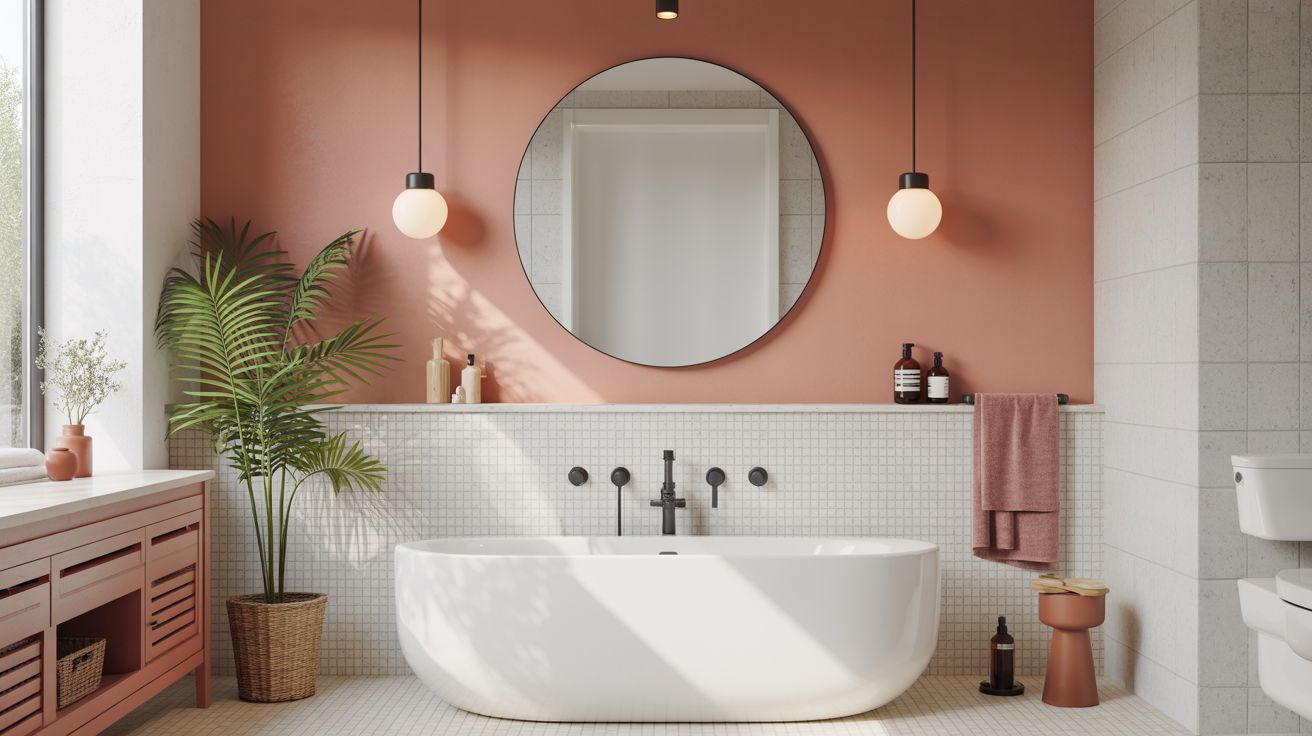
A single statement wall can shift the whole personality of a bathroom without touching plumbing, replacing fixtures, or swinging a sledgehammer. Whether you have a 50-square-foot powder room or a larger primary bath, a bathroom accent wall focuses the eye, adds depth, and gives the space something worth noticing.
The wall you choose and the material you apply matters as much as the look itself. This guide covers the most practical options, how to pick the right wall, and what to expect during each approach.
At a Glance
- The best accent wall is usually the one you see first: behind the vanity, the back of a walk-in shower, or the wall facing the entry door.
- Tile is the only fully waterproof option and the right call for any surface inside a shower enclosure.
- Paint is the cheapest and fastest route: a quart covers roughly 100 square feet and a standard wall takes two coats.
- Large-format porcelain slabs weigh 6 to 9 lbs per square foot; confirm the wall framing and substrate can carry that before ordering.
- Moisture-resistant, vinyl-coated wallpaper holds up far better than standard paper, but even good vinyl can lift at the seams in a heavily steamed shower over time.
- Good ventilation extends the life of every material on this list. Keeping humidity in check is the single biggest factor in how long paint, wallpaper, and wood paneling last on a bathroom wall.
Which Wall Works Best for a Bathroom Accent?
Not every wall reads as a feature wall. The best candidates tend to be:
- The wall behind the vanity. This is where the eye naturally lands when you enter most bathrooms. A bold tile pattern or contrasting paint here reinforces the sink as the room's focal point.
- The back wall of a walk-in shower. Shower walls already take on some visual weight because of the enclosure around them. A patterned or contrasting tile on the back panel makes the shower feel intentional rather than builder-standard.
- The wall opposite the entry door. Whichever wall you see first when you walk in is the one that sets the tone. If that wall is blank, it's a missed opportunity.
Avoid accent-walling a surface that's already crowded with a window, towel bars, toilet roll holders, and outlets. Those elements break up the visual effect and the result reads as cluttered rather than designed.
For a broader look at how wall choices interact with the rest of your layout, see bathroom layout ideas that make the most of your space.
Tile Accent Wall Ideas
Tile is the most durable and water-resistant option, which makes it the right choice for shower walls and areas that regularly get splashed. It's also one of the more permanent choices, so plan carefully.
Large-Format Slabs
Porcelain panels in sizes like 24x48 inches or 32x64 inches create a seamless, nearly grout-free look. They're heavier than standard tiles, so the substrate needs to be solid (cement board or tile backer, not standard drywall). The visual result is a wall that reads more like continuous stone than a tiled surface. Most of these panels weigh 6 to 9 lbs per square foot, so confirm your wall framing can carry the load before ordering. A full 8-foot-tall wall of large-format porcelain can add several hundred pounds to a single stud bay; if you're unsure whether the framing behind an existing wall can take that load, that's a question for a contractor before tile goes up, not after.
Zellige and Handmade Tiles
Zellige is a Moroccan clay tile, hand-cut from fired, glazed squares and assembled piece by piece the way it has been for centuries. According to the craft's documented history, individual pieces are chiseled by hand into pre-established shapes and pressed together like a puzzle, which is why no two tiles sit exactly flush and the surface catches light differently at every angle. Tiles typically run 4x4 inches. Because of their variation, they need a flexible adhesive and a grout color that complements rather than fights the color shifts.
Subway Tile in Non-Standard Proportions
The standard 3x6 subway tile has been everywhere for more than a decade. A 2x8 or 4x12 version in the same profile gives a similar feel but reads as more considered. Stacking them vertically rather than horizontally (a 1/3 offset rather than the standard 1/2) also changes the rhythm without changing the material.
Mosaic Tile
1x1 or 2x2 mosaics on mesh backing work well for small accent areas: behind a niche, on the back wall of a curbless shower, or as a floor-to-ceiling panel on one wall. The key is keeping the rest of the room calmer so the mosaic has visual room to work.
Paint and Color for a Feature Wall
Paint is the fastest and lowest-cost accent wall approach. In a bathroom, moisture matters, so use a satin or semi-gloss finish rated for high-humidity spaces. Flat or eggshell paints trap moisture and peel faster.
Deep, Saturated Colors
Navy, forest green, charcoal, and deep terracotta all work well as bathroom feature wall colors. A bathroom is a small space, and you'll close the door; you're not committing to painting a living room you stare at all day. Going bold on one wall while leaving the rest white or a pale neutral keeps the contrast legible without overwhelming the room.
A useful guideline: limit the accent color to one wall, and bring in one or two accessories (a towel, a plant, a bath mat) in the same tone to tie it together.
Two-Tone Walls
A painted wall doesn't have to be uniform from floor to ceiling. A horizontal divide at about 36 inches from the floor, with a darker shade on the lower third and a lighter one above, creates a wainscot effect without millwork. A simple wooden bead along the joint gives it a finished edge and hides any brush line.
For help pairing a feature wall color with the rest of the room, how to choose a bathroom color scheme you won't tire of walks through the process.
Shiplap, Beadboard, and Wood Paneling
Wood paneling has moved well beyond rustic territory. The look depends heavily on the finish and the installation location.
Moisture-Tolerant Wood Choices
Teak, cedar, and some tropical hardwoods handle humidity reasonably well in a properly ventilated bathroom. MDF shiplap swells and warps when it gets wet repeatedly, so keep it away from splash zones and never use it as a shower wall surface without a fully waterproof coating on every edge and face.
Poplar and pine are common paneling materials, traditionally milled with rabbeted edges so each board overlaps the next; that overlap is what defines shiplap as a profile, distinct from the tighter tongue-and-groove joint used in most beadboard. If you're installing painted shiplap on a non-shower wall, prime every surface (including the cut edges) before installation, apply two coats of semi-gloss paint after, and leave a small gap (roughly 1/8 inch) between boards to allow for seasonal wood movement. That gap also happens to be where dust collects fastest, so a horizontal-plank wall needs a quick vacuum pass with a brush attachment more often than a flat painted wall does.
Where Wood Panels Work Best
A shiplap or wood plank ceiling in a bathroom reads as architectural detail, not rustic throwback, especially in an otherwise white or very light palette. Because it's away from direct water contact, wood holds up longer on the ceiling than it would on a shower wall.
Floor-to-ceiling paneling behind the vanity in a matte or painted finish adds texture without the permanence of tile. If you later want to change it, the swap is more reversible than a fully tiled wall.
Wallpaper and Wall Murals in Bathrooms
Moisture-resistant wallpaper (not standard wallpaper) can work in a bathroom with good ventilation. Vinyl-coated wallpapers designed for kitchens and baths, or fabric-backed vinyl, tolerate humidity better than standard paper.
A single-wall application, particularly behind the toilet or in a powder room with no shower, is the most practical location. The steam from a shower builds up over years, and even quality vinyl wallpaper may peel at the seams in a small, frequently steamed space. Running the bathroom's exhaust fan during and after every shower matters more for wallpaper than for any other material on this list. The EPA's guidance on moisture control recommends keeping indoor humidity in the 30-to-50-percent range and running a fan or opening a window while showering specifically to limit the moisture that causes peeling, staining, and mold behind wall coverings.
Peel-and-stick wallpaper is a reasonable way to test a pattern before committing to paste. It doesn't last as long (typically 3 to 5 years before edges start lifting), but for a rented space or an experiment, it's a sensible choice.
For accent wall ideas that fit a specific style direction, see modern farmhouse bathroom ideas that still feel fresh.
Materials at a Glance
| Material | Best Location | Durability | DIY-Friendly? |
|---|---|---|---|
| Large-format porcelain tile | Shower wall, vanity wall | Very high | Moderate (heavy) |
| Zellige tile | Vanity wall, dry walls | High | Moderate |
| Semi-gloss paint | Any non-shower wall | Medium | Yes |
| Shiplap (primed wood) | Ceiling, vanity wall | Medium | Yes |
| Moisture-resistant wallpaper | Powder room, behind toilet | Medium | Yes |
| Mosaic tile | Shower niche, accent strip | Very high | Moderate |
Cost and Lifespan Compared
Budget and how long a material is expected to last before it needs redoing are usually the deciding factors once the look is settled. Rough ranges for a standard 5x8-foot accent wall:
| Material | Typical Material Cost (5x8 wall) | Expected Lifespan |
|---|---|---|
| Semi-gloss paint | $25 to $40 | 5 to 8 years before recoating |
| Peel-and-stick wallpaper | $60 to $200 (2 to 3 rolls) | 3 to 5 years |
| Pasted vinyl wallpaper | $150 to $400 | 8 to 12 years with good ventilation |
| Primed shiplap or beadboard | $150 to $350 in material | 10 to 15 years |
| Standard-format tile | $200 to $600 | 20+ years |
| Large-format porcelain slab | $500 to $1,200+ | 20+ years |
These figures cover material only, not labor. Tile installation labor for a single accent wall commonly runs as much as or more than the tile itself, which is one reason paint and wallpaper remain the most popular starting points for a first accent wall project.
Frequently Asked Questions
Can I tile over existing bathroom tile for an accent wall?
Yes, in many cases. The existing tile needs to be firmly bonded with no hollow spots or cracked pieces. You can apply a polymer-modified adhesive directly over sound tile and set new tile on top, but you'll add 1/2 inch or more to that wall's thickness, which can affect door clearance and trim. Check that the combined weight won't exceed what your wall structure can carry, and use a flexible adhesive rated for tile-on-tile installation.
What is the cheapest way to add a bathroom accent wall?
Paint. A quart of quality bath-formula paint covers roughly 100 square feet and costs $25 to $40. For a standard 5x8-foot wall, one quart is enough for two coats. Peel-and-stick wallpaper runs $30 to $80 per roll depending on pattern and quality; a single-wall powder room application typically uses 2 to 3 rolls.
Does a bathroom need an exhaust fan for wallpaper or wood to hold up?
Yes. A ventilation fan sized for the room (typically 1 CFM per square foot of floor area, with a minimum of 50 CFM for a standard bath) significantly reduces moisture damage to any wall material. Without it, repeated steam exposure shortens the life of paint, wallpaper, and wood considerably, often within a few years.
Is a bathroom accent wall a reasonable DIY project?
Paint and peel-and-stick wallpaper are manageable for most homeowners. Wood paneling is more involved (cutting, fastening, priming, and finishing) but achievable over a weekend. Tile is the most demanding; it requires solid substrate prep, even adhesive coverage, precise cuts, and careful grouting. If you haven't tiled before, a small accent wall is a reasonable first project. Large-format tile (anything over 15 inches per side) is harder to set level and is better suited to someone who has tiled before or is willing to hire a pro for the wall installation.
How do I choose between tile and paint for a bathroom feature wall?
Location and water exposure drive the decision. Any wall inside a shower enclosure needs tile or another fully waterproof finish. Walls outside the shower in a humid bathroom can use paint, wood, or wallpaper, provided the room is well ventilated. Tile costs more upfront and takes longer to install, but lasts decades with minimal maintenance. Paint is fast and inexpensive, but needs recoating every 5 to 8 years in a high-use bathroom.
Can I mix two accent materials on the same wall?
It works, but only with a clear break point. A common approach is tile on the lower third of a wall (where splashes actually happen, around a freestanding tub for example) transitioning to paint or wallpaper above a clean horizontal line, often finished with a wood or metal trim strip at the seam. Mixing materials without a defined transition point, like feathering tile into paint with no trim, tends to look unfinished rather than intentional.