Bathroom Design
Modern Farmhouse Bathroom Ideas That Still Feel Fresh
Farmhouse bathroom ideas that balance rustic warmth with clean modern lines — materials, palettes, tile choices, and fixtures that work.
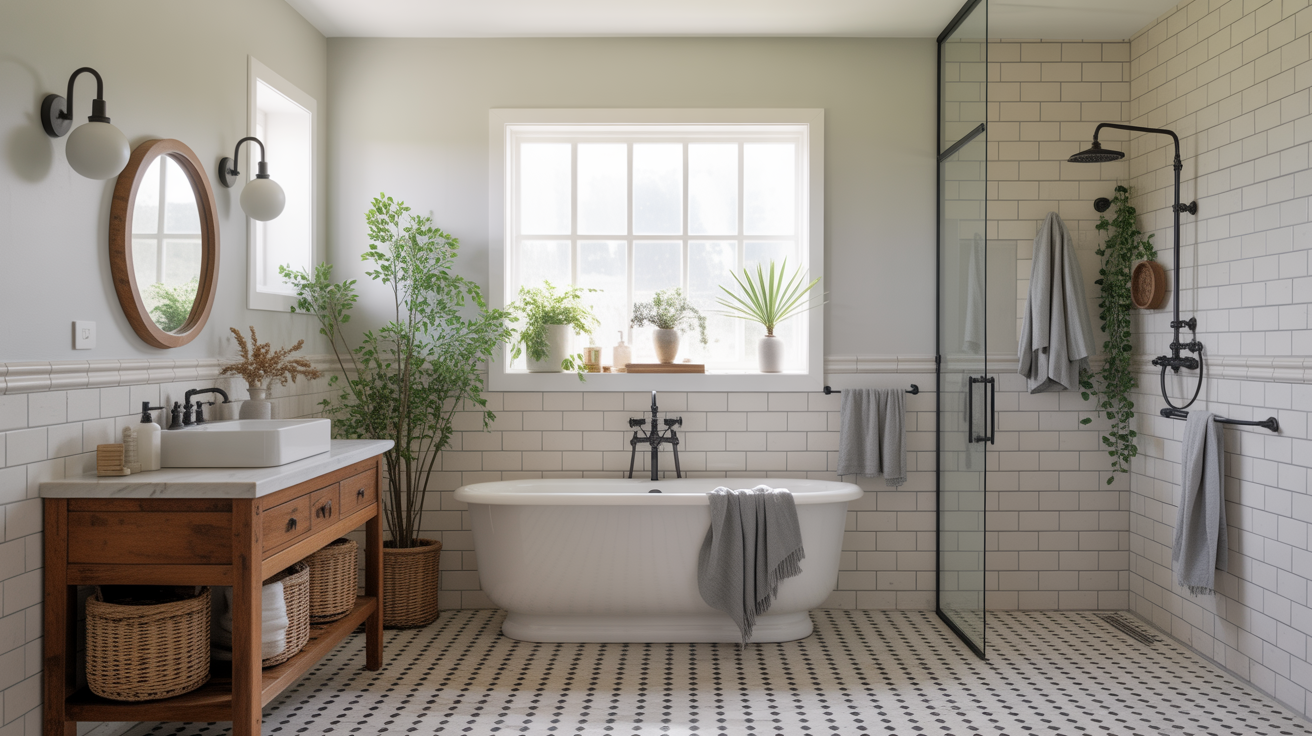
The modern farmhouse bathroom is easy to do right and surprisingly easy to do wrong. Get the balance correct and you have a space that feels warm, personal, and timeless. Tip too far toward the décor side and you end up with something that looks like a Pinterest board from 2017, all galvanized buckets and chalkboard signs.
What actually makes a farmhouse bathroom feel fresh in 2026 is restraint: natural materials used with intention, a palette that doesn't shout, and fixtures that are clearly functional rather than theatrical.
The Material Foundation: Where Farmhouse Character Actually Comes From
Most farmhouse bathrooms that age badly were decorated rather than designed. The ones that hold up are built on materials that have texture, variation, and a real reason for being there.
Tile as the Starting Point
Tile is the largest surface you'll specify, so it sets the tone for everything else. A few combinations that read as modern farmhouse without veering into theme-park territory:
- Large-format matte porcelain in warm white or greige on the floor (24×24 or 18×18 inch). The scale is contemporary; the slight warmth ties to rustic traditions. Rectified edges let you run tight grout lines (1/16") that keep the look clean.
- 3×6 or 4×8 subway tile on shower walls, stacked vertically rather than in a standard brick-offset pattern. Vertical stacking reads more current and adds visual height.
- Hex mosaic on the shower floor, a classic detail that shows up in farmhouses built from the 1890s through the 1950s. Matte white or bone with dark grout is the most legible choice. Keep the hex small (1" or 2") on the floor, where it provides grip and genuine period character.
- Textured, matte wall tile (zellige-style or handmade ceramic) as an accent on one wall or behind a freestanding tub. These tiles have natural color variation that no amount of shiplap can replicate.
The best farmhouse tiles are the ones that look like they might have always been there.
Shiplap and Wood: Use It Sparingly
A shiplap bathroom accent wall became so overdone that designers started avoiding it entirely. That's an overcorrection. Shiplap originated as a shipbuilding technique before it became a common construction material, and behind a vanity or on a single accent wall it's still a genuinely good choice, because it adds texture without weight, takes paint well, and references an authentic building tradition rather than a decorating trend.
The rules for keeping it from looking dated: paint it the same color as the surrounding walls (or close to it) rather than bright white, keep the boards narrow (3–4 inches), and don't run it floor to ceiling on every surface. One wall is enough. In a wet area, use a cementitious backer or PVC shiplap rather than MDF, moisture will destroy anything paper-faced.
Reclaimed wood on a floating vanity shelf or as an open cabinet frame adds warmth without the costume-drama risk. Stick to boards that have been properly dried and sealed; raw reclaimed wood in a bathroom absorbs moisture and warps.
Palettes That Work
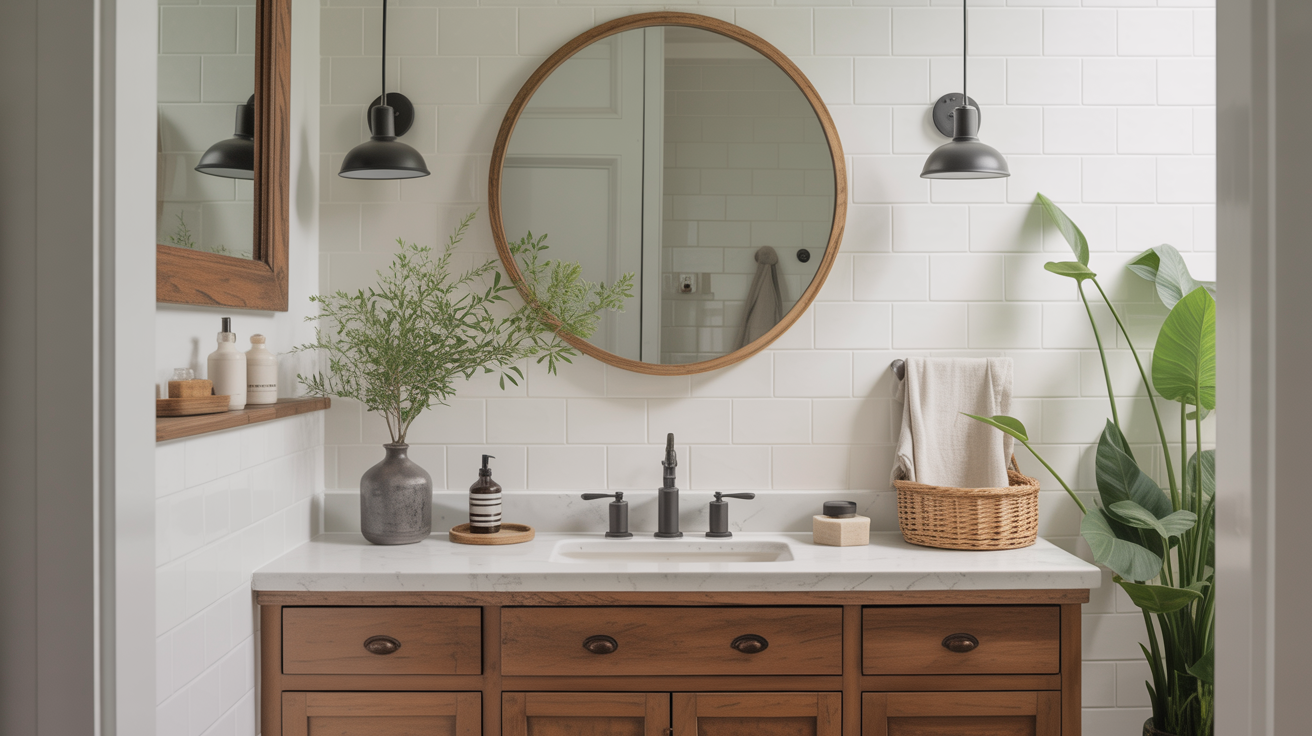
The farmhouse bathroom palette that aged worst was all-white with galvanized metal accents and a pop of black. The one that actually holds up longer is quieter.
Warm whites and off-whites (Benjamin Moore White Dove, Sherwin-Williams Alabaster) remain the best base. They're not stark, they don't go yellow under warm lighting, and they make natural materials look good next to them.
For a second color, lean toward muted earth tones: warm taupes, sage greens that tend toward gray, or dusty blue-greens. These read as old-house colors because they are, they're close to the natural pigments used in historic paints. Avoid bright sage, yellow-green, or any green with too much blue in it. They look cheerful in photos and strange under artificial light.
Black as an accent color (fixtures, mirror frames, cabinet hardware) still works when used precisely. The mistake is treating black as a neutral and applying it everywhere. Pick one category, hardware, for instance, and hold the line there. See the bathroom color scheme guide for a deeper look at choosing palettes that last.
Fixtures and Hardware: The Functional Core
Farmhouse bathroom fixtures should look like they belong in a real bathroom, not a prop house. The defining characteristic of the style is that things appear to have been bought for their utility first.
Faucets and Shower Trim
Brushed nickel and matte black remain the most compatible finishes with farmhouse materials. Oil-rubbed bronze reads warmer but can look heavy in a small space. Unlacquered brass is a serious choice here, it patinas over time, which suits the aesthetic better than anything with a factory finish. It also requires near-zero maintenance if you're comfortable with the aging process.
For faucets, look for cross handles or lever handles with straightforward geometry. Elaborate decorative detailing reads as Victorian or traditional rather than farmhouse. A bridge faucet on the vanity, one with a horizontal piece connecting the hot and cold valves, is a period-appropriate choice that still looks considered rather than nostalgic.
The Vanity
A freestanding vanity with tapered or turned legs reads as farmhouse while also keeping the floor visible, which matters for small bathrooms. The bathroom layout guide covers how vanity placement affects flow and perceived space.
Open shelving below the vanity instead of solid cabinet doors is another option, it reads as casual and unfussy, and forces you to keep what's stored there tidy. Either a vessel sink in a matte white ceramic or an undermount in a stone composite works here; avoid overly decorative vessel sinks with irregular organic shapes, which look mismatched with the clean lines modern farmhouse implies.
The Tub, If You Have One
A clawfoot tub is the most on-trend farmhouse choice and also the most literally accurate to the period. It works. But a freestanding soaking tub with simple rolled edges and a matte or satin exterior finish is arguably more contemporary and takes up about the same floor space. Either way, avoid drop-in tubs surrounded by tile decks in a farmhouse context, they read as 2000s builder-grade and undercut every other material choice you make. For tub placement and retreat-style layouts, the spa bathroom guide has useful framing.
Rustic Bathroom Decor That Doesn't Overdo It
Rustic bathroom decor is where things go wrong fastest. The problem is usually accumulation: too many objects, too many materials, too many messages.
A short list of decor that earns its place:
- A single large mirror with a simple wood or black metal frame. Ornate mirrors are harder to justify here than people expect.
- Open wood shelving (floating, well-secured, sealed against moisture) for towels and a few objects. The objects should be things you actually use, glass jars for cotton rounds, a ceramic soap dish.
- Linen or cotton textiles in neutral or muted colors. Waffle-weave towels in warm white or stone read as considered without trying too hard.
- One plant, if the light allows it, a pothos or snake plant is low-maintenance and genuinely suits a bathroom environment.
The items to avoid: signs with typography, decorative wagon wheels or mason jar fixtures, anything galvanized that isn't performing a real function, and layered patterns that compete with your tile.
A Practical Spec Checklist
Before finalizing a modern farmhouse bathroom design, run through this list:
| Element | What to look for | What to avoid |
|---|---|---|
| Floor tile | Matte, warm-toned, 18×18"+ | High-gloss, very cool white |
| Wall tile | Subway or textured ceramic, vertical stack | Colorful patterns, glossy ceramic in warm tones |
| Grout color | Medium to dark on floor, matching or slightly contrasting on walls | Bright white grout on floors (stains fast) |
| Faucet finish | Matte black, brushed nickel, unlacquered brass | Chrome, polished nickel |
| Vanity style | Freestanding with legs or simple shaker-door cabinet | Ornate raised-panel or contemporary flat-front slab |
| Shiplap (if used) | One accent wall, painted to match or complement walls | All four walls, floor-to-ceiling |
| Decor count | Minimal, 3 to 5 objects maximum | Collections, signs, themed accessories |
Frequently Asked Questions
Is shiplap a good idea in a bathroom?
Yes, with the right installation. Solid wood shiplap or PVC shiplap on walls outside the wet zone (away from direct water splash) holds up well and adds genuine texture. In a wet zone, inside a shower or directly behind a freestanding tub, you need a waterproof substrate underneath and proper sealing at every joint. Never use paper-faced composite in a bathroom; moisture will get behind it. For most bathrooms, one accent wall is plenty.
What's the difference between farmhouse and rustic bathroom styles?
Rustic bathroom decor leans into rough, raw, natural-state materials: knotty wood, stone with visible veining, iron fixtures, exposed structure. Farmhouse design is a more finished, practical version of that impulse, it incorporates natural materials but with an eye toward function and livability. Modern farmhouse specifically adds contemporary lines and restrained decoration to that base. The most common mistake is treating them as interchangeable and mixing the heavy rawness of rustic with the cleaner geometry of modern farmhouse.
What tile is most associated with farmhouse bathrooms?
Subway tile is the most historically accurate choice, it was widely produced and installed in American homes from the early 1900s onward. Hex mosaic floor tile is equally authentic for the same period. Both remain genuinely good choices today. If you want something less common, handmade or zellige-style tile gives you the color variation and texture of natural materials with a slightly more artisanal look.
How do I keep a farmhouse bathroom from looking dated in five years?
Limit themed accessories and keep structural choices neutral. Tile, paint, and fixtures age well when they're honest about their materials and function. What dates a space fastest is over-decoration: too many signs, too many matching "set" items, and palettes that were trendy for a narrow window. A bathroom with good tile, plain white walls, and quality fixtures will outlast any specific trend cycle.
Can a farmhouse bathroom work in a small space?
Yes, and the style suits small bathrooms well. The palette tends toward light and neutral, freestanding vanities with legs keep visual weight low, and open shelving avoids the boxed-in feeling of closed cabinetry. A small shiplap bathroom with a simple vanity, a framed mirror, and good tile can feel more intentional than a large bathroom that's been over-furnished. Keep the tile consistent across floor and shower walls to avoid visual interruption, and use the same grout color throughout.