Tile & Flooring
Best Flooring for Bathrooms (and What to Avoid)
Find the best bathroom flooring for your budget and lifestyle. Porcelain, LVP, natural stone, and more—compared honestly, with clear advice on what to skip.
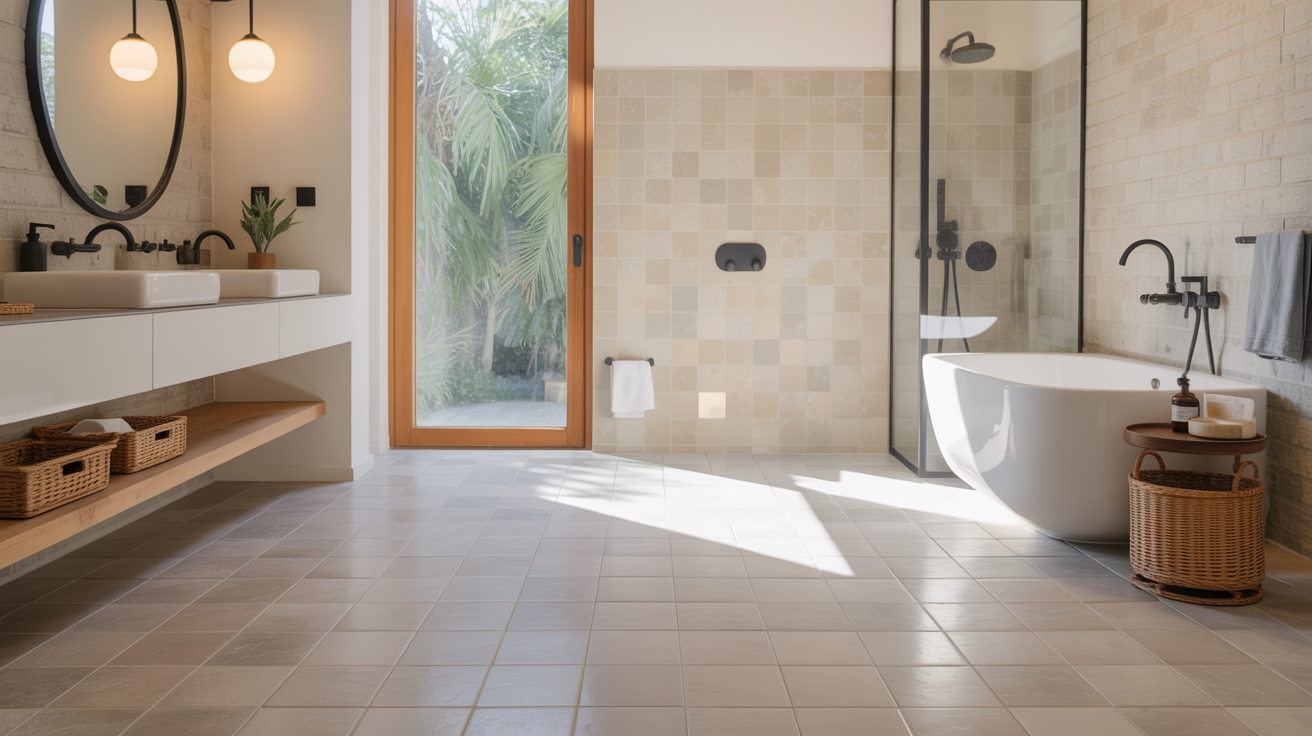
The best bathroom flooring is waterproof, grippy enough to be safe wet, and tough enough to survive decades of steam, cleaning products, and dropped shampoo bottles. Porcelain tile is the workhorse most installers reach for first, but it's not the only solid choice, and a few popular options have no business being within ten feet of a shower.
What Makes a Bathroom Floor Different
A bathroom floor faces conditions no other room does. Standing water, high humidity, cleaning chemicals, and the thermal cycling from hot showers stress flooring in ways that accelerate failure in materials that aren't built for it. The key specs to evaluate are:
- Water resistance, Can it shed water indefinitely, or does it tolerate only brief contact?
- Slip resistance, The tile industry measures this with a Dynamic Coefficient of Friction (DCOF); ANSI A137.1 sets 0.42 as the minimum for tile rated for wet, level interior floors.
- Subfloor compatibility, Heavy tile needs a stiff, properly supported subfloor. Flex causes grout cracks and, eventually, loose tiles.
- Maintenance tolerance, Grout needs sealing. Some natural stones need re-sealing annually. LVP just needs a mop.
Getting these right matters more than chasing a trend. A floor that looks great in the showroom but absorbs water at the seams is a mold problem waiting to happen.
Porcelain and Ceramic Tile: The Reliable Standard
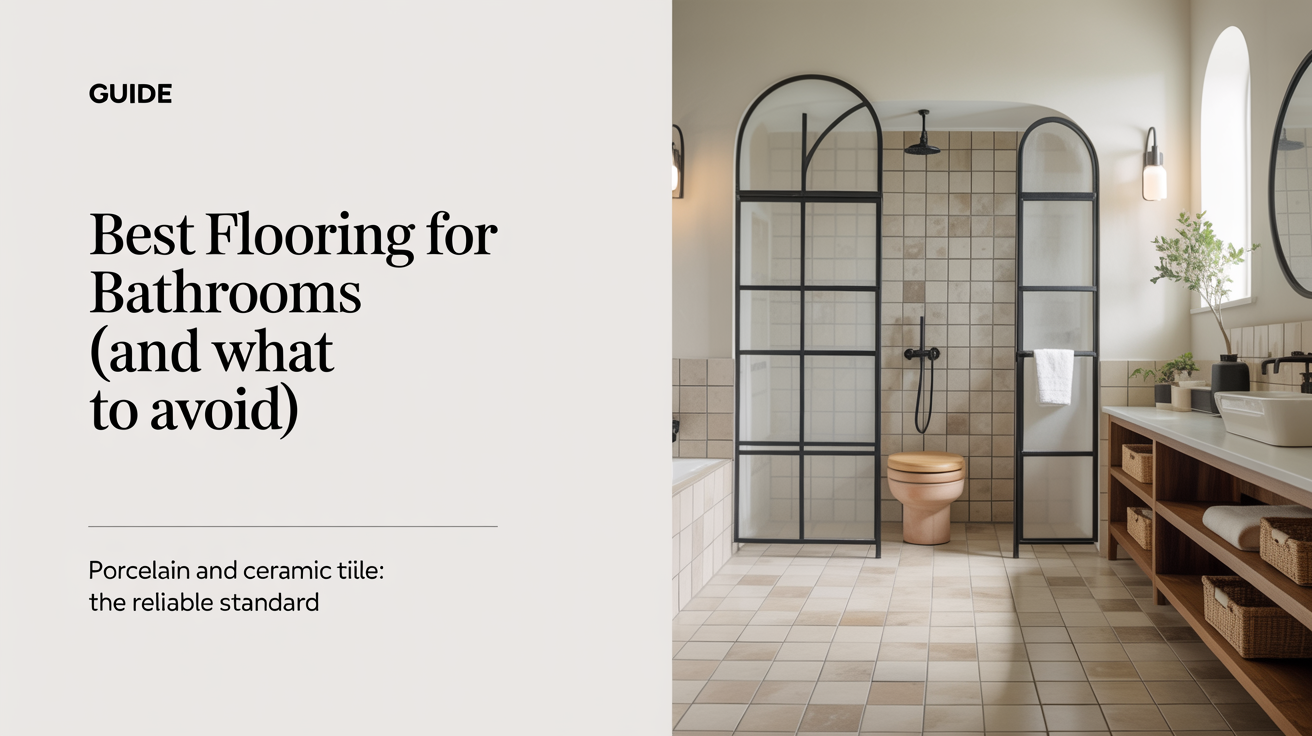
Porcelain tile is the most proven bathroom flooring option available. It's fired at higher temperatures than ceramic, making it denser, harder, and nearly impervious to water, a water absorption rate under 0.5% by ANSI standards. That's why it's the default in wet rooms, steam showers, and mudrooms.
For a bathroom floor specifically, look for:
- Mosaic formats (1"–2" hex or square), More grout lines mean more traction. Good for shower floors, where larger tiles can be problematic on curved drain pans.
- Matte or textured finishes, Polished porcelain is beautiful and dangerously slippery when wet. A honed or textured surface gives you the look with better grip.
- Rectified edges, Allow tighter grout joints (1/16"–1/8"), which reduces grout maintenance.
Ceramic tile costs less and works fine in a powder room or low-traffic guest bath. In a primary bath that sees daily use, porcelain holds up better over time. For a deep look at picking the right tile format and finish, see our guide to choosing bathroom floor tile that lasts.
Cost range: $2–$15/sq ft for the tile itself; installation typically adds $6–$15/sq ft depending on substrate prep and pattern complexity.
The Grout Factor
Tile is only as waterproof as its installation. Sanded grout in wide joints is porous; epoxy grout is not. If you're using standard cement grout, seal it at install and again every 1–2 years. Unsanded grout for joints under 1/8" is denser but still benefits from a penetrating sealer.
Luxury Vinyl Plank and Vinyl Tile: The Practical Contender
Waterproof vinyl flooring has improved dramatically over the past decade. Modern LVP (luxury vinyl plank) and LVT (luxury vinyl tile) are 100% waterproof through the core, unlike older laminate, which swelled at the seams when wet. They're warm underfoot, forgiving of subfloor imperfections, and significantly cheaper to install than tile.
The vinyl vs tile bathroom debate comes down to your priorities:
- Choose LVP if you want DIY-friendly installation, a softer surface underfoot, lower material costs, or if you're working over a subfloor that flexes slightly (vinyl can handle minor movement that would crack grout).
- Choose tile if you want maximum longevity, resale value, or a truly custom look. Tile also handles heat better, relevant if you're adding radiant floor heating.
One real limitation: vinyl can be gouged by dragged furniture or sharp objects, and it doesn't add structural value to the home. In a primary bath with radiant heat, stick with tile.
Cost range: $2–$7/sq ft for material; DIY-friendly click-lock formats can cut installation costs substantially.
Natural Stone: High Reward, High Maintenance
Marble, travertine, limestone, and slate bring a look that no manufactured product fully replicates. They're also the most demanding bathroom flooring options to own.
The core issue is porosity. Most natural stone, marble in particular, absorbs water, soap residue, and cleaning products unless sealed consistently. Travertine has natural voids that trap moisture and grime. Even "low-porosity" granite needs attention in wet environments.
If you want stone in a bathroom:
- Slate is the most practical. It's naturally textured, relatively dense, and handles moisture better than marble or travertine.
- Honed marble is achievable, but plan on sealing it twice a year and using pH-neutral cleaners only. Acidic cleaners etch it.
- Avoid polished marble on the floor. It etches easily and is slippery. If you love the look, use it on walls where it stays dry.
Cost range: $5–$30+/sq ft for material; installation is similar to porcelain, but stone often requires a thicker mortar bed.
Sealed Concrete and Engineered Wood: Situational Choices
Polished or sealed concrete works in modern and industrial bathroom designs. A properly sealed concrete floor is waterproof and durable, but the sealer needs reapplication every 3–5 years, and concrete is cold and hard underfoot. It's also unforgiving of subfloor cracks, any movement telegraphs through. Best suited to ground-level bathrooms on slab foundations.
Engineered wood can tolerate occasional moisture better than solid hardwood, but it doesn't belong in a full bathroom. The veneer layer is thin, and repeated humidity cycling causes warping and delamination over time. If a client insists on a wood look in a bathroom, LVP is a better answer, it gives the same aesthetic with none of the long-term risk.
Flooring Comparison Table
| Material | Waterproof Rating | Cost (material) | Durability | Avoid In... |
|---|---|---|---|---|
| Porcelain tile | Excellent (≤0.5% absorption) | $2–$15/sq ft | 30–50+ years | Rarely; avoid polished finish on floors |
| Ceramic tile | Good (≤3.0% absorption) | $1–$8/sq ft | 15–25 years | Heavy-use primary baths; use porcelain instead |
| LVP/vinyl tile | Excellent (100% waterproof core) | $2–$7/sq ft | 15–25 years | Radiant heat systems; high-traffic commercial use |
| Natural stone | Poor to moderate (varies by stone) | $5–$30+/sq ft | 20–50+ years with maintenance | High-humidity showers without rigorous sealing |
| Sealed concrete | Good (depends on sealer quality) | $2–$6/sq ft (DIY seal) | 20+ years | Bathrooms above slab; homes with active foundation movement |
| Engineered wood | Poor | $4–$12/sq ft | 10–20 years (dry spaces only) | Any wet bathroom; use LVP for the wood look |
Installation Considerations Worth Knowing Before You Buy
A common mistake: buying flooring without accounting for what's under it. Tile requires a flat, stiff subfloor, deflection over 1/360 of the span will crack grout and eventually the tile itself. A 1/2" cement backer board over plywood is the standard solution, but it raises the finished floor height by about 5/8"–3/4" and can create transitions with adjacent rooms.
Vinyl flooring is more tolerant but still needs a smooth surface, any bump or depression telegraphs through the material over time. Fill low spots with floor leveler before installing.
Heated floors pair well with tile but require thin-set and tile rated for thermal cycling. If you're planning in-floor heat, confirm compatibility before purchasing materials. For more on installation technique, our step-by-step shower wall tiling guide covers the fundamentals that apply to floors as well.
Pattern choice also affects cost. A straight lay is the most economical to install. Diagonal, herringbone, or a custom border will increase labor time. If you're considering a statement pattern, our subway tile patterns and layout ideas page has practical layout advice that translates to floor work too.
The Short Answer on What to Avoid
Avoid laminate in any full bathroom, the core swells when wet, period. Avoid solid hardwood for the same reason. Avoid polished stone or high-gloss tile on the floor; the look is not worth a slip injury, and it's the fastest way to fall short of that 0.42 DCOF benchmark. And avoid unglazed quarry tile in a bathroom unless you're committed to a rigorous sealing schedule, it absorbs moisture aggressively.
Frequently Asked Questions
What is the most waterproof bathroom flooring?
Luxury vinyl plank with a waterproof WPC or SPC core is technically the most waterproof material available, water cannot penetrate it at all. Porcelain tile is a close second (absorption rate under 0.5%), and it's more resistant to heat and heavy impact. Either is a sound choice; the difference matters more in high-splash zones like around tubs and showers.
Is vinyl or tile better for a bathroom floor?
It depends on your budget, subfloor condition, and how long you plan to stay in the home. Tile costs more upfront and is harder to DIY, but it lasts longer and carries more resale value. Vinyl is faster to install, warmer underfoot, and costs less, it's a reasonable choice for a rental, a quick renovation, or a bathroom where you want an easy DIY project. If you're investing in a long-term primary bath, tile is generally worth it.
Can you put hardwood floors in a bathroom?
Solid hardwood, no. The humidity alone, even without any direct water contact, will cause it to cup and warp over a year or two. Engineered hardwood can handle dry areas adjacent to a bathroom, but it's still risky in the bathroom itself. If you want a wood aesthetic, waterproof LVP is the right material.
How do I make bathroom tile less slippery?
First, choose the right tile to begin with, matte, textured, or mosaic formats with a DCOF ≥ 0.42. If you're dealing with an existing slippery floor, anti-slip treatments (applied topically) can help somewhat, but they require reapplication. A bath mat in the high-risk zone (just outside the shower) is the simplest solution. Replacing a polished tile with a textured one is the permanent fix.
How often does bathroom flooring need to be replaced?
Porcelain tile installed correctly rarely needs replacement, it can last the life of the house. Grout may need patching or replacement after 20–30 years. LVP typically holds up 15–25 years depending on traffic and quality. Natural stone can last indefinitely with proper sealing but may need professional restoration after 10–15 years. The most common reason for early replacement isn't wear, it's water damage from inadequate sealing or subfloor issues that should have been caught at install.