Tile & Flooring
How to Choose Bathroom Floor Tile That Lasts
Pick bathroom floor tile that handles moisture, foot traffic, and years of use. Real ratings, material tradeoffs, and size guidance to help you decide.
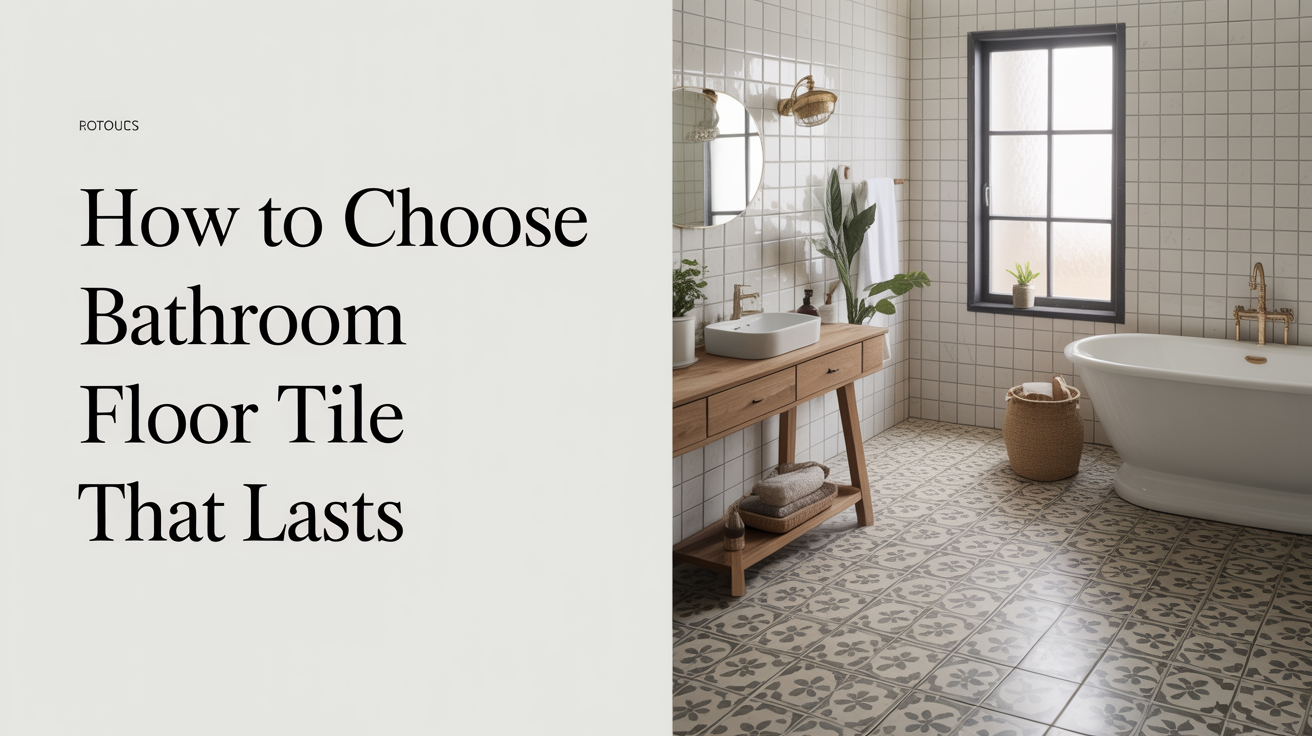
Bathroom floor tile is one of those decisions that feels small until you're replacing it five years later. Get the material, rating, and finish right the first time and it genuinely disappears into the background. Which is exactly what good flooring should do.
At a Glance
- Two numbers matter more than any showroom description: PEI rating (surface hardness, look for 3 or higher) and COF (slip resistance, look for 0.6 or higher wet).
- Porcelain (below 0.5% water absorption) outperforms ceramic (3–7%) in a wet floor application and needs no sealing.
- Natural stone looks great but needs sealing every 1–3 years; skip a cycle and expect etching or staining.
- Larger tile (18 in. and up) means fewer grout lines and easier cleaning, but it demands a flatter, stiffer subfloor.
- Matte and textured finishes grip better wet; polished and high-gloss finishes look better on walls than floors.
- Medium-to-dark grout hides everyday grime far better than white, regardless of which tile you choose.
What the Ratings Actually Mean
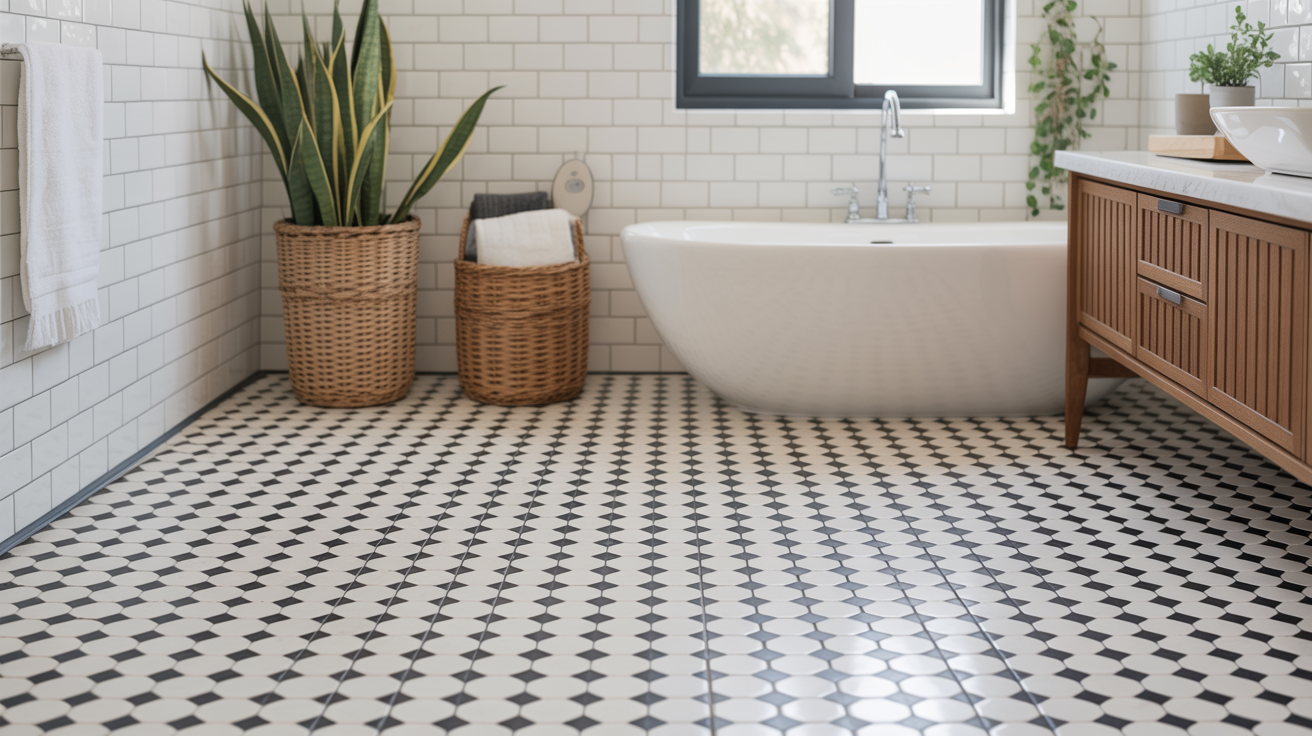
Two numbers matter more than any product description: PEI rating and COF. If a tile salesperson doesn't mention these, ask.
PEI (Porcelain Enamel Institute) rating measures surface hardness on a 0-5 scale. Glazed ceramic floor tiles rated PEI 3 or higher handle residential bathroom traffic without wearing through the glaze. PEI 4 suits busier bathrooms or households with kids and pets. PEI 0-2 is wall tile only. It will scratch and dull underfoot.
COF (Coefficient of Friction) is the slip rating: the ratio of the force resisting sliding to the force pressing two surfaces together, and it's an empirical measurement rather than something calculated on paper, so it has to come from an actual lab test. Current ADA accessibility standards require walking surfaces to be slip-resistant, but the U.S. Access Board has been explicit that the standards stop short of mandating a specific COF number, since no single test method has become the universal benchmark. In practice, the tile industry still treats a wet COF of 0.6 or higher as the working target for bathroom floors, carried over from older accessibility guidance and repeated across manufacturer spec sheets. Unglazed tile, matte finishes, and textured surfaces all tend to score higher. Polished stone and high-gloss porcelain usually fall below 0.5 when wet. Fine for a wall, a real problem on the floor.
These aren't marketing claims. They're standardized test results, and reputable tile manufacturers publish them in spec sheets. If you can't find the spec sheet, that's useful information too.
One more spec worth knowing: water absorption rate. Porcelain sits at below 0.5% water absorption, which is why it works in wet installations with no sealing needed. Standard ceramic is typically 3-7%, still acceptable for most floor applications when properly grouted. Natural stone varies widely by type and cut, but most require penetrating sealer to prevent staining and moisture intrusion.
Material Comparison: Pros, Costs, and Real Tradeoffs
| Material | Typical Cost (per sq ft) | Water Resistance | Slip Rating | Durability | Best For |
|---|---|---|---|---|---|
| Glazed ceramic | $1-$5 | Good (glaze) | Varies by finish | PEI 3-4 adequate | Budget-conscious remodels |
| Porcelain (matte) | $3-$12 | Excellent | COF 0.6-0.8 | PEI 4-5 | Most residential bathrooms |
| Natural stone (honed) | $7-$25 | Requires sealing | COF 0.5-0.7 | Moderate | Master baths, low-traffic |
| Slate | $5-$18 | Good when sealed | COF 0.7+ (cleft) | Good | Rustic/earthy styles |
| Encaustic cement | $8-$20 | Requires sealing | COF varies | Moderate | Decorative accent areas |
| Luxury vinyl tile (LVT) | $2-$8 | Excellent | COF 0.6+ | Good | Rentals, DIY installs |
A few notes on that table. Natural stone looks great in magazines and is genuinely beautiful, but "requires sealing" means annually for polished marble and every 2-3 years for most others. Skip a year in a busy bathroom and you'll have etching and staining. It's not high-maintenance in a bad way, just in a real way.
Porcelain is the workhorse. It's fired at higher temperatures than ceramic, absorbs almost no water (water absorption rate below 0.5%), and the color goes all the way through on through-body porcelain, so chips don't show as badly. For most bathrooms, a matte or satin-finish porcelain in the PEI 4 range is hard to beat.
Luxury vinyl tile deserves a mention here. LVT has gotten genuinely good in the last few years: waterproof core, realistic stone and wood looks, and easier to install than ceramic. The tradeoff is longevity and heat sensitivity. LVT can dent from heavy furniture over time and may warp if a radiant heating system runs too hot. It's a solid choice for rentals, basement bathrooms, or anyone doing their own installation for the first time. For a primary bathroom you're keeping for 15-plus years, porcelain holds up better.
Worked Example: Material Cost for a 40 Sq Ft Bathroom Floor
A typical hall bath floor runs around 40 square feet. Here's how material choice alone shifts the budget, before labor:
| Material | Cost per Sq Ft | Material Cost (40 sq ft) | Add for Sealer/Setting Materials |
|---|---|---|---|
| Glazed ceramic | $1-$5 | $40-$200 | Minimal |
| Porcelain (matte) | $3-$12 | $120-$480 | None (no sealing needed) |
| Natural stone (honed) | $7-$25 | $280-$1,000 | $50-$100 sealer, repeated every 1-3 years |
| Luxury vinyl tile | $2-$8 | $80-$320 | None |
Labor typically adds $5 to $15 per square foot depending on tile size and pattern complexity, so a 40 sq ft porcelain floor often lands between $320 and $1,080 installed. Large-format tile, herringbone layouts, and natural stone all push labor toward the top of that range because they take longer to set and level.
Size and Layout: How Tile Dimensions Change the Room
Tile size isn't just aesthetics. It affects grout line frequency, slip risk, and installation difficulty.
- Small format (1x1 in. to 4x4 in.): Mosaic tiles have more grout lines, which actually improves grip in wet areas. Good for shower floors. Labor-intensive to install.
- Medium format (6x6 in. to 12x12 in.): The classic bathroom tile size. Forgiving for DIY installers; works in most standard-size rooms.
- Large format (18x18 in. and up, including 12x24, 24x24, 24x48 in.): Fewer grout lines, easier to clean, makes small bathrooms read as larger. Requires a flatter substrate; any flex in the floor will crack large-format tile. These need back-buttering and often a larger-notch trowel (1/2 in. or larger).
- Rectangular planks (4x24, 6x36 in.): Wood-look porcelain planks are popular right now and work well in bathrooms. Pay attention to the rectified vs. non-rectified spec: rectified tiles are cut to precise tolerances and can be installed with very narrow grout joints (1/16 to 1/8 in.).
For a 5x8 ft bathroom, a 12x24 in. tile laid in a staggered offset looks proportionate without overwhelming the space. Tiny mosaics can feel busy unless balanced with larger field tile elsewhere. If you're not sure how many boxes to order once you've picked a size, our tile calculator converts room dimensions into square footage and adds a waste factor for cuts and breakage.
If you're exploring layout patterns beyond the basic grid, subway tile patterns and layout ideas covers offsets, herringbone, and basketweave in depth.
Grout, Finish, and the Details That Actually Fail
The tile almost never fails. The grout does.
Unsanded grout is for joints 1/8 in. or smaller. Sanded grout fills larger joints without shrinking and cracking. Epoxy grout is the most stain-resistant option (harder to work with, but worth it around toilets and in wet zones). If you use cement-based grout, seal it within 72 hours of installation and reseal every year or two.
Light-colored grout in a bathroom floor is a choice you'll regret within six months. Medium gray or charcoal grout hides grime without requiring constant scrubbing. If you're set on white or off-white grout, plan for epoxy.
Finish choices are simpler than they look:
- Matte/satin: Hides water spots, higher COF, more forgiving for daily use.
- Polished/high-gloss: Shows every footprint and drip, lower COF when wet. Better on walls.
- Textured/embossed: Best grip, harder to clean around the texture. Good for shower floors specifically.
Grout choice interacts with tile size, too. A large-format tile with a narrow rectified joint shows less grout overall, so the color decision matters less for maintenance but more for how the floor reads visually, since there's less of it to hide behind. A small mosaic with dozens of joints per square foot puts grout maintenance front and center no matter what color you pick.
For a broader look at which flooring types hold up over time and which to avoid, best flooring for bathrooms and what to avoid goes into waterproofing layers and subfloor prep in more detail.
Non-Slip Bathroom Tile: What to Actually Look For
"Non-slip" is a marketing term. COF is the measurement.
For bathroom floors, aim for COF 0.6 or higher (wet). The easiest ways to hit that number:
- Choose matte over gloss. Surface texture creates friction. High-gloss porcelain often drops to COF 0.4-0.5 when wet.
- Go smaller. More grout lines mean more friction. A 2x2 in. mosaic floor has dozens of grout joints per square foot acting as micro-grip channels.
- Look for the "wet COF" spec. Some manufacturers only publish dry COF. If only one number is listed and there's no wet rating, ask.
- Consider a grip-rated tile explicitly. Products tested to ANSI A137.1 or DCOF AcuTest (Dynamic COF) are tested under wet conditions and report a single wet friction value.
- Avoid large polished stone on the floor. Honed or flamed finishes on marble or granite score much better than polished cuts of the same stone.
For shower floors specifically, you want tile 4x4 in. or smaller, or a pre-sloped shower pan with a mosaic surface. The slope needs to be 1/4 in. per foot toward the drain, which a licensed tile setter can verify. That slope calculation is worth getting right; a flat shower floor pools water and becomes a slip hazard regardless of tile COF.
If you're doing the shower walls at the same time, how to tile a shower wall: a step-by-step guide covers waterproofing membranes and layout planning before the first tile goes up.
Frequently Asked Questions
What tile size is best for a small bathroom floor?
Medium-format tiles (12x12 in. or 12x24 in.) generally work better than tiny mosaics or oversized large-format tile in a small space. Large tiles can make the room feel cramped if the cuts at the edges eat into the pattern. Mosaics work fine but require more grout maintenance. The specific proportions of your room matter more than any general rule. Lay a few tiles out dry before committing.
Is porcelain or ceramic better for bathroom floors?
Porcelain for floors, either works for walls. Porcelain has a lower water absorption rate (below 0.5% vs. ceramic's 3-7%), which matters in a wet floor application. It's also harder and more chip-resistant. Ceramic costs less and is easier to cut, which makes it a reasonable choice for a low-traffic powder room or a tight budget, but for a primary bathroom floor, porcelain holds up better.
How do I know if a tile is slippery?
Check the COF rating in the manufacturer's spec sheet, specifically the wet COF. Anything at or above 0.6 is suitable for wet residential floors. If no spec sheet is available, run your thumb across the tile surface with water on it. This isn't scientific, but a tile that feels slick dry will feel worse wet. When in doubt, choose a matte or textured finish over polished.
Can I put large-format tile (24x24 in. or bigger) in a small bathroom?
Yes, but the subfloor has to be flat and stiff. Large-format tile requires no more than 1/8 in. variation over 10 ft (per TCNA guidelines). Any flex in the floor will crack the tile or pop it loose over time. If your bathroom floor has any spring or bounce to it, address the subfloor before tiling. Consult a licensed contractor if you're not sure what's underneath.
How often does bathroom floor tile need to be replaced?
Well-installed porcelain or ceramic tile with properly sealed grout can last 20-50 years. What actually fails: grout cracks from subfloor movement, caulk deteriorates at transitions, or a single cracked tile from a dropped object. Replacing individual tiles is straightforward if you kept extras from the original install. Keep at least 10% of your tile in storage, and photograph the product details so you can find it again if a match is needed later.
Does tile temperature matter for a bathroom floor?
Yes, more than most people expect. Porcelain and natural stone both feel cold underfoot in an unheated bathroom, especially first thing in the morning. Radiant floor heating under tile solves this and pairs well with any of the materials in the comparison table above, though LVT needs a manufacturer-approved low-temperature system to avoid warping. If radiant heat isn't in the budget, a bath rug near the tub and shower exit covers the worst of it.