Bathroom Design
Spa Bathroom Ideas for an At-Home Retreat
Transform your bathroom into a spa-like escape with practical design tips on materials, lighting, fixtures, and budget-friendly upgrades.
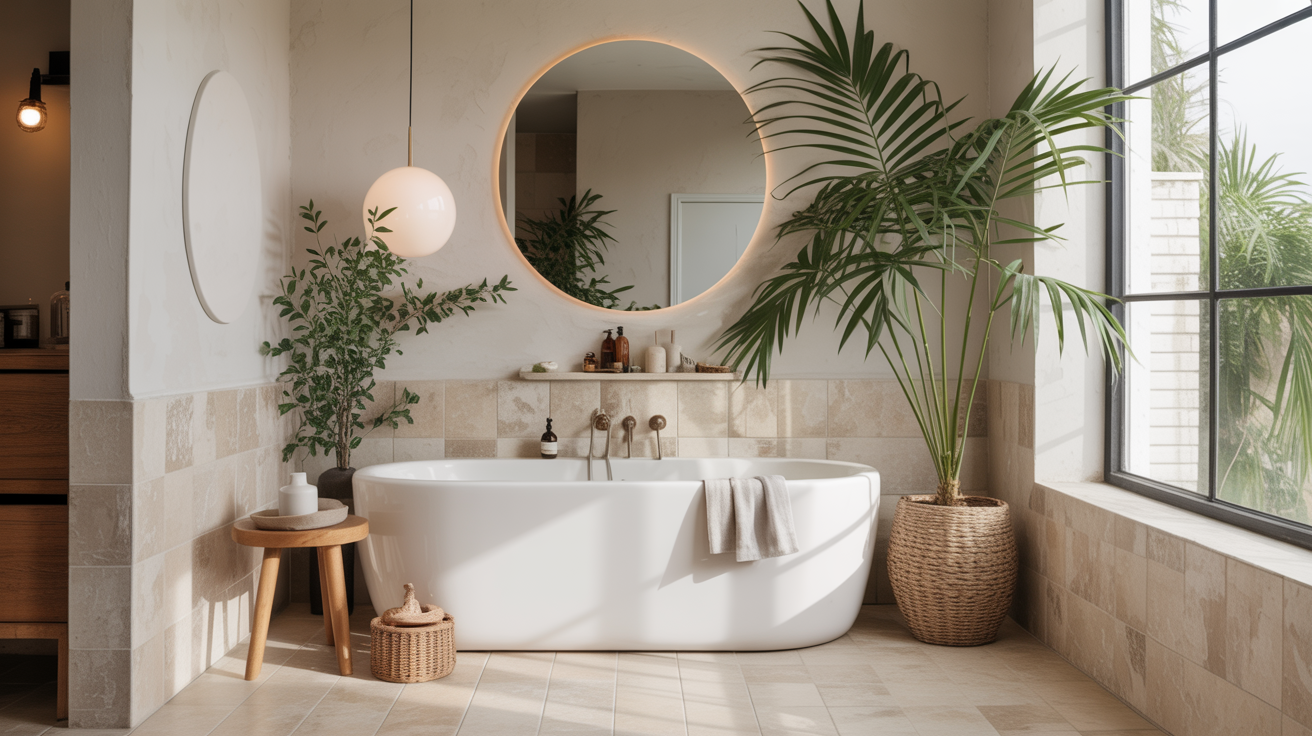
A true spa bathroom isn't about spending a fortune, it's about removing friction, choosing the right materials, and layering sensory details that make the space feel intentional. The same principles apply to a full gut renovation and to a weekend upgrade of what you already have.
At a Glance
- Calm reads as restraint, not luxury spending: a cleared counter and layered lighting change a room more than any single fixture.
- Stick to three tones at most (a dominant neutral, a mid-tone, one material accent) and keep them in the same color temperature family.
- Light in three layers (ambient, task, accent) on warm-white bulbs (2700 to 3000K), and put everything on a dimmer if code allows.
- A rainfall showerhead is the single fixture most associated with the spa feel, but a wall-mount rain arm is a far simpler retrofit than a ceiling-mount.
- Radiant floor heat is the most achievable big-ticket upgrade at $450 to $1,000 installed for a typical bathroom.
- A freestanding tub is optional. A well-tiled shower with a good head and bench reads as spa-level without one.
What Actually Makes a Bathroom Feel Like a Spa
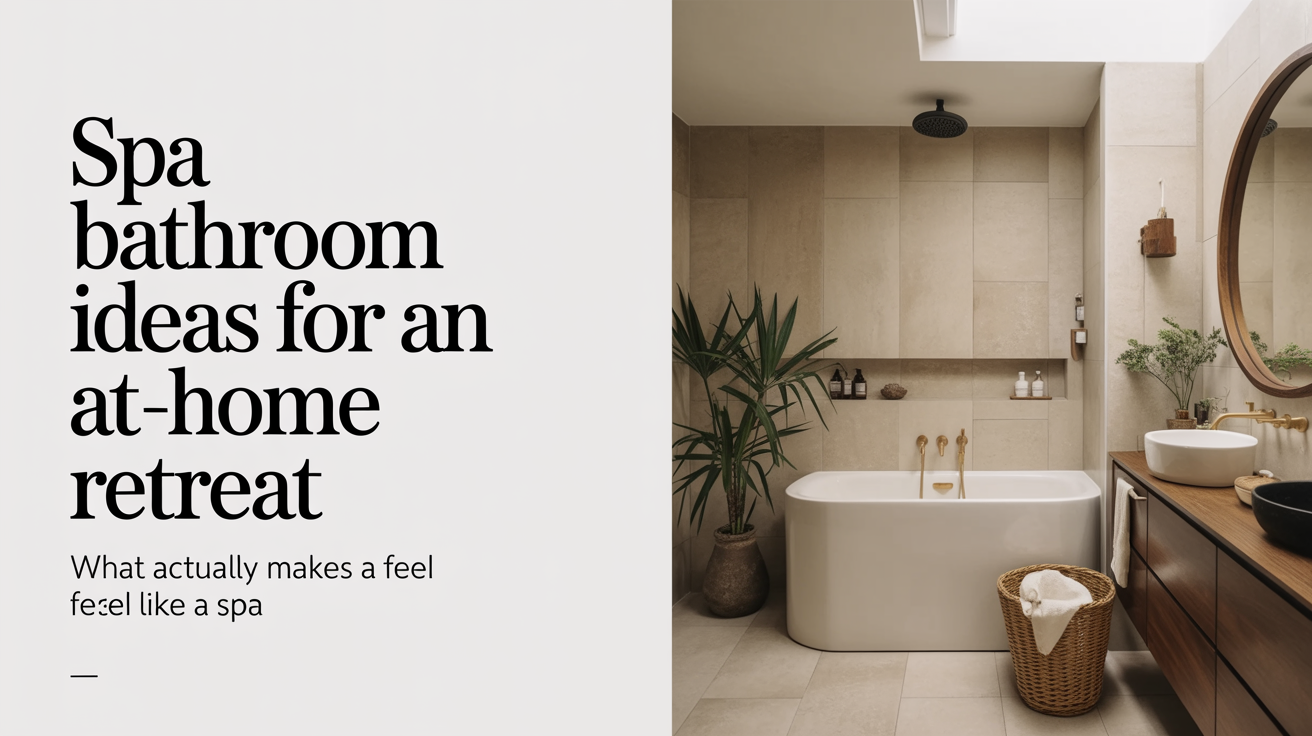
Most bathrooms fail the relaxation test not because they're small or cheap, but because they're visually noisy. Exposed products on the counter, mismatched towels, overhead lighting that casts unflattering shadows, these details break the spell.
A spa-like bathroom achieves calm through restraint. Think of it as editing down rather than adding up.
The Material Foundation
Natural materials do the heaviest lifting. Large-format stone-look porcelain tiles (60x120 cm) on the floor and walls create a seamless, hotel-caliber look without the maintenance demands of real stone. Matte or honed finishes scatter light more softly than glossy surfaces and hide water spots better on vertical walls.
For warmth and texture, consider:
- Teak or bamboo accents, bath mats, shelving, a small stool. Both handle humidity well.
- Limestone-look tiles in a warm greige for a neutral that reads as expensive without being trendy.
- Terrazzo in small doses (a single vanity countertop, for instance) adds quiet visual interest.
Wood-look porcelain on the floor paired with a stone-look wall tile is a reliable combination that doesn't require any design bravado to pull off.
Palette: Narrow and Grounded
A relaxing bathroom design uses three tones at most: a dominant neutral, a mid-tone, and one material accent. Warm whites, soft taupes, sage greens, and dusty blues are all well-proven. The key is staying within the same temperature family, mixing cool grays with warm creams introduces a tension that's hard to name but easy to feel.
For specific color direction, see our guide on how to choose a bathroom color scheme you won't tire of.
Lighting Layers That Change the Room
Overhead lighting alone is the most common mistake in bathroom design. A single ceiling fixture gives flat, unflattering light and one intensity, neither of which belongs in a space meant for relaxation.
A well-layered bathroom has three lighting zones:
- Ambient, a dimmable ceiling fixture or recessed cans on a dimmer switch, so you can drop the level in the evenings.
- Task, wall sconces flanking the mirror at face height (roughly 60 inches from the floor to center). Side-mounted sconces eliminate the shadows that an overhead mirror light creates.
- Accent, low-voltage LED strips recessed under a floating vanity, inside a niche, or along the toe kick. These are subtle, low-cost, and dramatically shift the room's mood at night.
Warm white bulbs (2700 to 3000K) are the standard for spa-feel spaces. Anything above 3500K reads as clinical. All fixtures should be on dimmers if your budget and code allow, dimming is one of the highest-return investments in a bathroom remodel.
The Fixtures That Carry the Most Weight
Not every fixture upgrade requires a full replumb. Some changes are cosmetic and reversible; others touch rough plumbing and should be budgeted and planned accordingly.
Rainfall Shower
A large-format ceiling-mount showerhead (8 inches minimum, 12 inches is more immersive) is the single fixture most associated with the spa experience. If your existing rough-in is in the wall, a ceiling-mount typically requires rerouting the supply line, that's a plumbing job. A wall-mount rain head on an extended arm is a simpler retrofit that still improves the experience.
Pair it with a handheld on a separate valve for flexibility. Thermostatic shower valves, which let you set a precise temperature and have it ready before you step in, are worth the premium if you're doing a full shower rebuild.
Rain heads run more water per minute than a standard showerhead by design, so it's worth checking the flow rating before you buy. The EPA's WaterSense program caps labeled showerheads at 2.0 gallons per minute, against 2.5 gpm for a standard head, and estimates the swap saves an average household around 2,700 gallons a year. A larger rain head can still carry the label; the diameter changes the coverage pattern, not necessarily the flow rate, so it's not a tradeoff you have to accept automatically.
Heated Floor
Radiant electric mat under tile is the most achievable luxury in a bathroom remodel. A standard bathroom (50 to 70 sq ft of floor) runs $150 to $400 for the mat; installation labor adds $300 to $600 depending on your area. The result is a floor that's warm underfoot on cold mornings and subtly raises the room temperature, reducing the shock of stepping out of a hot shower.
Important: heated floor mats must be specified for wet areas and installed by a licensed electrician in most jurisdictions. Local code in the U.S. generally requires ground-fault circuit interrupter (GFCI) protection on the circuit, either built into the thermostat or at the breaker, since the mat sits under tile in a room where the floor can be wet and someone may be standing on it barefoot. Always check local code before you buy a mat, since specification requirements vary by jurisdiction.
Freestanding Tub
A freestanding soaking tub is the most visual statement in a spa bathroom, and one of the more expensive.
| Material | Starting Price | Weight (Empty) | Heat Retention |
|---|---|---|---|
| Acrylic | $500 to $900 | 60 to 90 lb | Lowest; cools fastest, feels light underfoot |
| Stone resin | $800 to $2,500 | 200 to 350 lb | Better than acrylic, worse than cast iron |
| Cast iron | $1,500+ | 300 to 500 lb | Highest; holds heat longest for long soaks |
Acrylic freestanding tubs read well in photos but feel light underfoot. Cast iron holds heat significantly longer, a real functional advantage for long soaks, but its weight can require floor reinforcement in an upstairs bathroom, so confirm structural capacity before ordering one for anything above grade. Stone resin has better heat retention than acrylic without the weight of cast iron.
If your layout is tight, a smaller Japanese soaking tub (shorter but deeper) can fit where a standard 5-foot tub won't. See our overview of bathroom layout ideas that make the most of your space for fixture placement strategies.
Reducing Clutter Without Sacrificing Function
The fastest way to make any bathroom feel more spa-like is to remove everything from the counter. That sounds extreme, but the test is useful: if you clear the countertop and only put back what you use every day, you'll find the list is much shorter than you thought.
Storage that keeps surfaces clear:
- Recessed niche in the shower wall, standard size is 12x24 inches, built between studs, tiled to match. One well-placed niche holds everything you need in the shower and eliminates the wire caddy.
- Floating vanity with drawers, the toe gap creates visual space on the floor and makes the room feel larger. Drawers (rather than doors) make daily use more efficient.
- Medicine cabinet with a mirrored front, doubles as the mirror, hides the interior, and adds significant storage without projecting into the room.
- Linen tower or tall cabinet if you have the wall space, keeps towels and backup supplies off the counter and floor.
Adding Greenery and Sensory Details
Live plants in a bathroom aren't just decorative, they soften hard surfaces acoustically and add a living element to an otherwise hard-surfaced room. The idea that a bathroom's humidity alone will keep a plant happy is common but overstated: Penn State Extension notes that the claim is hard to substantiate and that most bathrooms lack the light a plant actually needs, so pick a plant for the light level first and treat any humidity boost as a secondary benefit, not the reason for the choice. Pothos, snake plants, and ZZ plants tolerate low light and irregular watering better than most, which makes them a safer bet for a windowless bathroom than a plant chosen purely because it likes moisture.
A single large plant in the corner (a bird of paradise or a monstera in a good-sized pot, assuming the room gets enough natural light to support one) makes more impact than a collection of small ones.
For scent, a reed diffuser or a small candle is more manageable than an oil diffuser in a humid space. Eucalyptus hung from the showerhead is a well-known trick, the steam releases the oils and the bundle lasts a week or two.
Budget Tiers: Where to Spend and Where to Save
| Upgrade | Budget Option | Full Investment |
|---|---|---|
| Flooring | Peel-and-stick luxury vinyl tile | Large-format porcelain with heated mat |
| Lighting | Dimmable LED bulbs + two plug-in sconces | Hardwired sconces, recessed dimmers, LED strips |
| Showerhead | Wall-mount rain head on arm ($80 to $150) | Ceiling-mount with thermostatic valve ($600 to $1,800+) |
| Tub | Refinish existing tub ($300 to $600) | Freestanding cast iron or stone resin ($1,500 to $3,500) |
| Storage | Over-toilet cabinet + drawer organizers | Custom floating vanity + recessed niche |
| Greenery + scent | $20 to $40 pothos or snake plant | $150 to $250 statement plant + diffuser |
| Towels + accessories | Matching set in one neutral color | Waffle-weave or Turkish cotton in a coordinated palette |
The highest-return moves for a tight budget are: dimmable lighting, matching towels in a single color, clearing the counter, and one good plant. Those four changes cost under $200 combined and shift the room's feel more than most fixture swaps.
For broader style direction, our modern farmhouse bathroom ideas article covers how to layer natural materials without the space reading as rustic.
Frequently Asked Questions
How do I make a small bathroom feel like a spa?
Start with the two biggest visual noise sources: clutter and lighting. Clear the counter, add a dimmable bulb (or swap in a dimmer switch), and hang a single large mirror if you don't already have one. Large-format tiles in a light neutral make a small room read as bigger than it is. Frameless shower glass instead of a curtain opens the space further without any construction.
What are the most important spa bathroom ideas on a budget?
The highest-impact, lowest-cost changes are: replacing the showerhead with a rain-style model ($80 to $150, no plumbing required for most wall-mount versions), adding a dimmer switch to the overhead light ($15 to $40 plus an hour of work if you're comfortable with basic electrical), buying a cohesive set of towels in one neutral color, and removing everything from the counter. Together these feel like a different bathroom.
Do I need a freestanding tub for a spa bathroom?
No. A freestanding tub is a visual statement, not a functional requirement. A well-tiled walk-in shower with a good showerhead and bench seating reads as spa-level without a tub at all. If you use a tub rarely, the square footage is often better spent on a larger shower footprint.
What tile works best for a spa bathroom?
Large-format matte or honed porcelain in a stone look (travertine, limestone, or marble styles) is the most flexible choice, it reads as high-end, handles moisture well, and has fewer grout lines to clean. On the floor, a slip-resistance rating of R10 or higher is standard for wet areas. For the shower walls, a rectified tile (precision-cut edges) allows tighter grout joints, which reinforces the seamless look.
How do I add warmth to a spa bathroom without making it feel dark?
Warmth comes from material tone, not from darkness. Creamy whites, warm taupes, and muted greens read as warm without reducing light. Teak or wood-look accents, warm-white bulbs (2700K), and natural fiber textiles (linen, cotton waffle-weave) all add warmth. A large mirror bounces light back into the space and prevents the room from feeling enclosed even with a darker palette on the walls.
Does a low-flow rain showerhead feel weaker than a standard one?
Not in most cases. WaterSense-labeled rain heads are tested for spray force and coverage as part of earning the label, not just flow rate, so a well-engineered 2.0 gpm head can feel more substantial than a cheap 2.5 gpm one thanks to nozzle design and pressure compensation. If you've used an older rain head and found it weak, the fix is usually a better head, not a higher flow rate.
Is radiant floor heat worth it if I only shower in the morning?
For most households, yes, if the bathroom is used year-round in a cold-winter climate. The mat itself is a modest cost relative to a full remodel, and the daily comfort gain (plus the fact that it dries the floor faster after a shower) tends to outweigh the running cost, which is typically a few dollars a month on a programmable thermostat set to warm the floor only before your usual shower time.