Fixtures & Vanities
Walk-In Shower Ideas and Features to Consider
Explore practical walk-in shower ideas covering sizes, curbless designs, glass panels, benches, niches, and drains to plan a shower you'll use every day.
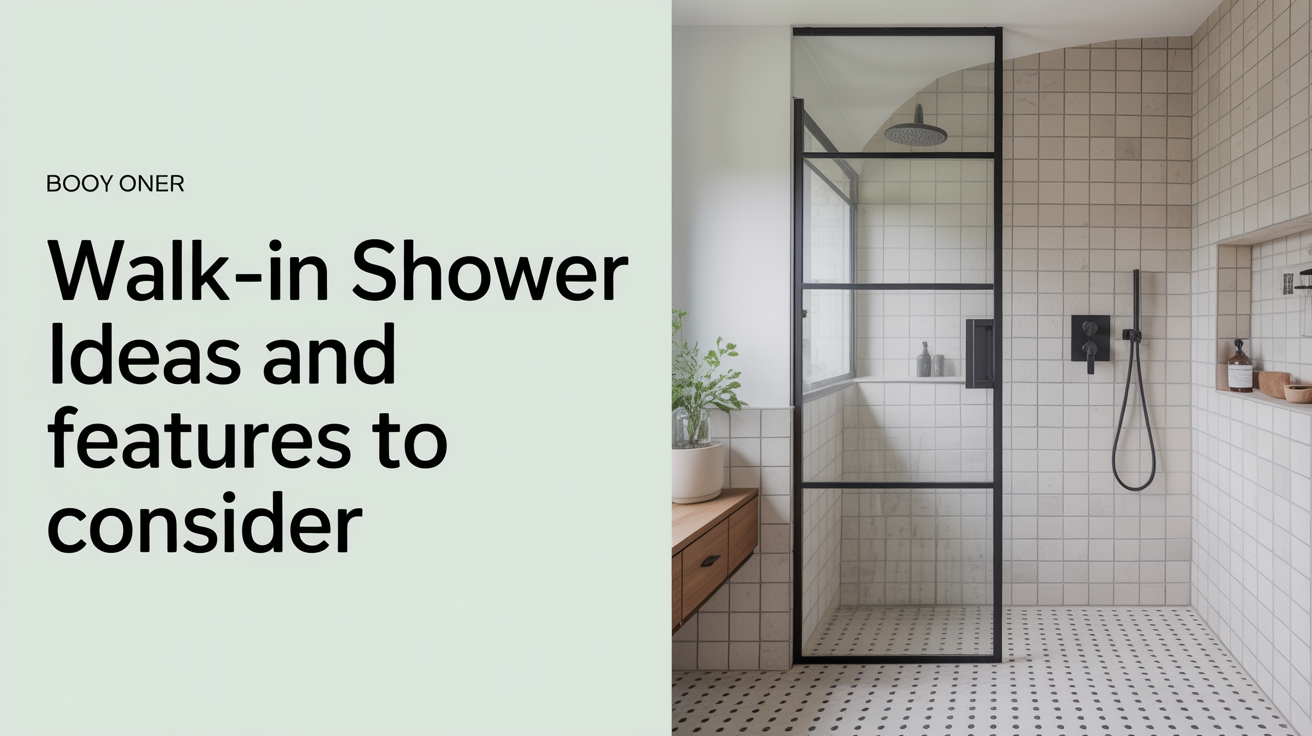
A walk-in shower can work in almost any bathroom if you plan it around the way you actually bathe. The core decisions, curbed or curbless, door or open entry, bench or no bench, all connect to each other, so locking them down early keeps the project from scope-creeping mid-tile.
At a Glance
- Code minimum floor area is 36 x 36 inches; most designers treat 48 x 48 inches as the comfortable working size.
- Doorless showers need roughly 60 inches of entry-to-showerhead distance so spray doesn't wander into the room.
- Curbless entries cost more to waterproof correctly but are the easier long-term choice for aging in place.
- A built-in bench sits 17 to 19 inches high, the same height range used for accessible transfer seats, so it works for every household even if accessibility isn't the goal.
- Linear drains simplify the floor slope to a single plane; center drains need a four-way slope that's harder to execute in small tile.
- Waterproofing is the layer that actually keeps the room dry. The tile is cosmetic on top of it.
Minimum Sizes and Layout Rules
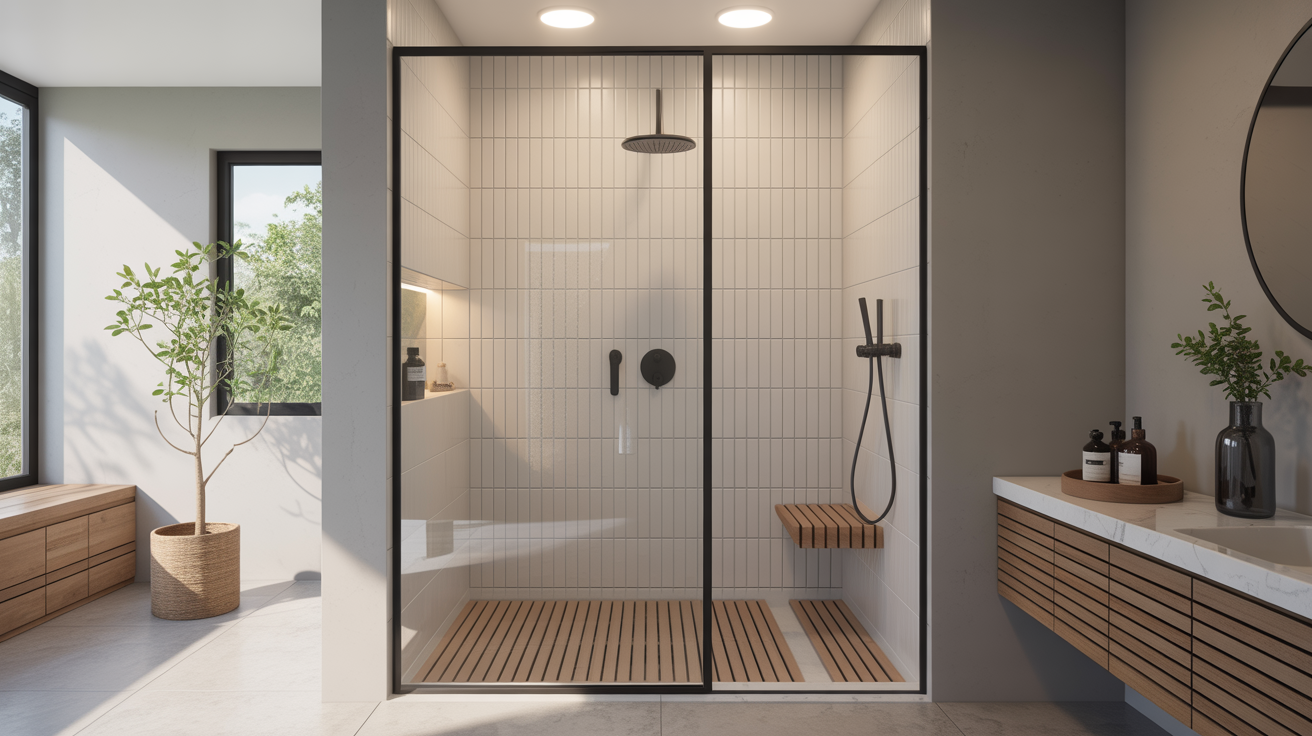
Building codes in most U.S. jurisdictions set a floor area of 36 x 36 inches as the absolute minimum for a shower enclosure. That square footage is tight. Most designers push toward 36 x 48 inches as a practical minimum, and 48 x 48 inches if you want comfortable movement or plan to add a built-in bench.
If you're going with a doorless shower (sometimes called an open-entry or wet-room design), the math shifts. Without a door to contain spray, you need either a larger footprint or a carefully angled entry wall. A common rule of thumb for doorless walk in shower design is a minimum 60-inch entry-to-shower-head distance so water doesn't wander out under normal use.
Curbless vs. Curbed Entry
| Feature | Curbless (Zero-Threshold) | Curbed |
|---|---|---|
| Accessibility | ADA-compatible, easier aging-in-place | Step-in required (typically 2 to 4 in.) |
| Waterproofing complexity | Higher, pan must slope 1/4 in. per foot to drain | Curb acts as a secondary barrier |
| Visual effect | Seamless; opens up small bathrooms | Defined enclosure |
| Installation cost | Usually higher (more substrate work) | Lower |
| Floor tile continuity | Can run same tile wall-to-wall | Grout joint break at curb |
Curbless showers are increasingly common and genuinely easier for older adults or anyone with mobility limitations. The tradeoff is a more demanding waterproofing job. The slope to drain must be precise, 1/4 inch of drop per linear foot, and the waterproof membrane must extend up the walls at least 3 inches above the finished pan. Get a licensed tile contractor or plumber to set the pan; this is not the place to learn sloped mud beds on the first try.
For reference, the U.S. Access Board's accessible design guidance on bathing rooms specifies a maximum threshold height of 1/2 inch at a curbless entry, and a maximum floor slope of 1:48 (which works out to the same 1/4-inch-per-foot figure above) so the transition stays passable for a wheeled walker or wheelchair. Building your curbless shower to that tolerance, even if no one in the household currently needs it, keeps the bathroom usable if that changes later.
Glass Panels, Doors, and Open Entries
The enclosure determines how the shower feels as much as its size does.
Framed doors were standard for decades. They're durable and inexpensive, but the metal frame collects soap scum and the swinging door eats floor space.
Frameless glass panels, fixed panels of 3/8-inch or 1/2-inch tempered glass, give a clean, open look without a swinging door in the way. A single fixed panel beside the entry is one of the more popular walk in shower design moves right now because it contains water while keeping the enclosure visually light.
Doorless or open-entry showers skip glass entirely at the entry. They require thoughtful layout: a return wall, an angled entry, or enough depth that the showerhead can't throw spray into the room. Heated floors in the wet zone just outside the shower footprint help with the cold-floor issue that comes with open designs.
Whatever glass you choose, tempered safety glass is non-negotiable. Wipe-down coatings (factory-applied hydrophobic treatments) cut daily cleaning time noticeably; they're worth adding to a frameless install.
Walk-In Shower With Bench: Why It's Worth the Space
A built-in bench is one of the most requested walk in shower design upgrades, and once you've had one, it's hard to go back. The functional case is strong: a place to prop a foot while shaving, set a product while shampooing, or sit during an illness. Accessibility-wise, a bench is a prerequisite for aging-in-place retrofits.
Bench Sizing Guidelines
- Seat height: 17 to 19 inches from the shower floor. This isn't an arbitrary comfort number; it matches the transfer-seat height range set out in federal accessible design guidance, so a bench built to this spec works for a wheelchair transfer as well as it does for anyone who just wants to sit down.
- Seat depth: 15 inches minimum; 16 to 18 inches is more comfortable
- Length: 24 inches minimum for a corner bench; 36+ inches for a full fold-out or long-wall bench
- Material: Teak, porcelain tile over concrete board, or solid surface, avoid MDF or untreated wood in the wet zone
Corner benches work in showers as small as 48 x 48 inches. Full-length wall benches feel generous but need at least a 60-inch wall to avoid boxing you in on the opposite side.
If you're planning a walk in shower with bench, run the waterproofing membrane over and under the bench substrate before tiling. Water that gets under a bench and sits on untreated cement board will destroy grout joints within two or three years.
Niches, Linear Drains, and Grab Bars
Recessed Niches
A recessed niche built into the wall avoids the soap shelf that sticks out and collects mildew underneath. Standard sizing is 12 x 24 inches to fit a single tile without cuts. Place it between studs (typically 14.5 inches of usable space in a 16-inch OC framed wall) and waterproof the recess separately before tiling, a niche that isn't independently waterproofed is one of the most common sources of wall moisture damage.
Height for a niche should be comfortable for the tallest person in the household. Roughly 48 to 54 inches from the floor works for most adults; lower if children use the shower regularly.
Linear Drains vs. Center Drains
| Factor | Linear Drain | Center Drain |
|---|---|---|
| Floor slope | Single plane, one direction | Four-way slope from all sides |
| Best fit | Curbless showers, large-format tile | Curbed showers, small-format tile |
| Typical cost (drain only) | $150 to $500 | $25 to $80 |
| Cleaning | Removable hair-catch basket, more frequent cleaning | Standard strainer, less frequent |
| Visual effect | Architectural, minimal | Utilitarian |
Linear drains run along one wall rather than centering in the floor. They have two practical advantages: the floor can slope in a single plane toward one wall (easier to tile cleanly), and they look architectural rather than utilitarian. For a curbless shower, the single-slope floor that a linear drain enables is often the more watertight option because it eliminates the complex four-way slope required for a center drain, which is exactly the kind of detail that determines whether a curbless entry holds up over years rather than months.
Grab Bars
Grab bars belong in almost every shower, not just accessibility remodels. A 24-inch horizontal bar on the entry wall and a 16-inch angled bar near the showerhead are a reasonable starting set. Accessible design guidance places grab bar gripping surfaces 33 to 36 inches above the floor, a workable default even outside a formal accessibility remodel. Blocking (2x lumber or 3/4-inch plywood) must be installed between studs before the backer board goes up, there's no retrofit-friendly way to anchor a load-bearing grab bar into tile without opening the wall.
Grab bars are now available in brushed nickel, matte black, and polished chrome finishes that coordinate with faucet trim, so they don't have to look institutional. Pair them with your faucet finish when ordering so the hardware reads as intentional rather than afterthought. Speaking of faucets, if you're still choosing fixtures, the guide on how to choose a bathroom faucet types explained covers valve types and trim compatibility in detail.
Tile and Waterproofing Considerations
The waterproofing layer does the actual work; the tile just covers it. A shower pan built on a proper schluter-style membrane or a bonded foam substrate with taped seams will outlast one where the waterproofing was skipped or rushed. Ask to see the membrane installed and seams taped before any tile goes down.
Getting this layer wrong has consequences beyond a failed tile job. The EPA's guide to mold and moisture in the home is blunt about the underlying mechanism: moisture control is mold control, and materials that stay wet for more than a day or two behind a wall create conditions mold can establish in. A shower assembly with a compromised membrane keeps the substrate damp indefinitely, which is a very different situation from a splash that dries out. It's the reason a rushed waterproofing job shows up as a problem months or years later, not immediately.
For floor tile in a walk-in shower, smaller format tiles (2-inch hex, 2 x 2 mosaic, or 4 x 4 squares) create more grout joints, which gives the mortar bed more grip points and improves slip resistance. Tiles rated for wet floor use carry a Dynamic Coefficient of Friction (DCOF) of 0.42 or higher; confirm this spec before purchasing floor tile.
On walls, large-format tiles (12 x 24 or 24 x 48) minimize grout lines and make cleaning faster. Rectified tiles (machine-cut to precise dimensions) allow tighter 1/16-inch grout joints, which look cleaner and give mold less surface to colonize.
Coordinate tile choices with your overall bathroom look. If you're also selecting a vanity, the guide on how to choose a bathroom vanity that fits your space walks through finish and proportion matching that applies here too.
Frequently Asked Questions
What is the minimum size for a walk-in shower?
Most building codes require at least 36 x 36 inches of interior floor space. In practice, 36 x 48 inches gives you room to move, and 48 x 48 inches or larger is where the shower starts to feel comfortable rather than functional. If you're adding a bench, budget for at least 48 x 60 inches so the bench doesn't make the shower feel like a phone booth.
Are doorless showers practical, or do they get water everywhere?
A doorless shower works well when the layout accounts for spray direction. The showerhead should point toward a wall rather than toward the opening, and the entry should be set back at least 24 to 36 inches from the head. An angled knee wall or a single fixed glass panel can contain most of the spray without a door. Heated bathroom floors near the entry help with the cold-spot problem.
How do I waterproof a walk-in shower properly?
Waterproofing goes on before the tile, over the backer board or foam substrate. A bonded sheet membrane (like Schluter Kerdi) or a liquid-applied membrane (RedGard, Mapelastic) both work when applied correctly. Corners and changes-of-plane need fabric tape embedded in the membrane. The pan needs to slope 1/4 inch per foot toward the drain. Have a licensed contractor handle the pan and curb or threshold if you're not experienced with mud-bed work, those are the spots that fail first when they're wrong.
What's the best drain for a curbless walk-in shower?
A linear drain along one wall simplifies the floor slope to a single plane, which is both easier to install correctly and easier to tile cleanly. Center drains are fine in curbed showers but require a four-way slope that's harder to execute in small-format tile. Either drain type works; linear is the better fit for curbless designs.
Can I add a built-in bench to an existing shower?
Yes, but it requires opening the walls to install blocking before the bench substrate goes in. If the shower is being retiled anyway, it's a natural time to add a bench. A floating bench (anchored to blocking in the wall with a tiled concrete-board top) is more durable than a freestanding teak bench because it's waterproofed as part of the shower assembly. If you're reworking the layout, also consider whether a larger or different vanity makes sense alongside the shower upgrade, the single vs. double vanity guide may help if the bathroom is shared.
How do I keep a walk-in shower from feeling drafty without a door?
Heat is the usual culprit, not the missing door itself. A radiant floor mat in the wet zone and a properly sized exhaust fan (run during and for 15 to 20 minutes after every shower) address most of the discomfort people blame on the open layout. A half-height knee wall or a single fixed glass panel angled to block direct airflow from a nearby window or vent also helps without closing the shower off.
Do I need a permit to convert a tub to a curbless walk-in shower?
In most jurisdictions, yes, because the work touches the drain location, subfloor, and sometimes the waste line slope, all of which are inspected items. Framing and waterproofing changes of this scope are exactly the kind of work a permit and inspection are meant to catch before it's covered up. Check with your local building department before demolition starts; a failed inspection after the tile is set is far more expensive to fix than a delay before it.