Bathroom Design
Coastal Bathroom Design Ideas That Skip the Beach Cottage Cliches
Coastal bathroom ideas that read as calm and collected, not themed. Palette, materials, lighting, and a checklist that keeps the look from feeling dated.
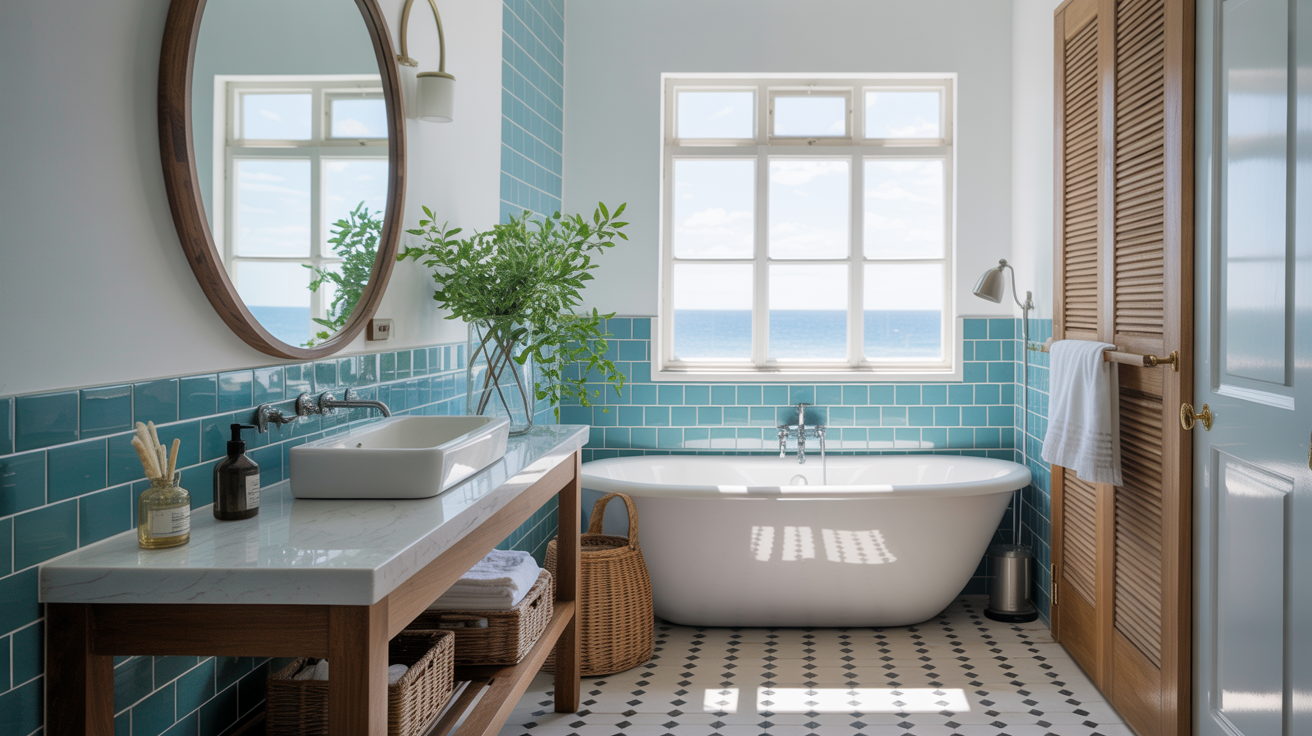
Say "coastal bathroom" to most people and they picture a wall of anchors, a net full of plastic starfish, and a sign about salt air fixing everything. That's not coastal, that's a gift shop. Good coastal bathroom ideas borrow the feeling of being near water: the light, the weathered wood, the sense that everything's been softened by wind and sun. None of that requires a single shell.
The trick is restraint. A beach style bathroom that leans on literal props reads as a costume, and costumes date fast. A bathroom built around real coastal materials and a believable palette just looks like a nice, calm room that happens to feel coastal. It'll still look right in ten years, which is more than you can say for rope-wrapped mirror frames.
What "Coastal" Actually Means When You Strip the Cliches Out
Before picking finishes, separate the look from the theme. Coastal design, at its best, is about light and weathered materials: the color a cedar shingle turns after a decade of sun, the way sea glass loses its shine and goes soft and matte, the pale gray-blue of water under an overcast sky. Those are the references worth pulling from, not a beach-souvenir shop.
Nautical bathroom decor gets a bad reputation because it usually means literal objects: ship wheels, rope trim, anchor hooks. Keep a whisper of that if you love it (a single piece, not five), but the room should work without it. If your coastal bathroom stops being coastal the moment you remove the starfish soap dish, the bones weren't doing enough work.
A Coastal Bathroom Color Palette That Doesn't Scream Beach
This is where most coastal bathrooms go wrong, and it's the easiest thing to fix. Skip the primary-colored navy-and-red combo that reads more "sailor costume" than "seaside home." A coastal bathroom color palette that actually holds up leans on three families:
- Sandy neutrals for walls and larger surfaces: warm off-whites, pale putty, a soft greige that isn't cold. This is your base, and it should cover the majority of the room.
- Sea glass and muted blue-green as an accent, not a main color: a pale, slightly grayed teal or seafoam works on a vanity, a single tiled wall, or trim, but rarely looks good wall-to-wall in a small room.
- Driftwood and weathered tan for wood tones: think sun-bleached rather than orange-toned oak. This shows up in vanities, shelving, and any trim.
If you've read a guide on choosing a bathroom color scheme you won't tire of, the same logic applies here: pick one dominant neutral, one supporting tone, and let a single accent color do the coastal signaling. Three colors, used at different volumes, reads intentional. Five colors at equal volume reads chaotic.
Test any prospective blue or green against real coastal water photos, not paint chip fantasies. Ocean water on a clear day is rarely the saturated turquoise on a paint swatch; it's grayer and quieter. Grayer is what keeps the room from looking like a theme park gift shop.
Materials That Do the Work Instead of the Decor
Once the palette is set, the materials carry most of the coastal feeling, and this is where restraint pays off the most.
A natural wood vanity, sealed properly
A single vanity in a light, natural wood, oak, ash, or a driftwood-finished cabinet, does more for the coastal mood than any amount of decor. Skip stark white (too clean) and heavy dark espresso (too traditional or farmhouse). The wood should look like it's seen some sun.
Here's the part that matters for a bathroom specifically: any exposed or unsealed wood in a humid room is asking for trouble. A vanity with a proper marine-grade or polyurethane sealed finish holds up fine. Raw, oiled-only wood, exposed edges, or anything porous left untreated can swell, warp, or grow mildew with repeated humidity from showers. If you love the driftwood look, get it in a sealed manufactured finish rather than reclaimed raw lumber you sealed yourself over a weekend.
Woven textures, used sparingly and kept dry
A woven basket for towels, a rattan mirror frame, a jute-look bath mat (synthetic, so it actually dries) all read coastal without being literal. The rule here is the same as with wood: anything woven and natural-fiber near the shower or tub needs to be sealed, kept clear of direct water, or swapped for a synthetic look-alike. Real rattan and unsealed rope in a small, poorly ventilated bathroom is a slow mildew problem waiting to happen, so if your fan is weak, save the real natural fiber for a hallway or bedroom instead.
Coastal bathroom tile ideas that skip the nautical stripe
For tile, the coastal reference doesn't have to mean a literal wave pattern or blue-and-white stripe (though a subtle stripe on a single wall can work if it's restrained). Better coastal bathroom tile ideas usually pull from natural stone and water-inspired texture instead of literal imagery:
- A honed, pale limestone or travertine-look porcelain floor, which reads sun-bleached rather than glossy
- A subway tile in a soft sea glass or pale sand color, rather than stark white or navy
- A textured, slightly irregular zellige-style tile in a muted blue-green for a shower accent wall or backsplash, used on one wall only
If a full tiled feature wall interests you, it's worth reading up on bathroom accent wall ideas before committing, since the same "one wall, not four" rule that keeps an accent wall from overwhelming a room also keeps a coastal tile choice from tipping into theme territory.
Lighting That Reads Coastal, Not Just Bright
Coastal light is soft, a little hazy, and warm without being yellow. In practice, that means:
- Favor a warm-white bulb (around 2700 to 3000 Kelvin) over a cool, clinical white, which can make a pale palette feel sterile instead of sunny.
- Layer light instead of relying on one fixture. A vanity light plus a small window (real or a light tube) plus a dimmer does more for mood than any single fixture choice.
- Choose fixtures in aged brass, weathered bronze, or matte black rather than bright chrome, which can read more modern-minimalist than coastal.
A woven or rattan pendant shade is a nice coastal touch here, since it isn't in direct water contact and skips the mildew risk that a bath mat or shower-side basket carries.
How a Restrained Coastal Look Ages
This is the real argument for going light on the theme. A bathroom full of anchor hardware and shell-shaped soap dishes will look exactly like what it is: a trend piece, dated within a few years the same way a lot of chevron-and-burlap farmhouse decor already looks dated. A bathroom built on a believable palette, sealed natural wood, and quiet tile choices doesn't really "expire," because none of those elements are trend pieces. They're just good materials in flattering colors.
If you're weighing coastal against another whole-house direction, it's worth comparing notes with a modern farmhouse bathroom or a more spa-driven approach: a spa-style retreat bathroom actually overlaps a lot with restrained coastal design, since both lean on natural materials, a quiet palette, and soft lighting rather than heavy theming. The line between "coastal" and "spa" is often just which accent color and wood tone you pick.
A Restrained Coastal Checklist
Before you buy anything with a boat on it, run your choices through this list:
- Is your wall color a warm neutral, not a bright white or a saturated blue?
- Is your one accent color grayed-down sea glass or muted blue-green, not primary blue?
- Is any exposed wood or woven fiber properly sealed or kept away from direct water?
- Could the room still read as coastal with zero literal beach objects in it?
- Are you using tile texture and stone tones to signal "coastal," rather than a wave or shell pattern?
- Is your lighting warm rather than cool-toned?
If you can answer yes to most of those, you're building a room that will still feel calm and current well after the theme has cycled out of style everywhere else.
Frequently Asked Questions
Is a coastal bathroom the same as a nautical bathroom?
Not quite. Nautical leans on literal maritime objects, often in a navy-and-white or red-white-blue combination. Coastal is softer, built on weathered natural materials and a muted, sun-bleached palette. You can have a coastal bathroom with zero nautical decor in it.
What's the biggest mistake people make with coastal bathroom ideas?
Overcommitting to literal beach objects, shells, anchors, rope trim in bulk, rather than letting the palette and materials carry the theme. One small nautical accent paired with strong material choices reads better than ten beach-themed knickknacks.
Can I do a coastal bathroom with no natural light?
Yes, if you lean harder on the lighting advice above. Warm-toned bulbs, a pale wall color, and a driftwood-toned vanity can carry the mood even in a windowless room. Save any saturated sea glass color for a small accent rather than the walls, since a dark room needs a lighter palette to feel airy.
Is rattan or woven decor a bad idea in a bathroom?
Not automatically, but it needs thought. Anything porous and natural-fiber near a shower or tub, without good ventilation, is at higher risk of mildew. Keep real rattan and jute away from splash zones, make sure your exhaust fan actually clears humidity, and consider synthetic look-alikes for anything close to water.
How do I keep a sealed wood vanity looking good long term?
Wipe up standing water instead of letting it sit, and check the seal periodically, especially around the sink cutout. A properly sealed finish sheds daily splashes fine, but no sealant lasts forever in a humid room, so plan on a light reseal every few years depending on use.